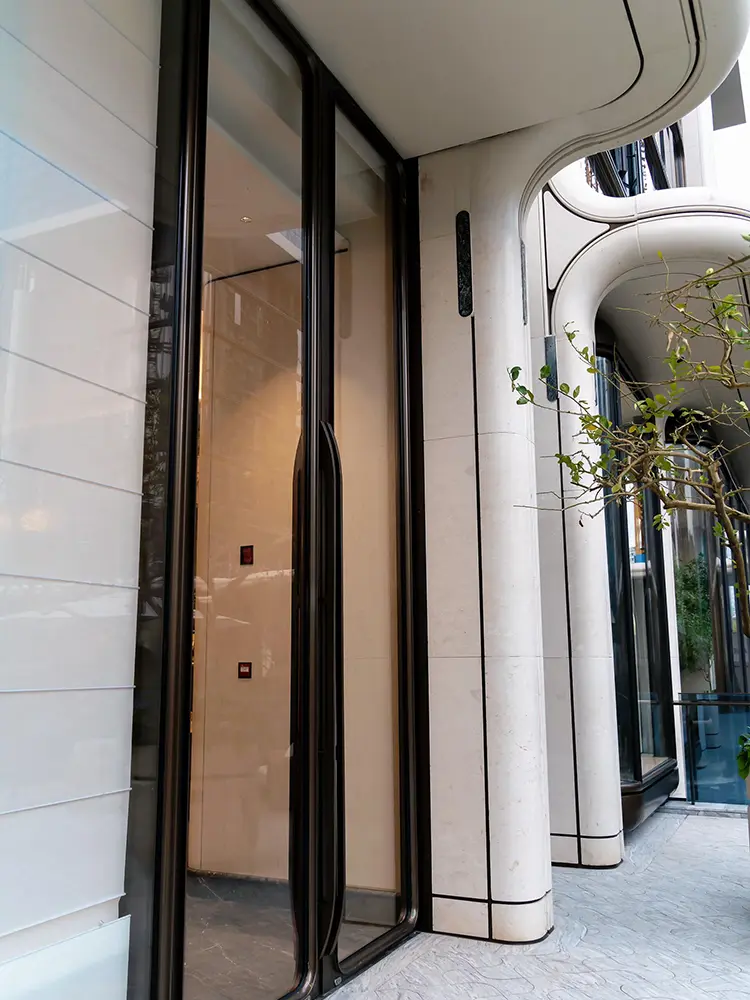
The better aluminum panel manufacturer is not simply the factory with the lowest price or the longest equipment list. For a custom facade or ceiling project, the better supplier is the one that can understand the drawings, identify fabrication risks, make repeatable panels, control the finish, label the pieces clearly, and protect them during delivery.
A buyer can check those abilities before placing the full order. The most useful evidence is a marked-up drawing, an approved sample, a clear quotation scope, current production photos, inspection records, and a packing plan. A polished sales presentation is not enough.
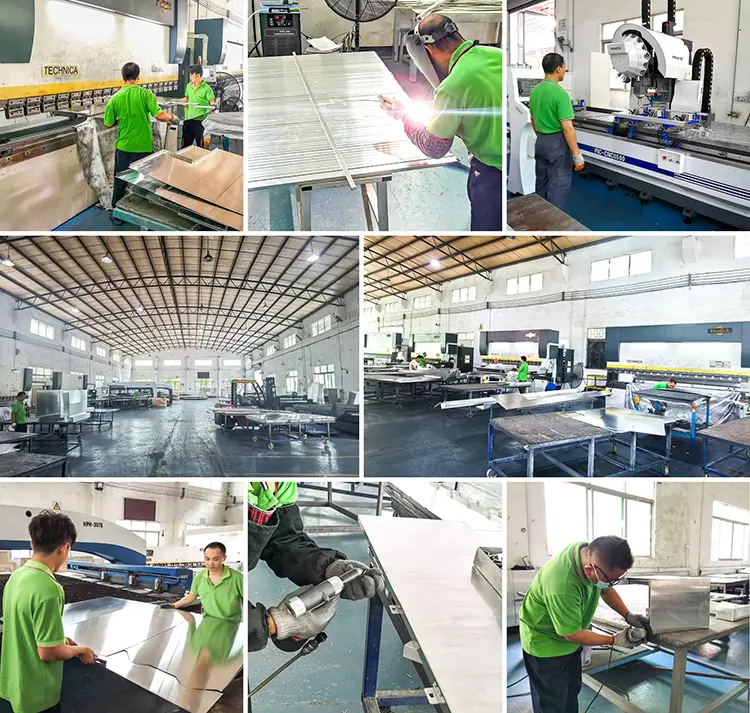
Start by defining what "better" means for your project
Two capable factories may still be suitable for different jobs. One may be efficient with repeated flat panels. Another may be stronger in perforated patterns, curved sections, welded corners, deep folded edges, or small batches with many different panel codes.
Before comparing manufacturers, write down the work the supplier must actually perform:
- flat, curved, perforated, welded, or three-dimensional panels;
- exterior facade, soffit, column cover, screen, interior wall, or ceiling use;
- panel sizes and the number of repeated versus unique pieces;
- required finish, color reference, gloss, and sample approval;
- folded edges, stiffeners, brackets, hangers, or other back details;
- packing method, delivery destination, and site sequence.
This prevents a common mistake: selecting a supplier that looks impressive in general but is not a good fit for the panel details in your project.
If the design includes custom hole patterns, use the same review method for perforated aluminum panels: ask about hole size, open area, edge distance, pattern direction, deformation control, and sample approval.
Eight checks that reveal how a manufacturer really works
| What to check | Useful evidence | Warning sign |
|---|---|---|
| Drawing review | Questions about joints, folds, fixing points, panel size, hole pattern, or reinforcement | A price is issued without reading the drawings |
| Similar fabrication experience | Current photos of comparable shapes and processing steps | Only finished-building photos with no production detail |
| Sample approval | Agreed color, gloss, texture, edge quality, and reference sample | "The color will be close" with no approval method |
| Quote completeness | Material, thickness, finish, fabrication, reinforcement, packing, and delivery scope shown separately | One square-meter price with important items missing |
| Process control | Cutting, punching, bending, welding, grinding, assembly, and inspection steps explained | Equipment is listed, but nobody explains the workflow |
| Quality checks | Dimension, diagonal, flatness, folds, stiffeners, surface, color, and labels are checked | Inspection means only looking at the front surface |
| Packing and numbering | Panel codes match drawings and packing follows the installation sequence where practical | Mixed pieces, unclear labels, or exposed finished surfaces |
| Problem ownership | A named contact and a clear method for handling drawing changes or nonconforming pieces | Questions are passed between sales, factory, and subcontractors |
You do not need a long audit for every small order. For a custom building envelope, however, these checks are cheaper than discovering a mismatch after coating or after the panels reach the site.
The fastest supplier test: ask for a drawing review
Send one representative panel drawing to each shortlisted manufacturer. Choose a panel that includes a real difficulty, such as a curved corner, a large size, a perforated area, a welded return, or a tight joint.
Ask each supplier to comment on:
- Whether the shape can be made as drawn.
- Which dimensions or tolerances need clarification.
- Whether folded edges or back stiffeners need review.
- Which surfaces will be visible after installation.
- Where welding or grinding marks may need control.
- How the panel will be fixed, labeled, packed, and checked.
The purpose is not to make the supplier redesign the facade for free. It is to see whether the team notices practical questions before production.
A useful response is specific. It refers to the drawing and identifies decisions. A weak response says only that everything can be made.
Check the sample process, not just the color chip
A small color chip can confirm a general finish, but it cannot show every production risk. Depending on the project, the approval sample may also need to show:
- the real substrate and specified finish;
- color and gloss under relevant lighting;
- perforation edge quality;
- a folded corner or welded corner;
- the relationship between the front face, returns, and joints;
- an acceptable reference for future production batches.
For complicated panels, a representative fabricated sample is often more useful than a flat color chip. It can reveal whether a sharp corner, hole pattern, fold direction, or welded edge looks acceptable before hundreds of pieces are made.
Keep the approved sample and define who can approve a change. Otherwise, a supplier and buyer may both say "the color is correct" while comparing against different references.
Look past the equipment list
CNC machines, turret punches, bending machines, and welding stations matter, but equipment alone does not prove that a factory can control a project.
Ask how the information moves through the factory:
- Who checks the drawings before production?
- How are revisions separated from old drawings?
- How are unique panel codes sent to cutting and bending?
- When are stiffeners, brackets, or hangers installed?
- What is inspected before surface treatment?
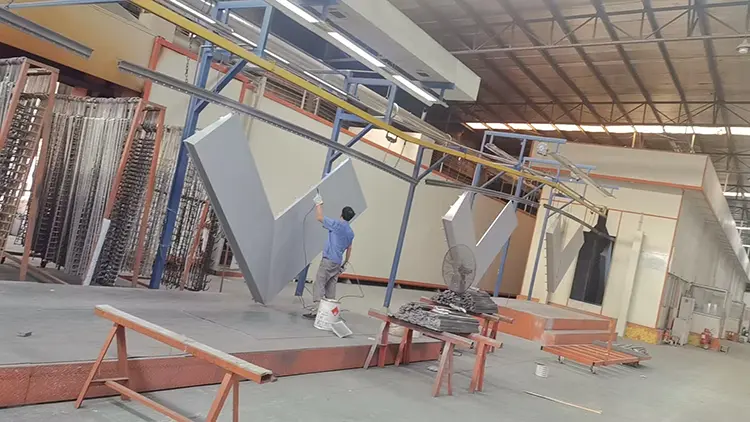
- How are coated panels protected from scratches?
- How are replacement pieces traced back to the correct revision?
The answer should describe a process, not only a machine brand.
For custom architectural panels, manufacturing errors often begin as information errors. A wrong revision, unclear visible-face mark, missing opening, or reversed fold can waste more time than the cutting operation itself.
Compare quotations on the same scope
Two square-meter prices are not comparable until you know what each one includes.
Use a simple scope sheet:
| Quote item | Supplier A | Supplier B | Supplier C |
|---|---|---|---|
| Material and stated thickness | |||
| Panel size and quantity basis | |||
| Folded edges | |||
| Stiffeners, brackets, or hangers | |||
| Perforation, curves, or welding | |||
| Surface finish and color approval | |||
| Shop drawing or drawing review scope | |||
| Panel labeling | |||
| Protective film and packing | |||
| Delivery term and destination | |||
| Replacement-piece procedure |
A low quote may be valid if the design is simple and the factory is efficient. It becomes risky when the price is low because reinforcement, finishing details, packing, or drawing work have been left out.
For more detail on what changes a custom panel quote, see Thick Aluminum Panel Price per Square Meter.
Check quality where problems actually occur
Do not ask only, "Do you have quality control?" Ask what is checked and when.
Before surface treatment
The factory can check:
- overall length, width, diagonal, and folded edge dimensions;
- hole size, spacing, pattern direction, and edge distance for perforated panels;
- curved shape against the drawing or template;
- welded and ground areas;
- stiffener location and attachment;
- brackets, hangers, and fixing details;
- visible-face direction and panel code.
Many geometry problems are easier to correct before coating.
After surface treatment
The checks shift to:
- color and gloss against the approved reference;
- scratches, dents, coating marks, or contamination;
- coverage at returns and difficult corners;
- batch consistency;
- label readability;
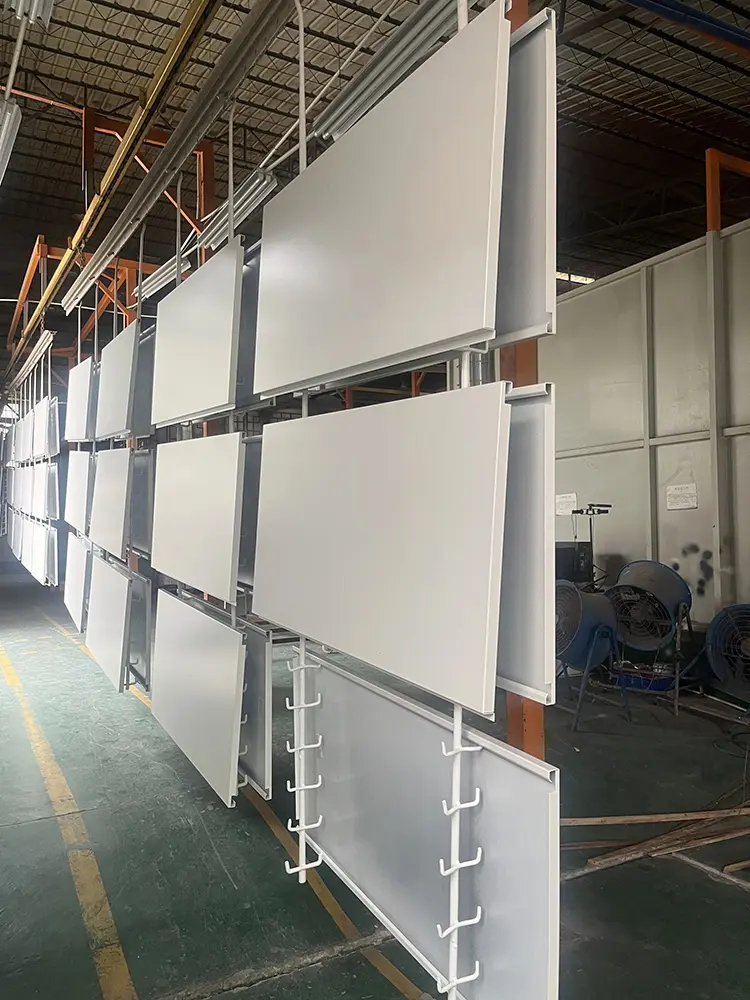
- protection between finished surfaces.
Before shipment
The final check should connect the panel to the project:
- Does the panel code match the drawing and packing list?
- Are small accessories identified?
- Are finished faces separated and protected?
- Can the site team find the first required panels without unloading everything?
- Is the crate or frame suitable for the transport route and handling method?
Use a weighted score instead of choosing by impression
The following scorecard gives a procurement team a more consistent way to compare suppliers. Change the weights if your project has a special priority.
| Evaluation area | Suggested weight | What a strong score means |
|---|---|---|
| Drawing review and technical questions | 20 | Risks are identified before pricing and production |
| Relevant fabrication capability | 15 | The factory can show similar current work and explain the process |
| Sample and finish control | 15 | Approval reference, batch control, and change rules are clear |
| Quote completeness | 15 | The scope can be compared line by line |
| Dimensional and surface QC | 15 | Inspection points and responsibilities are defined |
| Panel numbering and packing | 10 | Delivery supports site installation instead of creating confusion |
| Communication and revision control | 5 | Questions and drawing changes reach the correct people |
| Commercial fit | 5 | Payment, delivery terms, and order size suit the project |
| Total | 100 |
Price still matters, but it should sit beside technical and delivery risk. A supplier that saves a small amount at purchase but causes sorting, rework, or replacement on site may not be the lower-cost option.
Red flags before you place the order
Pause and clarify the scope if you see any of these:
- the manufacturer prices a complex drawing immediately but asks no technical questions;
- the proposed thickness or finish changes without explanation;
- the factory cannot show how panel codes follow drawing revisions;
- a sample is approved verbally with no retained reference;
- coating, reinforcement, brackets, or packing are described as "standard" but not defined;
- the quotation excludes key items that other suppliers include;
- the supplier promises that every shape is easy;
- current production evidence is unavailable, while the website shows only attractive project images;
- responsibility for replacement pieces is unclear.
One red flag does not automatically disqualify a supplier. Several unresolved red flags usually mean the buyer is accepting uncertainty rather than buying a clearly defined product.
When another sourcing route may be better
A custom aluminum panel factory is not the right answer for every order.
A local stockist or distributor may be more practical when you need a small quantity of standard, unprocessed sheet quickly. A proprietary system supplier may be required when the consultant specifies a tested complete system with named components. A local fabricator may also be easier for urgent site measurements or small replacement pieces.
Use a custom manufacturer when the project needs controlled fabrication, repeated panel codes, special shapes, perforation, folded returns, finish coordination, export packing, or a structured production batch. Buyers comparing this route can also review Likton’s aluminum curtain wall panel manufacturer guide and exterior aluminum wall panel information before preparing the RFQ.
How Likton supports supplier verification
Likton’s useful role starts with the drawings. The Foshan workshop can review panel size, joint direction, folded edges, fixing points, hole patterns, visible faces, and reinforcement needs before fabrication.
Production may involve cutting, CNC machining, punching, bending, welding, grinding, stiffener or hanger assembly, surface treatment, and final packing, depending on the approved panel design. That process is relevant to buyers because each step creates a different inspection point.
For a supplier comparison, ask Likton for the same evidence you request from other factories: drawing comments, a defined sample, a clear quote scope, relevant production images, quality checkpoints, panel numbering, and packing details. A fair comparison is more useful than a sales claim.
RFQ checklist for custom aluminum panels
Send the same information to every shortlisted supplier:
- project location and building type;
- elevation drawings and representative panel details;
- panel schedule or estimated quantity;
- specified material and thickness, if already decided;
- flat, curved, perforated, welded, or irregular shapes;
- folded edge, stiffener, bracket, or hanger requirements;
- surface finish, color code, gloss, and reference sample;
- visible-face and joint requirements;
- installation system or fixing concept, if available;
- inspection, mock-up, or document requirements;
- panel numbering and packing sequence;
- delivery destination and transport conditions;
- required quotation breakdown and exclusions.
When all suppliers receive the same brief, price and capability differences become much easier to understand.
FAQ
Which aluminum panel manufacturer is better?
The better manufacturer is the one that fits the project’s actual fabrication, finish, documentation, packing, and communication needs. Compare evidence against the same RFQ instead of relying on a general "best manufacturer" claim.
Should I choose the manufacturer with the lowest square-meter price?
Not until the scopes are equal. Check whether the price includes folded edges, reinforcement, special fabrication, finish control, labels, packing, and delivery terms.
How can I verify a factory without visiting it?
Ask for a review of one representative drawing, current photos or video of relevant work, a sample procedure, inspection checkpoints, panel-numbering method, and packing details. A third-party inspection can also be considered when the project requires it.
Is a color sample enough before production?
It may be enough for a simple finish decision, but not for every custom panel. A representative fabricated sample can also reveal fold, perforation, welding, corner, and edge-quality issues.
What should a manufacturer check on my drawings?
Useful checks include panel dimensions, joint layout, folded edge depth, fixing points, stiffeners, visible faces, hole pattern, edge distance, curves, welded corners, finish, and panel codes.
How many manufacturers should I compare?
There is no fixed number. Compare enough qualified suppliers to understand the market and the technical differences, but use the same RFQ and scorecard so the review stays manageable.
What evidence should be agreed before the deposit or purchase order?
Agree the drawing revision, quotation scope, material and finish, approval sample, inspection requirements, packing method, panel codes, delivery term, and method for handling changes or replacement pieces.
A practical final decision
Do not ask a manufacturer to prove that it is "the best." Ask it to prove that your project information can move from drawing review to fabrication, inspection, labeling, packing, and delivery without losing control.
If you are preparing a supplier comparison, send Likton the same representative drawings and RFQ used for the other candidates. The team can review the fabrication details and return a defined scope for comparison.