Short answer: perforated aluminum panels are aluminum sheets with round holes, slots, or custom patterns. They are used on facades, curtain walls, parking garages, sunshades, balcony screens, ceilings, and decorative walls. For a real project, the key is not only the pattern. You also need the right open area, thickness, coating, stiffeners, and factory production control.
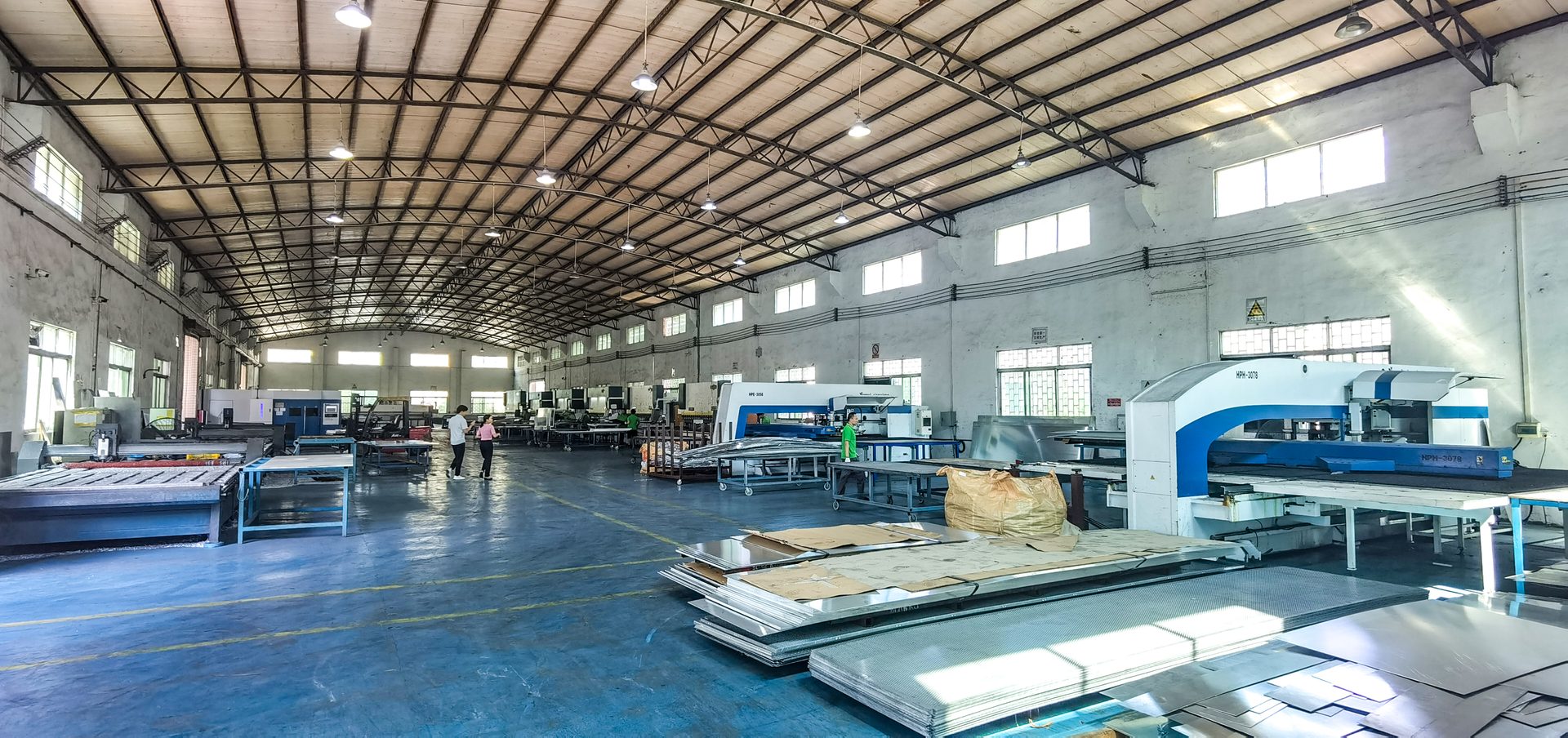
This guide explains perforated aluminum panels in simple language, and also shows how Likton produces custom perforated facade panels in our Foshan workshop.
What Are Perforated Aluminum Panels?
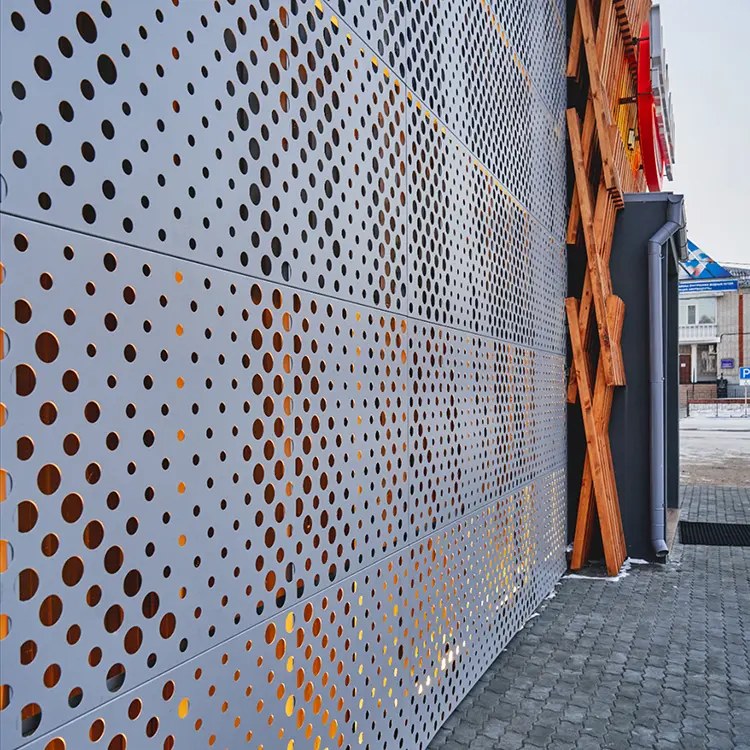
A perforated aluminum panel is an aluminum sheet with holes punched or cut into the surface. The holes can be round, square, slotted, hexagonal, gradient, or custom-designed. After perforation, the panel can be bent, reinforced, coated, inspected, packed, and installed as part of an exterior facade or interior design system.
| Item | Common Choice | Why It Matters |
|---|---|---|
| Material | Solid aluminum sheet | Lightweight, corrosion-resistant, and suitable for exterior use |
| Thickness | 2.0 mm, 2.5 mm, 3.0 mm | Affects flatness, strength, wind resistance, and cost |
| Hole pattern | Round, square, slotted, custom | Controls appearance, light, ventilation, and privacy |
| Open area | 20% to 45% for many facade projects | Higher open area gives more airflow, but lowers stiffness |
| Finish | PVDF, powder coating, anodized finish | Controls color stability and outdoor durability |
Why Buyers Choose Likton for Perforated Aluminum Panels
Perforated panels look simple, but production is easy to get wrong. If the hole pattern is not accurate, if the panel is too thin, or if the coating is not suitable for outdoor use, the final facade can show waves, color difference, weak edges, or installation trouble.
Likton’s advantage is that we combine facade design support with real workshop production. We can help with pattern review, open-area suggestions, CNC punching, bending, coating, stiffener details, QC, and export packing.
| Likton Advantage | What It Means for Your Project |
|---|---|
| Custom perforation patterns | Round holes, slots, gradient patterns, and project-specific decorative designs can be made from drawings |
| CNC punching and machining | Better consistency when many panels need the same pattern and aligned joints |
| Panel forming capability | Panels can be folded, curved, reinforced, and prepared for facade installation |
| PVDF coating support | Better color and weather resistance for exterior facade applications |
| Drawing review before production | We check hole margins, folding edges, fixing points, and panel size before mass production |
| Export packing experience | Finished coated panels are protected against scratches, bending, and corner damage during shipping |
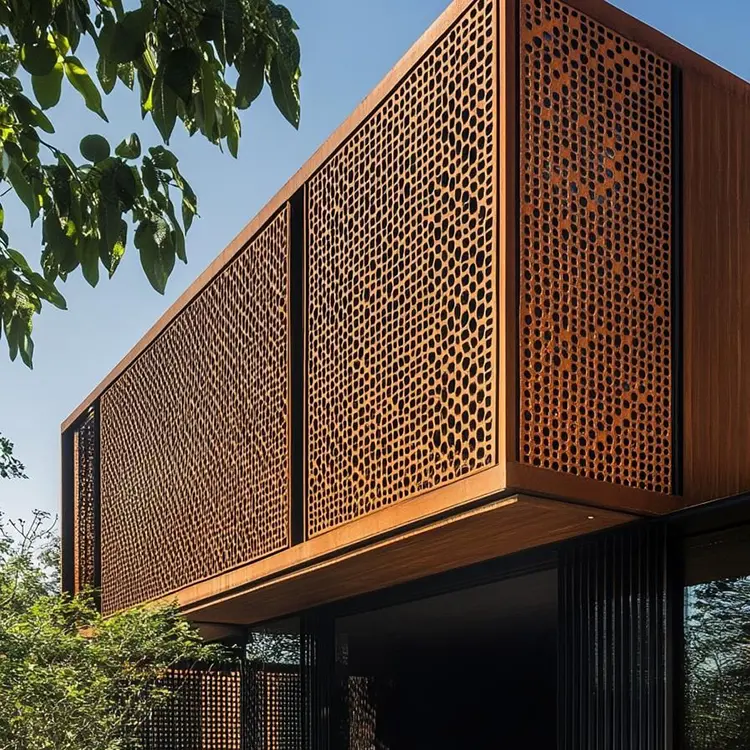
Where Are Perforated Aluminum Panels Used?
Perforated aluminum panels are popular because one panel can solve several needs at the same time. It can decorate the facade, allow airflow, reduce direct sunlight, create privacy, and hide equipment or parking areas.
- Commercial building facades: office buildings, shopping malls, hotels, and mixed-use projects.
- Parking garage screens: ventilation is needed, but the exterior still needs a clean appearance.
- Sunshade panels: perforated screens reduce direct sunlight while keeping some natural light.
- Balcony and corridor screens: useful when privacy and airflow are both important.
- Transport buildings: stations, airports, bus terminals, and public service buildings.
- Interior ceilings and walls: decorative panels, acoustic backing systems, and feature walls.
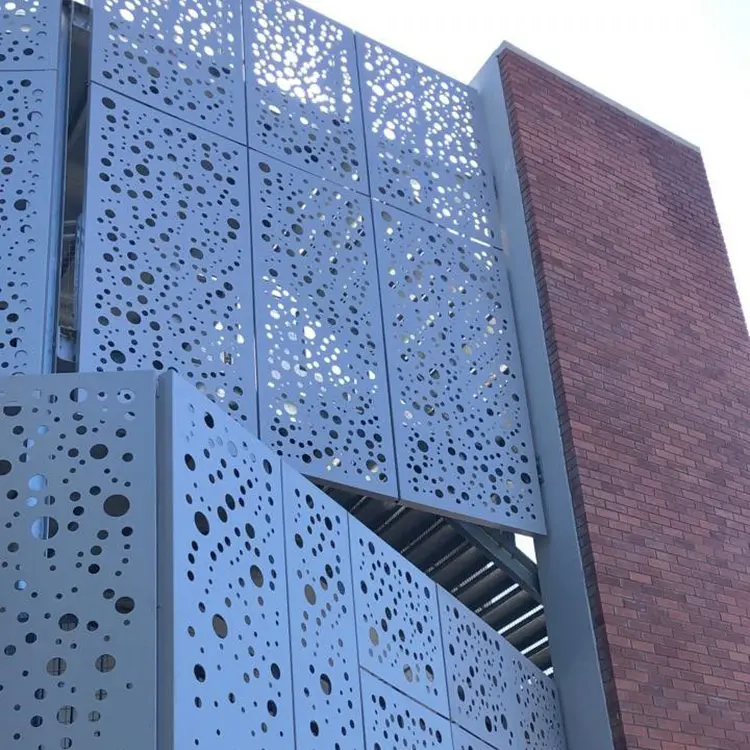
How to Choose the Hole Pattern
The hole pattern decides how the building looks and how the panel performs. Do not choose a pattern only from a small sample. A pattern that looks good in your hand may look too busy, too dark, or too weak when installed on a large facade.
| Pattern Type | Best For | Buyer Tip |
|---|---|---|
| Round holes | Modern facades, parking garage screens, general exterior use | The safest and most common option for large projects |
| Square holes | More geometric architectural appearance | Check corner quality after punching or cutting |
| Slotted holes | Linear design, ventilation, and sunshade effects | Horizontal and vertical slots create very different looks |
| Gradient perforation | Landmark buildings and custom facade design | Needs careful CAD drawing and CNC programming |
| Custom graphic pattern | Museums, cultural buildings, branded projects | Approve a sample panel before mass production |
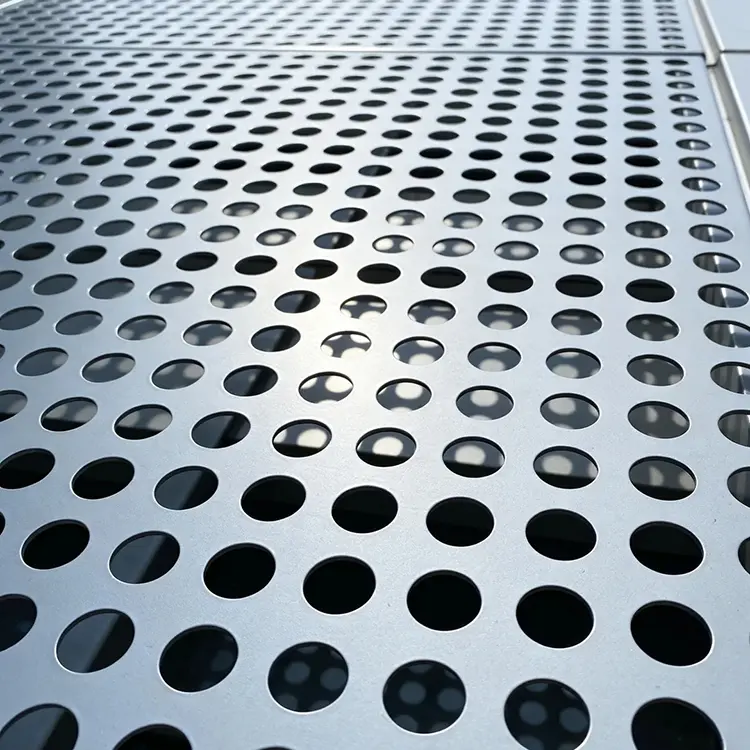
What Is Open Area?
Open area means how much of the panel surface is holes. If a panel has 35% open area, then 35% of the surface is empty space and 65% is aluminum.
This number affects ventilation, sunlight, privacy, and strength at the same time. A higher open area gives more airflow and light, but the panel becomes less stiff. This is why open area should be checked together with thickness and reinforcement.
| Open Area | Typical Use | What to Watch |
|---|---|---|
| 10% to 20% | Privacy screens and decorative facade layers | Less airflow and less light |
| 20% to 35% | General facade panels and sunshade screens | Balanced choice for many projects |
| 35% to 45% | Parking garages and ventilation screens | Panel strength and fixing method need closer review |
| Above 45% | Special ventilation or design effect | Often needs thicker aluminum or extra reinforcement |
How Likton Produces Custom Perforated Panels
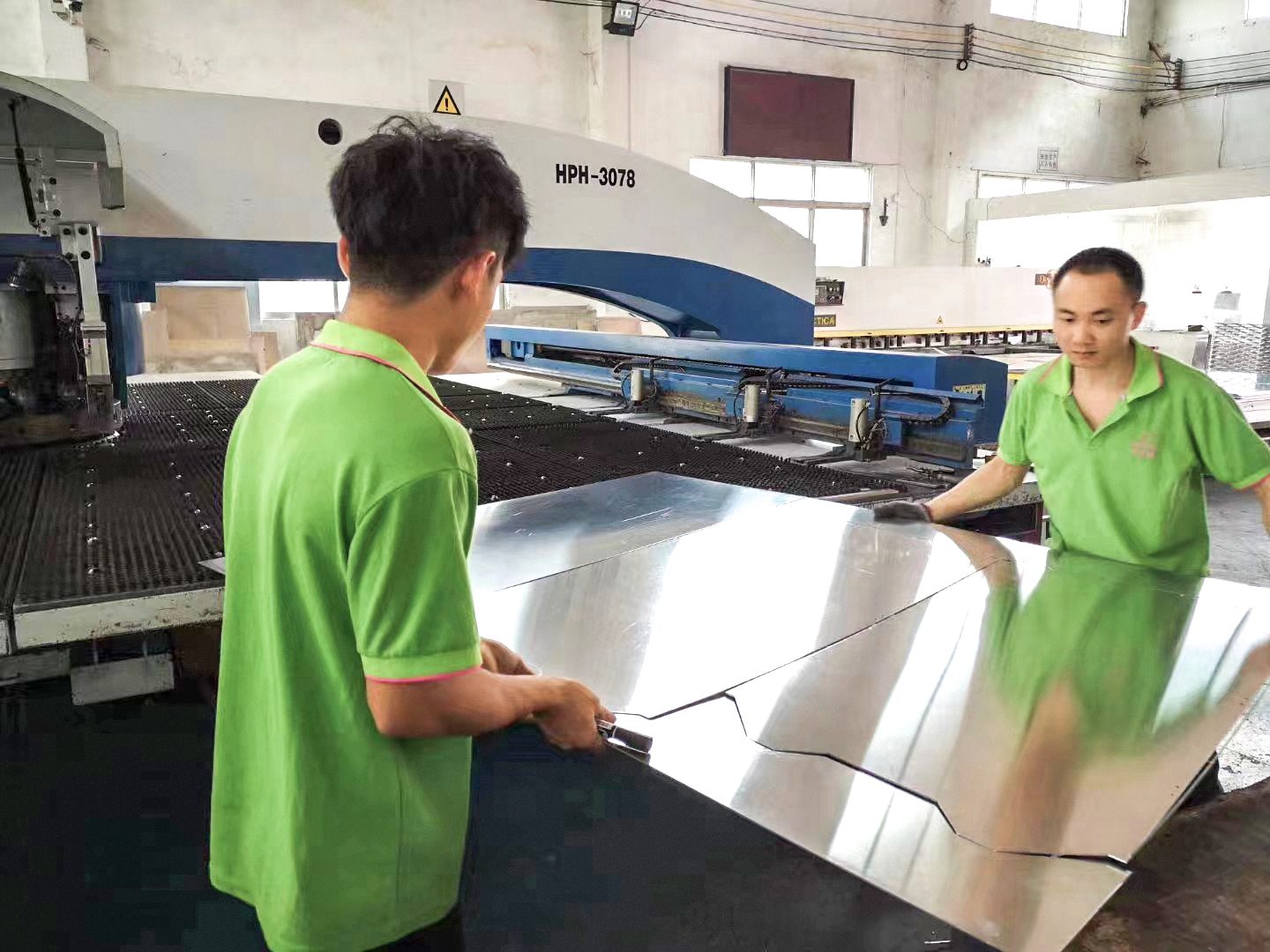
For custom perforated aluminum facade panels, production should start from drawings, not from guessing. We need to check panel size, hole size, pitch, edge distance, folding edge, fixing points, and coating requirement before production.
- Drawing review: check hole pattern, margin distance, folding edge, and installation direction.
- Material preparation: choose aluminum thickness and alloy according to project use.
- CNC punching or machining: make round holes, slots, or custom patterns accurately.
- Deburring and surface treatment: remove sharp edges and prepare the surface for coating.
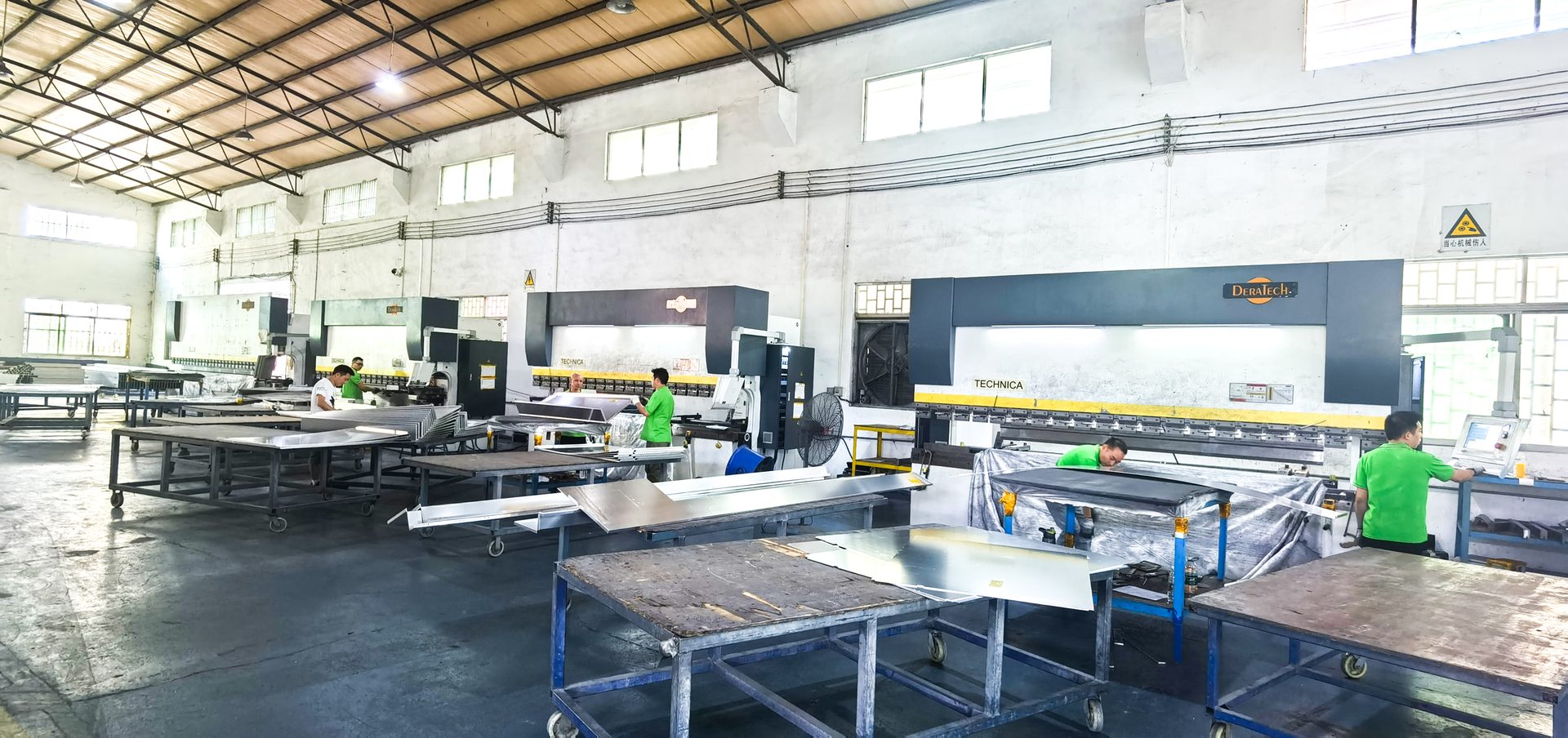
- Bending and reinforcement: fold edges and add stiffeners if needed.
- Coating: apply PVDF, powder coating, anodized finish, or another specified finish.
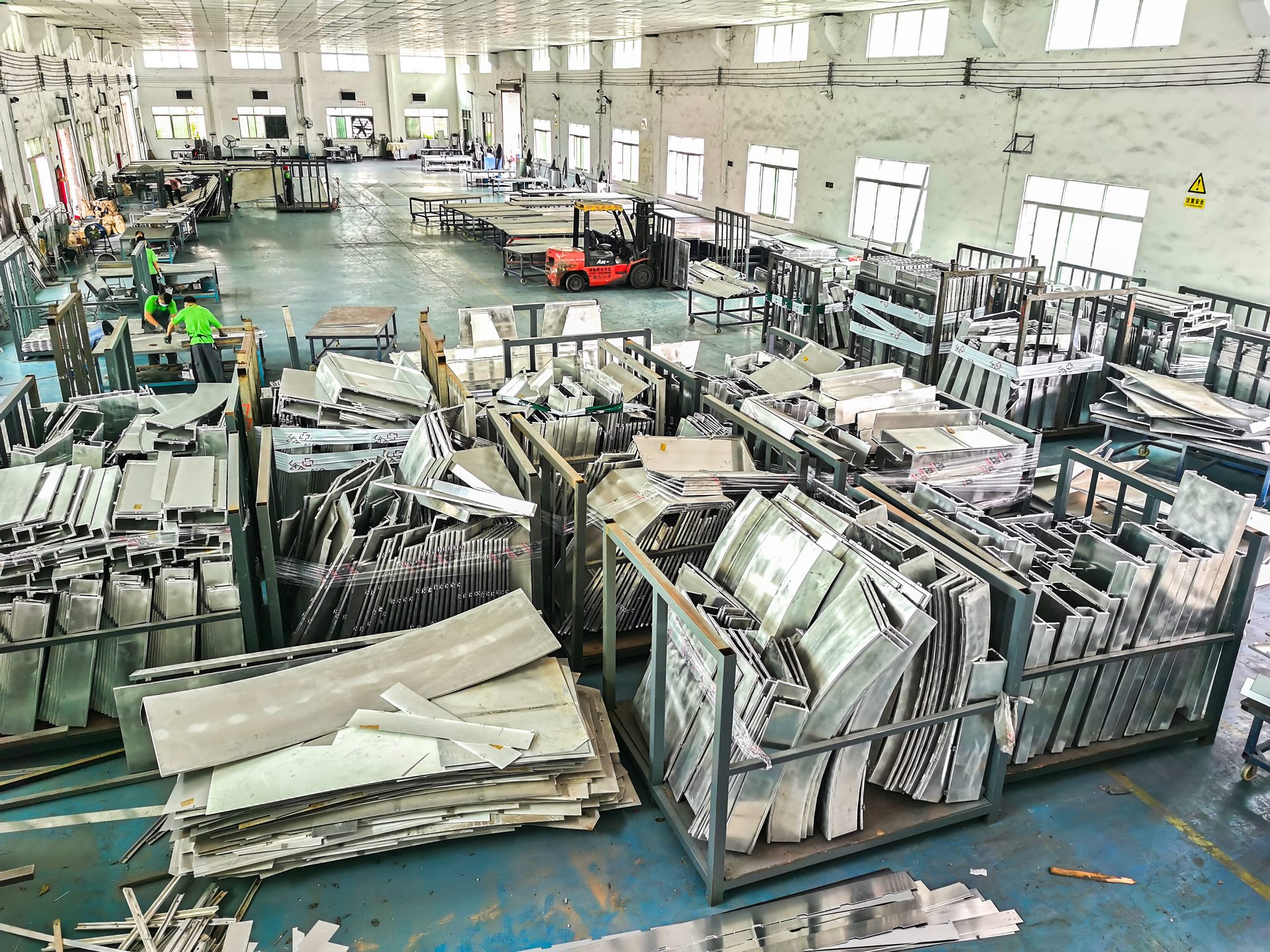
- Inspection and packing: check size, pattern, surface, color, and packing protection.
How Thick Should Perforated Aluminum Panels Be?
Perforation removes part of the metal, so the panel becomes less stiff than a solid sheet of the same thickness. This is why thickness, edge folding, and stiffeners are important for exterior projects.
| Thickness | Common Use | Comment |
|---|---|---|
| 1.5 mm | Interior decorative panels or small screens | Usually not the first choice for main exterior facade areas |
| 2.0 mm | Small exterior panels, ceilings, low wind-load areas | Works when panel size and open area are controlled |
| 2.5 mm | Common exterior perforated facade panels | A practical balance between cost and stiffness |
| 3.0 mm | Large panels, high-rise buildings, higher wind-load zones | Better flatness and strength, but higher cost |
| 4.0 mm+ | Special large-format or heavy-duty screens | Used when engineering calculation requires it |
Which Finish Should You Choose?
For exterior perforated aluminum cladding, the finish must handle sunlight, rain, dust, and cleaning. The right finish depends on project location and expected service life.
| Finish | Best Use | Notes |
|---|---|---|
| PVDF coating | Long-term exterior facades, coastal or high-UV areas | Best choice when color stability matters |
| Powder coating | Interior panels, ceilings, protected exterior areas | Good color options, but check exterior warranty |
| Anodized finish | Metallic natural aluminum appearance | Good for premium architectural design, but color range is limited |
| Wood grain or stone effect | Decorative screens and themed projects | Ask for outdoor durability information before choosing |
What Affects the Price?
Perforated aluminum panels are custom products, so price depends on more than square meters. When you compare quotations, make sure each supplier is quoting the same specification.
| Cost Factor | Why It Changes the Price | Buyer Tip |
|---|---|---|
| Panel thickness | Thicker aluminum uses more material | Compare 2.5 mm with 2.5 mm, not with 2.0 mm |
| Open area | High open area may need thicker sheet or more support | Ask if reinforcement is included |
| Hole pattern | Custom patterns need more programming and production time | Send CAD drawings if available |
| Surface finish | PVDF, metallic, and special colors cost more than simple powder coating | Confirm coating type and color code |
| Panel shape | Flat panels are easier; curved and folded panels cost more | Provide elevation and section drawings early |
| Packing and shipping | Export panels need strong protection to avoid scratches and bending | Check crate method before shipment |
Quality Details Likton Checks
For perforated facade panels, quality control is more than checking if the holes exist. The full panel must fit the installation system and survive shipping.
- Pattern accuracy: hole size, hole spacing, and alignment between panels.
- Edge distance: holes should not be too close to the folded edge or fixing area.
- Panel flatness: high open area or large panels may need thicker sheet or stiffeners.
- Surface quality: deburring and surface treatment before coating.
- Coating consistency: color and gloss should be controlled across batches.
- Packing protection: finished panels need film, corner protection, and strong crates.
Common Mistakes to Avoid
- Choosing only by a beautiful reference picture.
- Not confirming hole size, pitch, and open area.
- Making the open area too high without checking strength.
- Using interior-grade coating for outdoor facades.
- Forgetting edge distance near folds and fixing points.
- Skipping sample approval for custom patterns.
- Comparing quotations without checking thickness, coating, stiffeners, and packing.
What to Send for a Useful Quotation
If you want a serious quotation, send more than only total square meters. The more complete your information is, the faster the supplier can give a realistic price.
- Project location and building type
- Total panel area and approximate quantity
- Panel size range or elevation drawings
- Hole shape, hole size, pitch, and open area if known
- Required aluminum thickness and alloy
- Finish requirement, such as PVDF, powder coating, anodized, or wood grain
- Color code, such as RAL, Pantone, or physical sample
- Wind-load, fire, or coating documents required by the project
- Destination country and target delivery date
FAQ
Can Likton make custom perforated patterns?
Yes. We can make round holes, slotted holes, gradient patterns, and custom graphic patterns according to drawings. For special patterns, we recommend sample approval before mass production.
Are perforated aluminum panels suitable for exterior facades?
Yes. They are widely used for facades, sunshades, parking garage screens, and curtain wall cladding. For outdoor use, choose the correct thickness, open area, coating, and fixing system.
Can perforated panels provide ventilation?
Yes. Ventilation depends mainly on open area and hole layout. Parking garages and equipment screens usually need a higher open area than decorative facade screens.
Which coating is best for outdoor perforated aluminum panels?
PVDF coating is usually the safer choice for long-term exterior use, especially in strong sunlight, humid areas, coastal locations, or polluted cities.
Do perforated panels need back stiffeners?
Sometimes. Large panels, high open area, high wind-load projects, and high-rise facades may need folded edges and back stiffeners to improve flatness and strength.
Conclusion
Perforated aluminum panels are not only decorative panels. When specified correctly, they can improve facade appearance, airflow, shading, privacy, and long-term performance. The most important choices are hole pattern, open area, thickness, coating, reinforcement, and installation method.
Likton can support custom perforated aluminum facade panels from drawing review to CNC punching, bending, coating, inspection, and export packing. If you have a project drawing or pattern idea, send it to us and we can help check the specification before quotation.
Need Custom Perforated Aluminum Panels?
Send your drawings, pattern idea, panel size, coating requirement, and project location. Likton can help check the specification and prepare a practical quotation.