Metal Cladding for Extreme Climates: Durability and Design Solutions
Metal cladding for extreme climates should be chosen by risk, not by appearance alone. Coastal salt, desert heat, high UV, sand, heavy rain, freeze-thaw cycles, industrial pollution, and high wind can all damage a facade if the panel, coating, fasteners, drainage, and wall build-up are not matched to the site.
The practical question is not “is metal cladding durable?” The better question is: which metal cladding system can handle this climate, this building height, this maintenance plan, and this approval route without early fading, corrosion, oil canning, water problems, or loose panels?
1. Start With the Climate Problem
Extreme climate is not one single condition. A coastal hotel, a desert airport, a cold mountain station, and an industrial warehouse need different details. Before choosing panel thickness or color, define what the facade has to resist.
| Site condition | Main risk | What to check in the cladding system |
|---|---|---|
| Coastal salt air | Corrosion at edges, fasteners, brackets, and cut points. | Coating grade, compatible fasteners, isolation between metals, drainage, cleaning plan. |
| Hot desert or strong sun | Color fading, thermal expansion, sand abrasion, heat gain. | PVDF or suitable exterior coating, lighter colors, expansion joints, perforated screens, ventilation cavity. |
| Cold and wet climate | Condensation, ice, freeze-thaw movement, water trapped in joints. | Ventilated cavity, insulation, vapor strategy, open drainage path, joint design. |
| High wind zone | Panel deflection, fastener stress, noise, loose panels. | Wind load data, panel size, stiffeners, bracket spacing, anchor design. |
| Industrial or polluted city | Chemical deposits, staining, coating damage, difficult cleaning. | Coating resistance, cleaning method, avoid dirt traps, maintenance access. |
| Heavy rain / typhoon region | Water pressure, leakage at joints, damaged sealants. | Rainscreen logic, weep holes, overlap direction, sealant compatibility, bracket corrosion. |
This is why a general square meter price is not enough. A facade that works inland may fail faster near the sea or in a high-sun area if the details are copied without adjustment.
2. Common Problems With Prefinished Facades in Harsh Climates
GSC data shows people are searching for problems with prefinished facades in harsh climates. The concern is valid. Prefinished panels can work well, but only when the finish and detailing match the site. The finish can be strong; the weak point is often a cut edge, wrong fastener, poor drainage, or uncontrolled substitution.
| Problem | Likely cause | How to reduce the risk |
|---|---|---|
| White powder or staining near joints | Salt, pollution, trapped water, or incompatible metals. | Use compatible fasteners, isolate dissimilar metals, keep water moving out, plan cleaning. |
| Color fading on sunny elevations | Strong UV, weak coating, dark color, poor batch control. | Choose a suitable exterior coating, confirm color sample, check warranty scope and orientation. |
| Oil canning or wavy panels | Large panels, thin sheet, poor stiffener layout, thermal stress. | Review panel size, thickness, stiffeners, fixing points, and expansion allowance. |
| Loose or noisy panels | High wind, weak subframe, incorrect screw spacing, no movement control. | Use wind-load design, correct anchors, tested brackets, and installation inspection. |
| Water marks and dirt streaks | No drip edge, poor slope, closed drainage, dirt traps. | Design weep paths, drip edges, open joints, and cleaning access. |
| Early corrosion at cut edges | Exposed edges, damaged coating, salt accumulation. | Protect edges, avoid field cutting where possible, repair damaged coating, rinse salt deposits. |
3. Which Metal Cladding Material Works in Extreme Climates?
Aluminum, stainless steel, zinc, galvanized steel, and composite panels can all appear in harsh-climate projects. The right choice depends on risk, weight, budget, design, and approval requirements. For many commercial exterior walls, aluminum is chosen because it is light, corrosion resistant, easy to fabricate, and suitable for perforated, curved, folded, and cassette panels.
| Material option | Where it can work well | What to check |
|---|---|---|
| Solid aluminum panels | Coastal commercial buildings, malls, hotels, schools, transport hubs, custom facades. | Alloy, thickness, coating, edge protection, stiffeners, and fastener compatibility. |
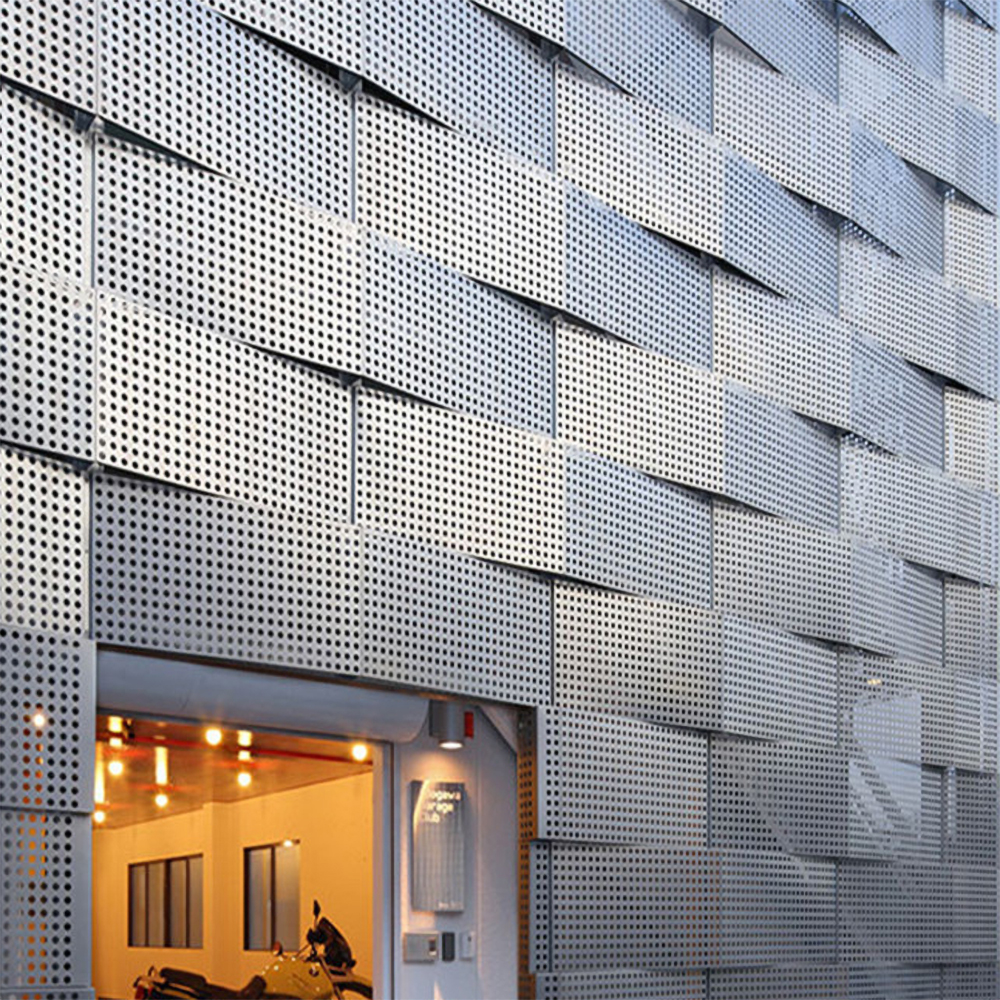
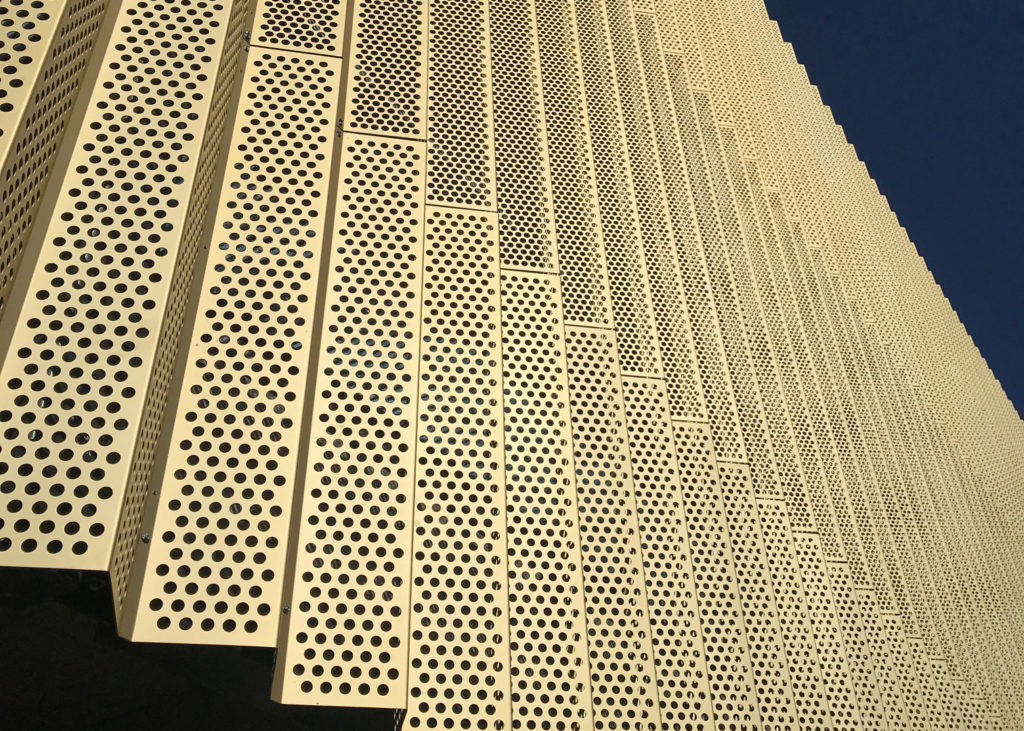
| Perforated aluminum panels | Hot climates, parking garages, screens, ventilation areas, sunshade zones. | Open area ratio, wind load, panel stiffness, bracket spacing, and cleaning access. |
| Aluminum composite panels | Low-rise retail, signage, controlled exterior zones where code allows. | Core type, fire rules, edge sealing, delamination risk, and coating grade. |
| Stainless steel panels | Severe corrosion areas, public zones, high-impact areas. | Grade selection, cost, surface finish, fingerprint risk, and galvanic contact. |
| Galvanized or coated steel | Industrial buildings and some budget exterior walls. | Cut-edge corrosion, coating thickness, scratches, fasteners, and maintenance. |
| Zinc or titanium-zinc | Architectural facades where natural patina is desired. | Runoff staining, ventilation, local climate, and compatibility with other metals. |
For a broader material comparison, see our aluminum facade materials guide. For fire questions, see aluminum facade fire resistance rating.
4. Corrosion Protection: What Actually Matters
Corrosion resistant metal facade panels are not only about the face sheet. The panel may look fine while screws, brackets, cut edges, or contact points begin to fail. In coastal and industrial environments, those small details matter.
| Area to check | Practical requirement | Common mistake |
|---|---|---|
| Coating | Use an exterior coating suitable for UV, humidity, salt, and pollution. | Choosing a color by appearance only and ignoring exposure. |
| Fasteners | Use compatible stainless or approved coated fasteners for the environment. | Using ordinary screws that corrode before the panel does. |
| Dissimilar metals | Separate aluminum from incompatible metals when moisture is present. | Allowing direct contact that creates galvanic corrosion. |
| Cut edges and holes | Protect exposed areas, avoid rough field cutting, and repair damaged coating. | Leaving cut edges untreated in salty air. |
| Drainage | Let water leave the cavity and joint areas quickly. | Trapping water behind panels or at horizontal ledges. |
| Cleaning plan | Plan periodic rinsing in coastal or polluted locations. | Assuming rain alone will remove salt and dirt. |
5. Is Metal Cladding Hot?
Metal can feel hot in direct sun, especially dark-colored panels. But the indoor comfort result depends on the whole wall system, not only the metal surface. Color, solar orientation, ventilated cavity, insulation, air gap, shading panels, and thermal breaks all matter.
In hot climates, metal cladding can help the building when it is used as a rainscreen, shade screen, louver, or perforated facade layer. The metal surface may heat up, but a ventilated cavity can help move heat away from the inner wall. Light colors and suitable coatings can also reduce heat absorption.
| Heat question | Simple answer | Design action |
|---|---|---|
| Does metal cladding make a building hot? | It can if poorly designed, especially with dark colors and no insulation. | Use insulation, ventilation, lighter colors, shade panels, and thermal breaks where needed. |
| Can metal cladding improve energy efficiency? | Yes, when it is part of a building envelope system. | Combine cladding with insulation, air cavity, sunshade, and controlled joints. |
| Are perforated panels useful in hot climates? | Yes. They can shade glass and reduce direct solar exposure. | Review open area ratio, orientation, wind load, and cleaning access. |
| Do thermally broken metal facade systems matter? | They matter when heat transfer through brackets or frames affects energy performance. | Ask whether brackets, frames, and supports need thermal separation. |
6. High-Wind Load Metal Panel Design
Wind is not solved by using a thicker panel alone. A high-wind metal facade needs the right panel size, return depth, stiffener layout, bracket spacing, anchor type, subframe design, and installation control. Large panels can look clean, but they need careful deflection review.
- Panel size: larger panels need stronger support and movement allowance.
- Return depth: deeper folded edges can improve stiffness.
- Stiffeners: back stiffeners help reduce deflection and oil canning.
- Bracket spacing: spacing should follow wind-load review, not only installer habit.
- Anchors: anchor type must match the base wall material and design load.
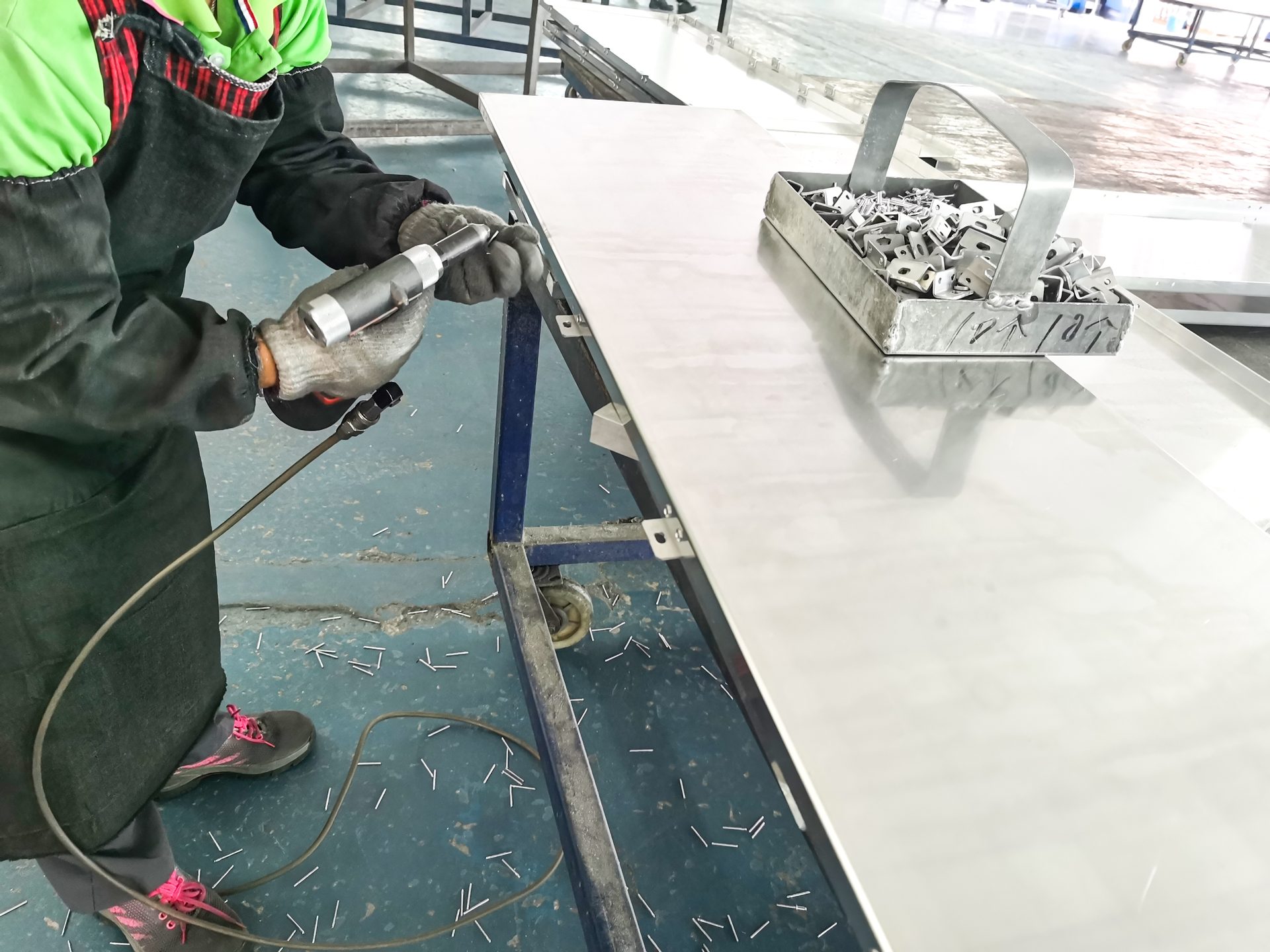
- Inspection: loose fasteners, wrong holes, and missing isolation pads should be caught before handover.
7. Detail Checklist by Climate
A useful specification should name the climate risks and the detail response. The table below can help owners, architects, and contractors check whether a quote is complete.
| Climate | Recommended focus | Ask the supplier |
|---|---|---|
| Coastal / marine | Coating, fasteners, isolation, edge protection, cleaning. | What fastener material is included? How are cut edges protected? |
| Desert / high UV | PVDF or suitable exterior coating, lighter colors, expansion joints, sand abrasion. | What coating and color warranty applies to strong UV exposure? |
| Cold / snow | Thermal movement, condensation control, drainage, freeze-thaw gaps. | How does the wall handle condensation and trapped water? |
| Typhoon / hurricane | Wind load, anchors, stiffeners, bracket spacing, panel size. | Can the quote be reviewed against project wind-load data? |
| Industrial pollution | Chemical resistance, cleaning method, avoid dirt traps. | What cleaning frequency and coating type are recommended? |
| Mixed climate | Balanced coating, drainage, thermal movement, maintainability. | Which risk is most important for this building location? |
8. What Not to Save Money On
In extreme climates, cheap details often cost more later. A lower panel price can be acceptable if the system still matches the site. It becomes risky when the quote removes the parts that protect the facade.
| Do not cut this | Why it matters |
|---|---|
| Exterior coating grade | Weak coating can fade, chalk, or fail faster in UV, salt, or pollution. |
| Compatible fasteners | Fasteners can corrode before panels and create safety or staining problems. |
| Drainage and cavity design | Trapped water increases corrosion, staining, and leakage risk. |
| Panel thickness and stiffeners | Thin, unsupported panels can wave, deflect, or make noise in wind. |
| Shop drawings | Drawings reveal bracket spacing, joints, edge details, and installation sequence. |
| Packing for export | Damaged coating before installation reduces corrosion protection. |
9. What Likton Needs for a Climate-Based Quote
If you need a practical quote for metal cladding in a harsh environment, send information about the site first. The same panel may need different coating, bracket, or packing details for Dubai, Miami, Riyadh, Sydney, London, or a coastal island project.
| Send this information | Example |
|---|---|
| Project location | Country, city, coastal or inland, desert or humid, pollution level. |
| Building type | Hotel, school, hospital, airport, office, mall, warehouse, apartment. |
| Building height and facade zone | Ground floor, podium, tower, soffit, roof edge, parking garage. |
| Drawings or photos | Elevation drawings, panel schedule, wall section, reference images. |
| Performance needs | Corrosion resistance, wind load, fire documents, insulation, thermal breaks. |
| Panel preference | Solid aluminum, perforated aluminum, ACP, honeycomb, corrugated metal. |
| Finish requirement | PVDF, powder coating, anodized, wood grain, stone texture, RAL color. |
| Delivery information | Quantity, destination port, packing method, delivery schedule. |
10. Likton Factory Support
Likton Metal manufactures aluminum facade and ceiling products in Lushi Town, Foshan, Guangdong. Our factory covers 20,000 sqm and uses 27 sets of CNC and fabrication equipment, including PRATIC PIC-CNC6500, Yawei laser cutting, and Deratech folding equipment. The production team has more than 100 members.
For harsh-environment projects, Likton can review panel type, thickness, perforation, folding depth, stiffener layout, coating, export packing, and available certificate documents before production. Products have been exported to more than 30 countries, including the USA, UK, Australia, Saudi Arabia, and the UAE.
Project documentation references include ISO 9001:2015, ISO 45001:2018, CE No. CTB25022505602 for EN 13501-1 Class A2, RoHS Compliance, and GPSR EU Authorized Representative Certificate. Final project approval should be checked against local requirements.
FAQ About Metal Cladding for Extreme Climates
What is the best metal cladding for coastal buildings?
For coastal buildings, aluminum panels with a suitable exterior coating, compatible stainless or approved fasteners, proper drainage, and edge protection are often practical. The system should also avoid direct contact between incompatible metals.
How do you prevent corrosion on metal cladding?
Use the right coating, protect cut edges, choose compatible fasteners, separate dissimilar metals, avoid trapped water, and plan regular cleaning in salty or polluted environments.
Is metal cladding too hot for desert climates?
Metal can become hot in direct sun, but a well-designed wall can still perform well. Use insulation, ventilated cavities, lighter colors, perforated screens, louvers, and thermal breaks where the building envelope requires them.
What causes prefinished facades to fail in harsh climates?
Common causes include weak coating selection, poor edge protection, wrong fasteners, trapped water, no movement allowance, large unsupported panels, and lack of cleaning in coastal or polluted areas.
How should high-wind metal panels be designed?
High-wind metal panels need wind-load data, suitable panel size, return depth, stiffeners, bracket spacing, anchor design, and installation inspection. Thickness alone does not solve wind performance.
Can metal cladding improve energy efficiency in homes or commercial buildings?
Yes, when it is part of a complete envelope system. Metal cladding can support shading, rainscreen ventilation, insulation, and weather protection, but the insulation, air cavity, thermal breaks, and joints must be designed correctly.