Understanding the Aluminum Facade Fire Resistance Rating
An aluminum facade fire resistance rating is not a simple “yes or no” label. Aluminum itself does not burn like plastic or wood, but a facade is a system. The panel, core, insulation, air cavity, brackets, fire barriers, sealants, and fixing method all affect fire safety.
If you are choosing fire resistant aluminium cladding for a commercial building, do not only ask whether the panel is aluminum. Ask what the complete wall build-up is, what standard was tested, what certificate is available, and whether the tested condition matches your project.
1. What Fire Rating Means for a Facade
People often mix three different ideas: non-combustible material, reaction to fire, and fire resistance of an assembly. They are related, but they are not the same. This is where many facade material mistakes start.
| Term | Plain meaning | Why it matters for aluminum facades |
|---|---|---|
| Non-combustible material | The material does not contribute fuel in the same way as combustible plastics, timber, or foam. | Solid aluminum sheet is metal, but the wall may still include insulation, membranes, gaskets, sealants, or composite cores. |
| Reaction to fire | How a product reacts when exposed to fire: flame spread, smoke, and burning droplets. | EN 13501-1 classes such as A1, A2, B, C, D, E, and F are commonly discussed for products. |
| Fire resistance | How long an element or assembly can keep required performance during a fire. | A facade panel alone is not the same as a tested wall assembly. The subframe and barriers matter. |
| Facade system fire test | A test for the full external wall build-up under a defined fire scenario. | This is important when the project includes combustible layers, high-rise use, or strict external wall rules. |
For buyers, the practical point is simple: a certificate for a sheet does not automatically approve your complete wall. Ask the supplier to explain exactly what the certificate covers.
2. Is Aluminum Fireproof?
Aluminum is often described as fire resistant because it is a metal and does not ignite like a combustible core. That does not mean an aluminum facade is “fireproof” in every situation. At high temperature, aluminum loses strength and can melt at about 660 C / 1220 F. In a real building fire, the facade also has joints, cavities, brackets, insulation, waterproof layers, sealants, and sometimes composite cores.
So the better question is not “is aluminum fireproof?” The better question is “does this aluminum facade system meet the fire requirement for my building type and location?”
| Common question | Short answer | What to check before buying |
|---|---|---|
| Is aluminum fire resistant? | Solid aluminum is non-combustible metal, but it is not a magic shield. | Panel thickness, alloy, coating, insulation, cavity barrier, subframe, and local code. |
| Is aluminum cladding non-combustible? | Solid aluminum cladding is generally treated very differently from plastic-core composite cladding. | Confirm whether the quote is solid aluminum panel, ACP, honeycomb, or another composite product. |
| Is ACP fire rated? | Some ACP has fire-rated mineral core; PE-core ACP is a different risk category. | Core type, test report, project height, local rules, and allowed use area. |
| Can coating make aluminum fireproof? | Coating can affect surface behavior, but it does not replace system design. | Do not accept coating claims as a substitute for material and assembly documentation. |
3. Solid Aluminum Panel vs ACP Fire Rating
Many procurement teams compare aluminum facade fire rating only by product name. This is risky because “aluminum panel” can mean very different products. A solid aluminum panel is one metal plate. ACP or ACM is a composite panel with aluminum skins and a core. The core may be PE, fire-retardant mineral, or A2-grade mineral depending on the product.
| Panel type | Fire review point | Where it may fit | Buyer warning |
|---|---|---|---|
| Solid aluminum panel | No plastic core inside the panel body; review still includes coating, insulation, cavity, and fixing system. | Public buildings, commercial facades, high-rise opaque zones, transport projects, schools, hospitals. | Do not ignore brackets, insulation, membranes, and fire stopping just because the panel is metal. |
| PE-core ACP / ACM | The core can be combustible and may be restricted in many exterior wall situations. | Low-risk signage, interiors, or controlled low-rise areas where allowed by code. | Do not use it as a simple substitute for fire rated facades. |
| FR-core ACP / ACM | Mineral-filled core can improve fire behavior, but details vary by product. | Projects where composite panel is allowed and documentation matches the specification. | Ask for core type, test standard, and whether the tested panel thickness matches your order. |
| A2 composite panel | Often selected for stricter reaction-to-fire requirements. | Regulated commercial projects when composite panel is accepted by the project authority. | Still check the complete wall assembly and installation details. |
| Aluminum honeycomb panel | Fire behavior depends on face sheet, core, adhesive, edge closure, and assembly. | Large flat modules, transport hubs, airports, interior and exterior premium zones. | Do not assume honeycomb automatically equals non-combustible assembly. |
If the project is mainly comparing ACP and ACM names, read our related guide: ACP vs ACM. If the project is comparing system types, see aluminum cladding systems.
4. Common Fire Standards Buyers See in Facade Projects
Different markets use different fire test routes. A supplier should not guess which one you need. The architect, facade consultant, fire engineer, or local authority should confirm the required standard. The supplier should then provide matching documents when available.
| Standard or route | What it usually tells you | Buyer note |
|---|---|---|
| EN 13501-1 | Reaction to fire classification for construction products, often shown with classes such as A1, A2, B and smoke/droplet notes such as s1, d0. | Useful for product classification. Check whether the certificate applies to the exact product and thickness. |
| NFPA 285 | Fire performance of exterior wall assemblies containing combustible components. | It is an assembly test. A single panel should not be casually called “NFPA 285 approved” without the tested wall build-up. |
| ASTM E84 | Surface burning characteristics, including flame spread and smoke developed indexes. | Useful information, but not the same as full exterior wall assembly approval. |
| BS 8414 | Large-scale external wall fire performance test method. | The test method is used with separate assessment or classification criteria. Ask what pass criteria were used. |
| Local building code | The actual rule your project must pass. | This is the final decision point. Standards support approval, but local authority requirements control the project. |
Likton can provide documentation references including ISO 9001:2015, ISO 45001:2018, CE No. CTB25022505602 for EN 13501-1 Class A2, RoHS Compliance, and GPSR EU Authorized Representative Certificate. The project team should confirm which document is required for the approval route.
5. Where Fire Risk Usually Hides
Many facade problems do not come from the visible panel alone. They come from hidden layers, incomplete fire stopping, poor substitution, or unclear quote scope. A cheaper quote can become expensive if it cannot pass review later.
| Hidden item | Why it matters | Question to ask |
|---|---|---|
| Core material | Composite cores can change fire behavior greatly. | Is it PE, FR mineral, A2 mineral, honeycomb, or solid aluminum? |
| Insulation behind panel | Combustible insulation can affect vertical fire spread. | What insulation is specified, and is it accepted for the building height? |
| Air cavity | Open cavities can allow hot gases and flame movement. | Where are cavity barriers and fire stops shown in the drawing? |
| Membrane and waterproof layer | Some membranes can be combustible. | Is the membrane part of the tested assembly or local review? |
| Sealants and gaskets | Small components can still matter at joints and openings. | Are sealants compatible with the fire requirement and weather requirement? |
| Subframe and brackets | Heat can affect support, movement, and panel retention. | What material, spacing, anchor type, and fire stopping detail are used? |
6. How to Choose Fire Resistant Aluminium Cladding
A practical selection process starts with the project risk. A one-story storefront, a hotel tower, a hospital, and an airport facade do not have the same fire approval burden. Do not choose the panel first and ask the fire question later.
- Confirm building type and height. High-rise and public buildings usually need more careful review.
- Confirm the local code route. Ask the architect or fire engineer whether EN, ASTM, NFPA, BS, or another local route is required.
- Choose the panel family. Decide whether solid aluminum panel, A2 composite panel, FR ACP, honeycomb panel, or another material is allowed.
- Check the full assembly. Review insulation, cavity, brackets, sealants, barriers, and subframe, not only the panel face.
- Ask for matching documents. The report should match product type, thickness, finish, and the intended use as closely as possible.
- Keep substitutions controlled. A cheaper substitute can break the tested condition or delay approval.
7. Quote Checklist for Fire Rated Facades
When you request an aluminum fire resistant cladding quote, send enough information for the supplier to price the right system. If the supplier quotes only a square meter price, you may be comparing incomplete scopes.
| Send to supplier | Why it affects fire rating and price |
|---|---|
| Building location and project type | Different markets and building types require different document routes. |
| Building height and facade zone | Ground floor, podium, tower, soffit, and high-rise zones may have different requirements. |
| Required standard or class | EN 13501-1 Class A2, NFPA 285 assembly route, BS 8414 route, or local code requirement should be clear. |
| Panel type and thickness | Solid aluminum, ACP, A2 composite, honeycomb, and perforated panel have different cost and review paths. |
| Insulation and backing wall | Fire review often depends on what is behind the panel. |
| Drawings and panel schedule | Openings, corners, joints, cavity barriers, and fixing details affect fabrication and risk. |
| Finish and coating | PVDF, powder coating, and special finishes affect price, lead time, and documentation. |
| Destination and packing requirement | Export crates, protection, and delivery terms affect total project cost. |
8. What Likton Can Support
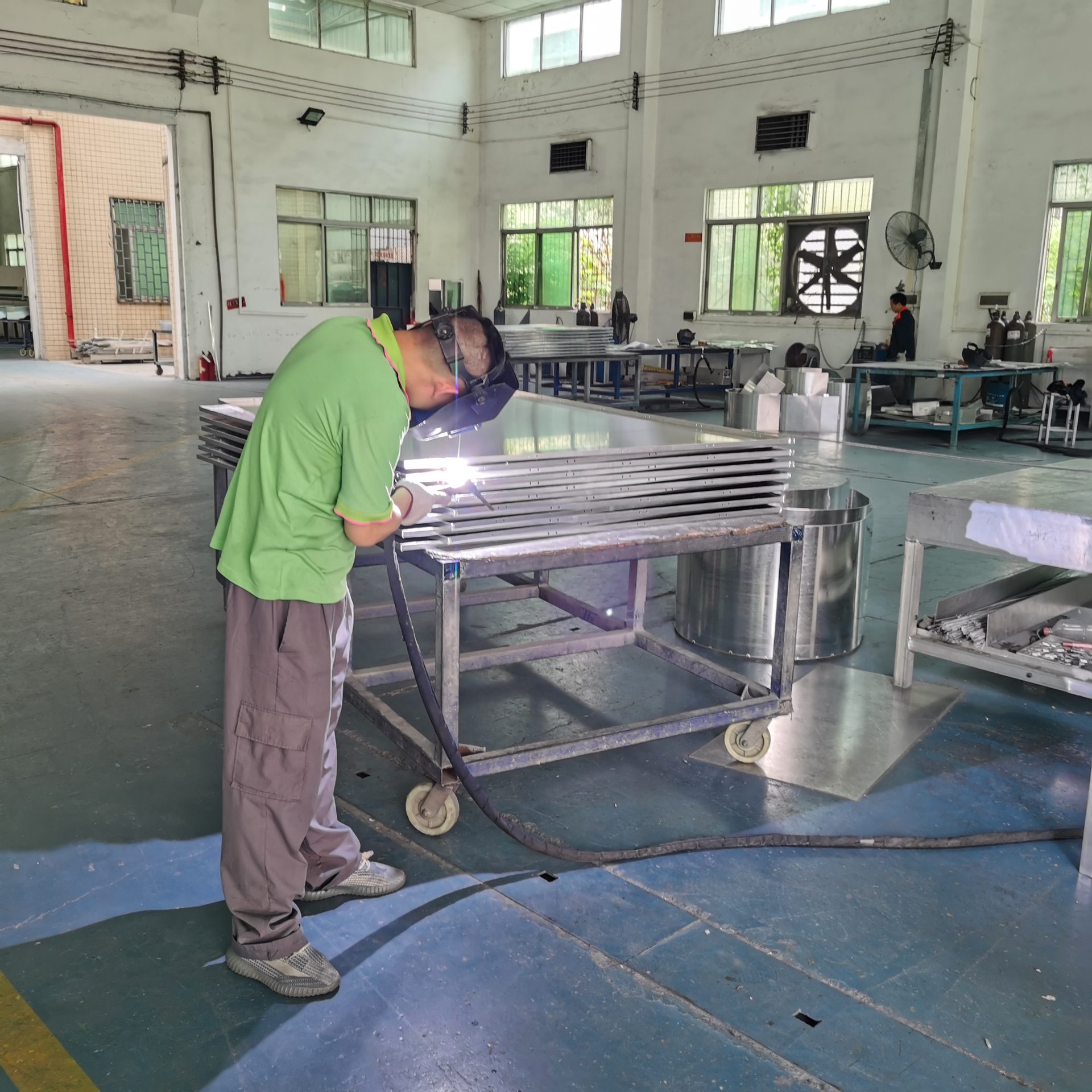
Likton Metal manufactures aluminum facade and ceiling products in Lushi Town, Foshan, Guangdong. The factory covers 20,000 sqm and has 27 sets of CNC and fabrication equipment, including PRATIC PIC-CNC6500, Yawei laser cutting, and Deratech folding equipment. The production team has more than 100 members.
For fire related facade projects, Likton can help buyers review the panel type, thickness, surface finish, fabrication drawings, packing method, and available certificate documents before production. Our aluminum facade products have been exported to more than 30 countries, including the USA, UK, Australia, Saudi Arabia, and the UAE.
For regulated projects, we recommend sending the project fire requirement before asking for the final price. It is better to select the correct panel system first than to redesign after the quote is approved.
FAQ About Aluminum Facade Fire Resistance Rating
Is aluminum fireproof?
Aluminum is non-combustible, but it is not correct to treat every aluminum facade as fireproof. Aluminum can lose strength and melt under high heat. The full facade assembly, including insulation, cavity, sealants, brackets, and fire barriers, must be reviewed.
What is the fire rating of aluminum cladding?
The fire rating depends on the product and the test route. Solid aluminum panel, FR-core ACP, A2 composite panel, and honeycomb panel can have different fire behavior. Ask for the exact standard, classification, certificate number, and tested product description.
Is solid aluminum panel safer than ACP?
Solid aluminum panel removes the plastic core found in some composite panels, so it is often easier to review for stricter exterior wall projects. However, the final fire safety result still depends on the complete wall assembly and local code.
Can ACP be used on a fire rated facade?
Some ACP products with FR or A2 mineral cores may be accepted in certain projects, but PE-core ACP can be risky or restricted for many exterior facade uses. The building height, local code, core type, and full assembly must be checked before selection.
What certificate should I ask for?
Ask for certificates or reports that match your project requirement, such as EN 13501-1 classification, NFPA 285 assembly documentation, ASTM E84 surface burning data, BS 8414 route documentation, or the local code document requested by your fire consultant.
What information should I send for a fire resistant facade quote?
Send elevation drawings, building height, project country, required fire standard, panel type, thickness, coating, backing wall, insulation type, panel schedule, and destination port. This helps the supplier quote the correct system instead of a vague square meter price.