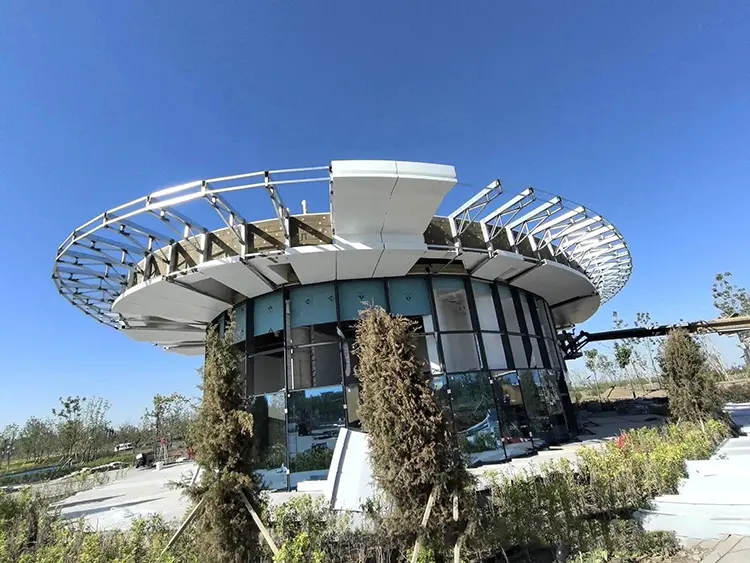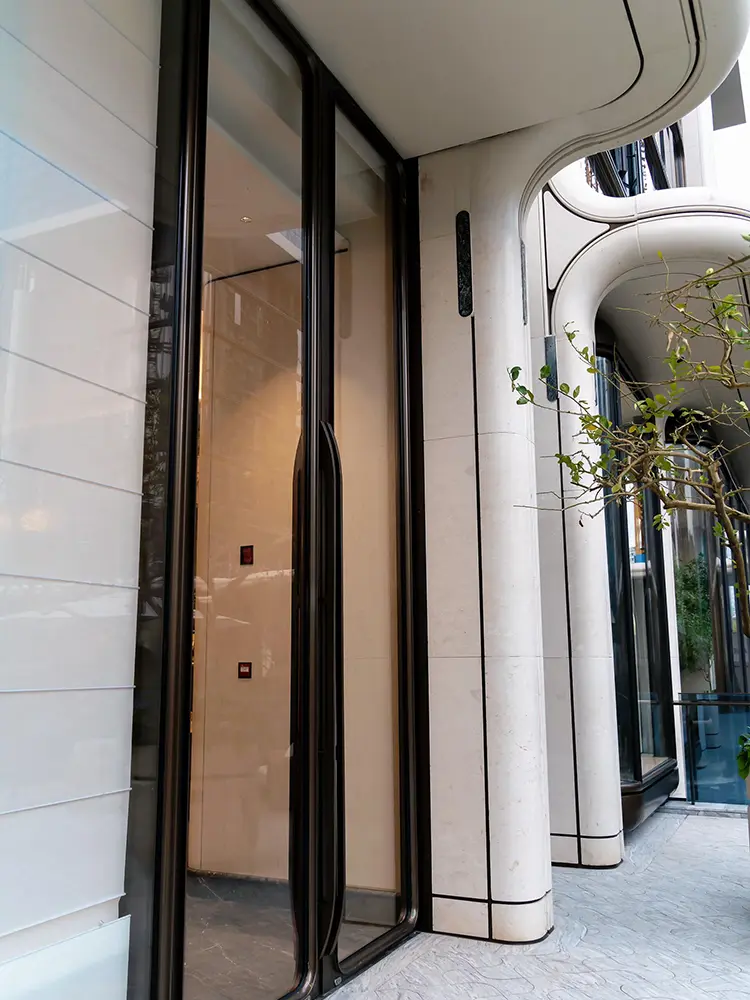
Short answer: clean aluminum facade panels with clean water first. If dirt remains, use a mild neutral detergent, soft cloths, sponges, or soft brushes. Do not use strong acid, strong alkali, abrasive pads, metal scrapers, or high-pressure water aimed into joints, sealants, perforations, or panel edges.
The goal is not to scrub the facade as hard as possible. The goal is to remove dirt while protecting the coating and the facade system. Building owners and facility teams usually search for cleaning methods because they worry about stains, coating damage, warranty responsibility, and whether the cleaning team may make the problem worse.
Start With a Small Test, Not the Whole Elevation
Always test a small hidden area before cleaning a visible facade. This is especially important for PVDF coated aluminum panels, powder coated panels, dark colors, metallic colors, perforated screens, and areas near sealant. A cleaner that seems safe on one surface may leave marks on another coating or color.
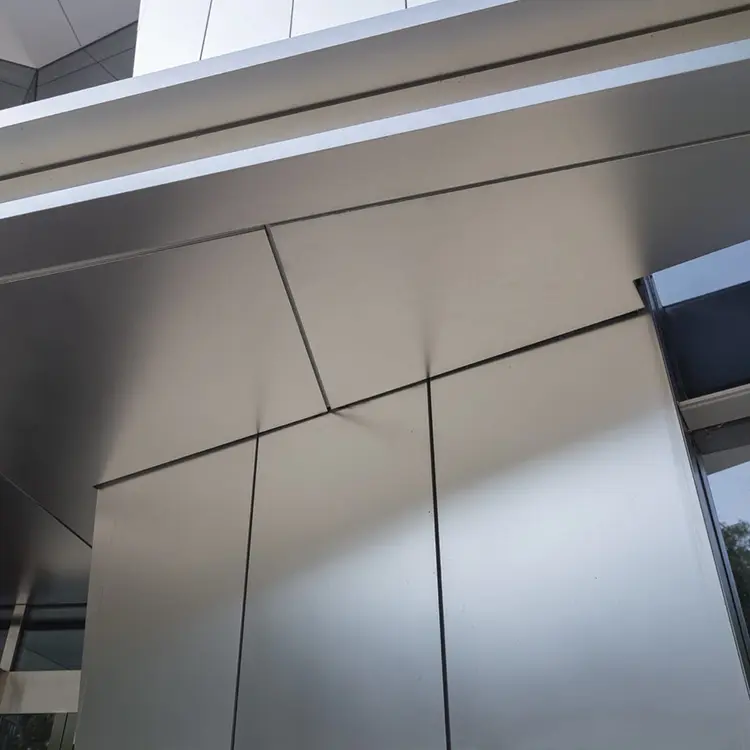
Inspection Checklist for Facility Teams
- Check whether the stain is on the coating or coming from an upper joint, ledge, or fastener line.
- Inspect sealant lines for cracks, gaps, dirt marks, or failed adhesion.
- Look at perforated holes, folded edges, corners, and fixing points.
- Check whether cleaning access is safe for upper floors and recessed areas.
- Record repeated stains with photos and location notes.
- After cleaning, confirm no detergent residue remains on the surface.
How Supplier and Fabrication Choices Reduce Maintenance Problems
Cleaning is not only a facility team issue. Supplier choices affect maintenance from the beginning. Coating selection, color batch control, edge quality, perforation margins, panel flatness, packing protection, and installation labeling all affect how the facade looks after handover.
For custom aluminum veneer panels, perforated panels, curved panels, soffit panels, and facade cladding, Likton checks drawings before production. The review looks at panel size, folding direction, hole edge distance, fixing points, coating requirement, and packing. These checks help reduce weak edges, wrong perforation margins, transport scratches, and dirt traps that become maintenance problems later.
What to Ask Before Ordering Aluminum Facade Panels
| Question | Why it matters for maintenance |
|---|---|
| What coating is recommended for this project location? | Coastal, sunny, or polluted areas need stronger finish planning |
| How are panels protected during shipping? | Scratches before installation can look like maintenance failure later |
| Are perforation edges and folded edges checked? | Dust and coating weakness often appear at edges first |
| Can panels be numbered and packed by elevation? | Better site sorting reduces handling damage |
| What cleaning method should be used after installation? | Facility teams need clear limits before using cleaners or pressure washing |
Useful Internal Reading
For coating decisions, read the PVDF aluminum veneer panel guide. If the project uses decorative screens, see perforated aluminum panels. For installation-related risks, use the aluminum veneer panel installation guide.
FAQ
Can I pressure wash aluminum facade panels?
Low-pressure rinsing is safer. Avoid direct high-pressure washing at joints, sealants, perforations, vents, and panel edges because water can be forced into weak areas.
What cleaner is safe for PVDF coated aluminum panels?
Start with clean water. If needed, use a mild neutral detergent and test a hidden area first. Avoid strong acid, strong alkali, and abrasive tools unless the coating supplier confirms compatibility.
How often should coastal aluminum facades be cleaned?
Coastal facades should usually be inspected every 3 to 6 months because salt deposits build up faster. Cleaning frequency depends on exposure, rain, access, and visible deposits.
Are perforated aluminum panels harder to maintain?
They can be harder because dust collects around holes, frames, and back surfaces. Good perforation design, coating, and access planning make maintenance easier.
Can scratches on coated panels be repaired?
Small marks may be improved, but deep scratches are difficult to repair invisibly on site. Good packing, handling, and installation protection are better than later repair.
If you are planning an aluminum facade project, send drawings, coating requirements, panel details, project location, quantity, and packing needs. Likton can review the panel design and help identify maintenance risks before production.