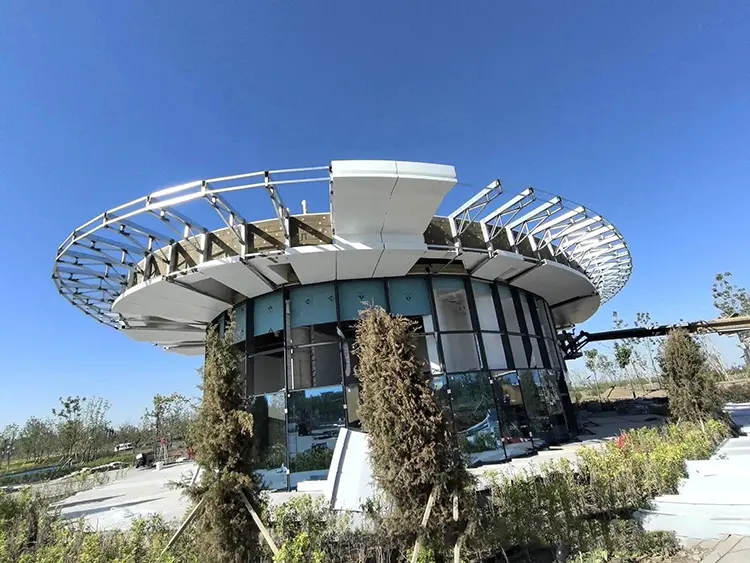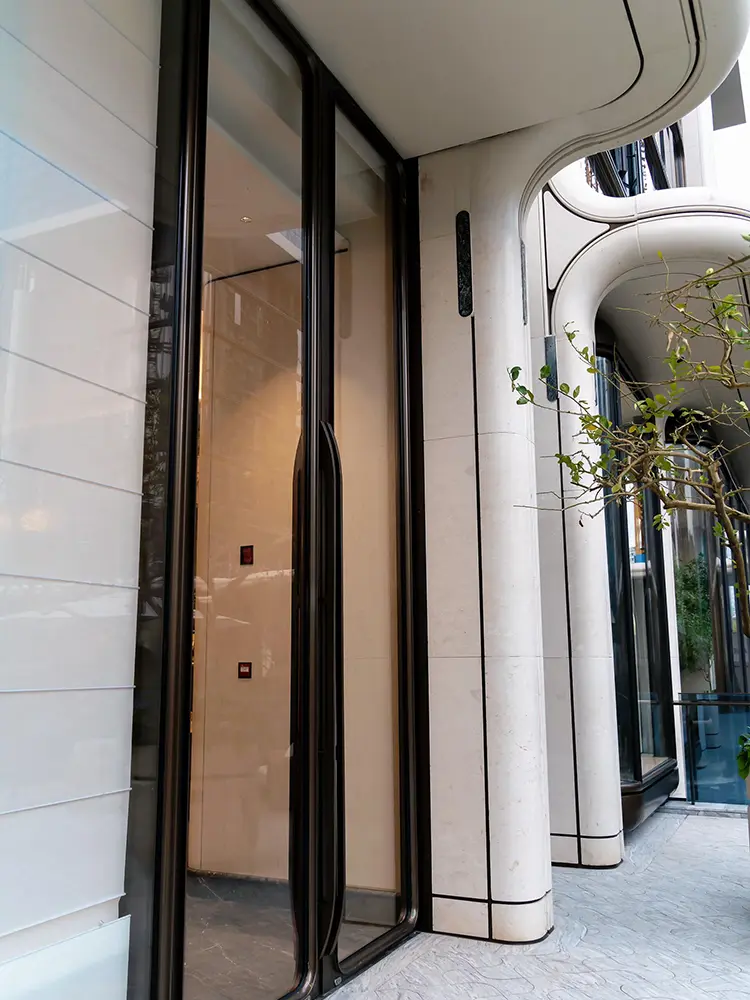
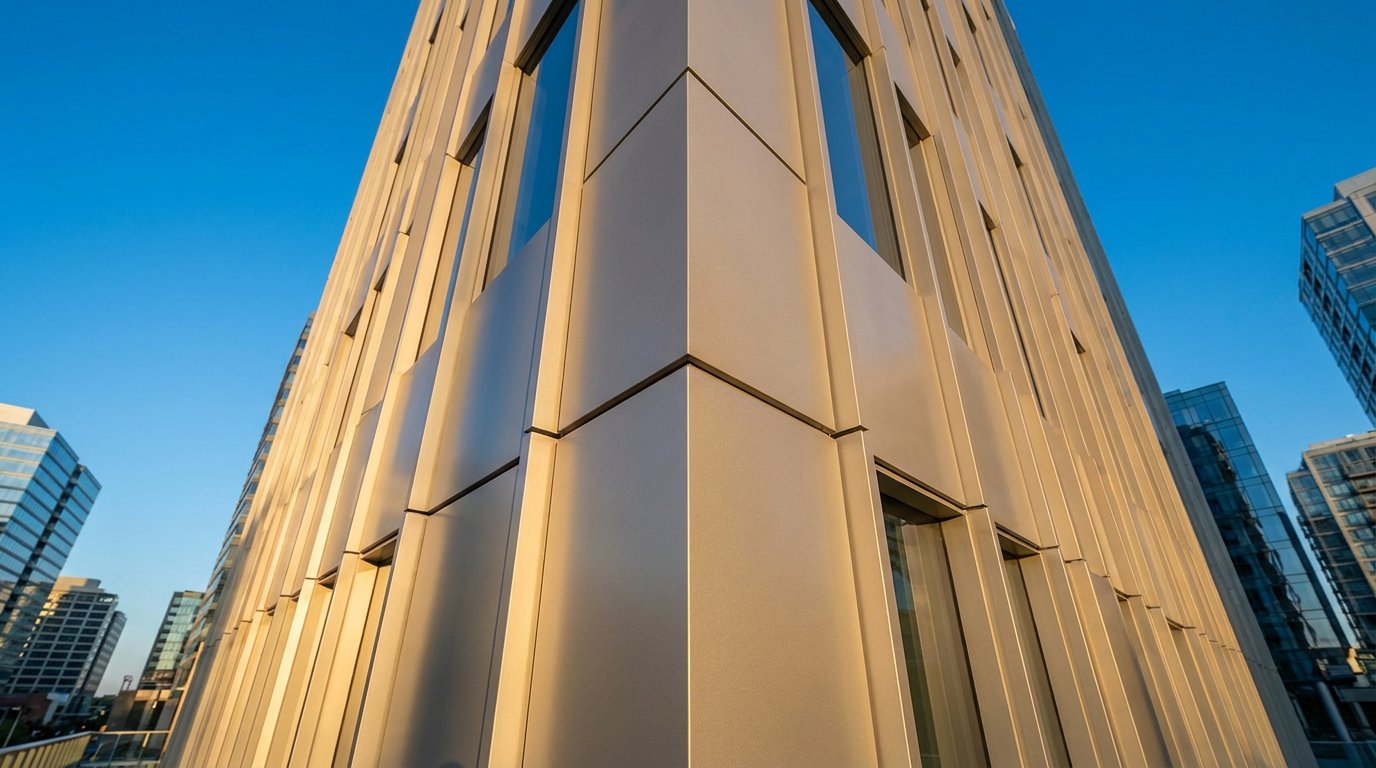
Short answer: choose a PVDF aluminum veneer panel when the project is outdoors, exposed to sun and rain, and expected to keep a clean appearance for many years. For a shopping mall, hotel, office tower, airport, station, school, or coastal building, PVDF is usually a safer choice than ordinary polyester coating.
This guide explains PVDF aluminum veneer panels in simple language. It is written for architects, facade contractors, project owners, and buyers who need to compare materials, ask suppliers the right questions, and avoid hidden problems before placing an order.
What Is a PVDF Aluminum Veneer Panel?
A PVDF aluminum veneer panel is a solid aluminum sheet that has been cut, bent, welded, reinforced, and coated with PVDF fluorocarbon paint. The panel is not a plastic composite board. It is a single-layer metal panel, usually made from 3003, 5005, or 5052 aluminum alloy.
The word PVDF refers to the coating resin. Compared with ordinary polyester paint, PVDF has better resistance to sunlight, rain, humidity, air pollution, and color fading. This is why it is often used for exterior facade panels.
| Item | Common Specification | What It Means for Your Project |
|---|---|---|
| Panel material | Solid aluminum sheet | No plastic core, better fire safety and easier recycling |
| Common thickness | 2.0 mm, 2.5 mm, 3.0 mm | Thicker panels are stronger but cost more |
| Common alloy | 3003-H24, 5005, 5052 | Choose by strength, forming shape, and weather exposure |
| Coating | 2-coat or 3-coat PVDF | 3-coat is better for metallic colors and harsh climates |
| Main use | Exterior facade, curtain wall cladding, canopy, soffit | Best for visible outdoor building surfaces |
When Should You Choose PVDF Instead of Ordinary Coating?
PVDF is not always necessary. If the panel is used indoors, or in a low-budget temporary project, a cheaper coating may be enough. But for long-term exterior use, PVDF is usually worth the extra cost.
You should strongly consider PVDF coating in these situations:
- The building is exposed to strong sunlight for many years.
- The project is near the sea, in a humid area, or in a polluted city.
- The facade color needs to stay stable and not fade quickly.
- The owner wants lower maintenance cost over the building life.
- The project uses metallic, champagne, grey, white, or custom architectural colors.
- The building is a hotel, mall, office tower, hospital, school, airport, or public project.
In plain words: if people will look at this facade every day for the next 15 to 25 years, do not choose the coating only by the lowest price.
PVDF vs Polyester vs Powder Coating
Many quotations look similar at first. The problem is that the word “coated aluminum panel” can mean very different quality levels. The table below is a simple comparison.
| Coating Type | Best Use | Strength | Weak Point |
|---|---|---|---|
| PVDF coating | Long-term exterior facade | Excellent color and weather resistance | Higher initial cost |
| Polyester coating | Interior or short-term exterior use | Lower price | Fades faster outdoors |
| Powder coating | Interior, railing, ceiling, some protected exterior areas | Good hardness and many colors | Not always equal to PVDF for long UV exposure |
For a facade buyer, the practical question is not “which coating is famous?” The better question is: how many years do you expect the color and gloss to remain acceptable without repainting?
How to Choose the Right Panel Thickness
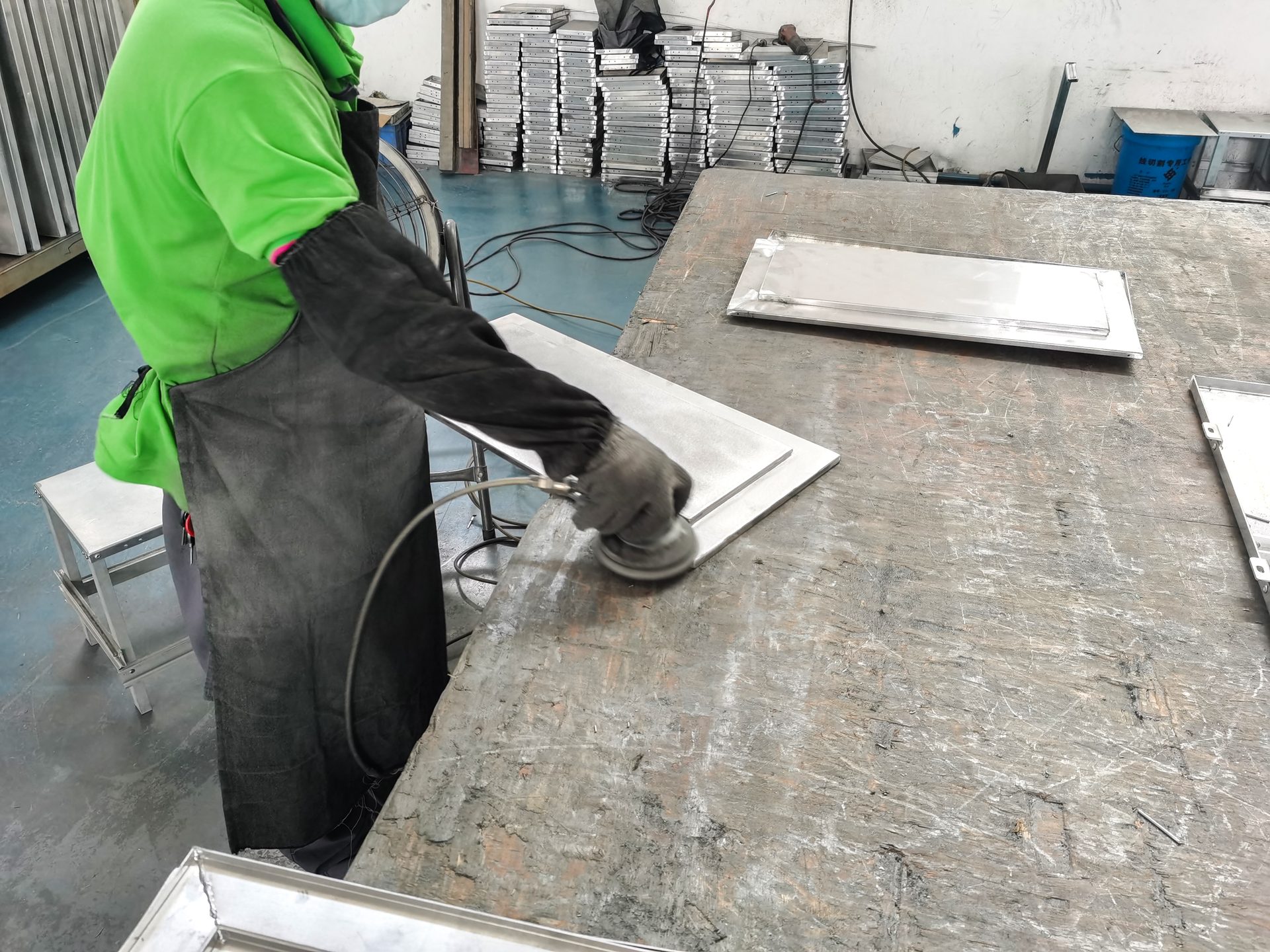
Thickness affects strength, flatness, wind resistance, and price. A thicker panel is not always better, but using a panel that is too thin can cause oil canning, vibration, or deformation after installation.
| Thickness | Typical Use | Notes |
|---|---|---|
| 1.5 mm | Interior wall, ceiling, small decorative areas | Usually not recommended for main exterior facade areas |
| 2.0 mm | Small exterior panels, soffits, low wind-load areas | Good for budget projects with controlled panel size |
| 2.5 mm | Common exterior facade panels | A balanced choice for cost and performance |
| 3.0 mm | High-rise facade, large panels, stronger wind-load areas | Higher cost, better stiffness and flatness |
| 4.0 mm+ | Special shapes, heavy-duty areas, custom engineering | Used when the design or structure really requires it |
For most exterior projects, the safe starting point is 2.5 mm or 3.0 mm. The final choice should depend on panel size, wind load, installation system, and local building requirements.
What Really Affects the Price?
Two suppliers may both quote “PVDF aluminum veneer panel”, but the price can still be very different. The reason is that the real cost is not only the aluminum sheet. It also includes coating quality, shape complexity, reinforcement, color, packaging, testing, and project service.
| Price Factor | Why It Matters | Buyer Tip |
|---|---|---|
| Aluminum thickness | Thicker panels use more raw material | Do not compare 2.0 mm with 3.0 mm as if they are the same product |
| Coating system | 3-coat PVDF and metallic colors cost more than standard colors | Ask for coating type, film thickness, and warranty terms |
| Panel shape | Curved, perforated, or folded panels need more processing | Send drawings early, not only square meters |
| Reinforcement | Large panels need stiffeners on the back | Check whether stiffeners are included in the quotation |
| Testing and documents | Some projects require fire, coating, or material reports | Confirm required reports before ordering |
A very low quotation may look attractive, but it can hide thinner aluminum, cheaper coating, weak pretreatment, missing stiffeners, or unclear warranty terms. For facade projects, the cheapest panel can become expensive after installation problems appear.
Quality Details You Should Check Before Ordering
You do not need to be a coating engineer to check supplier quality. You only need to ask for the right evidence.
- Ask for the alloy and thickness. The supplier should clearly state the aluminum alloy, temper, and real thickness tolerance.
- Ask for the coating type. The quotation should say whether it is 2-coat PVDF, 3-coat PVDF, polyester, or powder coating.
- Ask for color control. For large projects, the supplier should control color difference between batches.
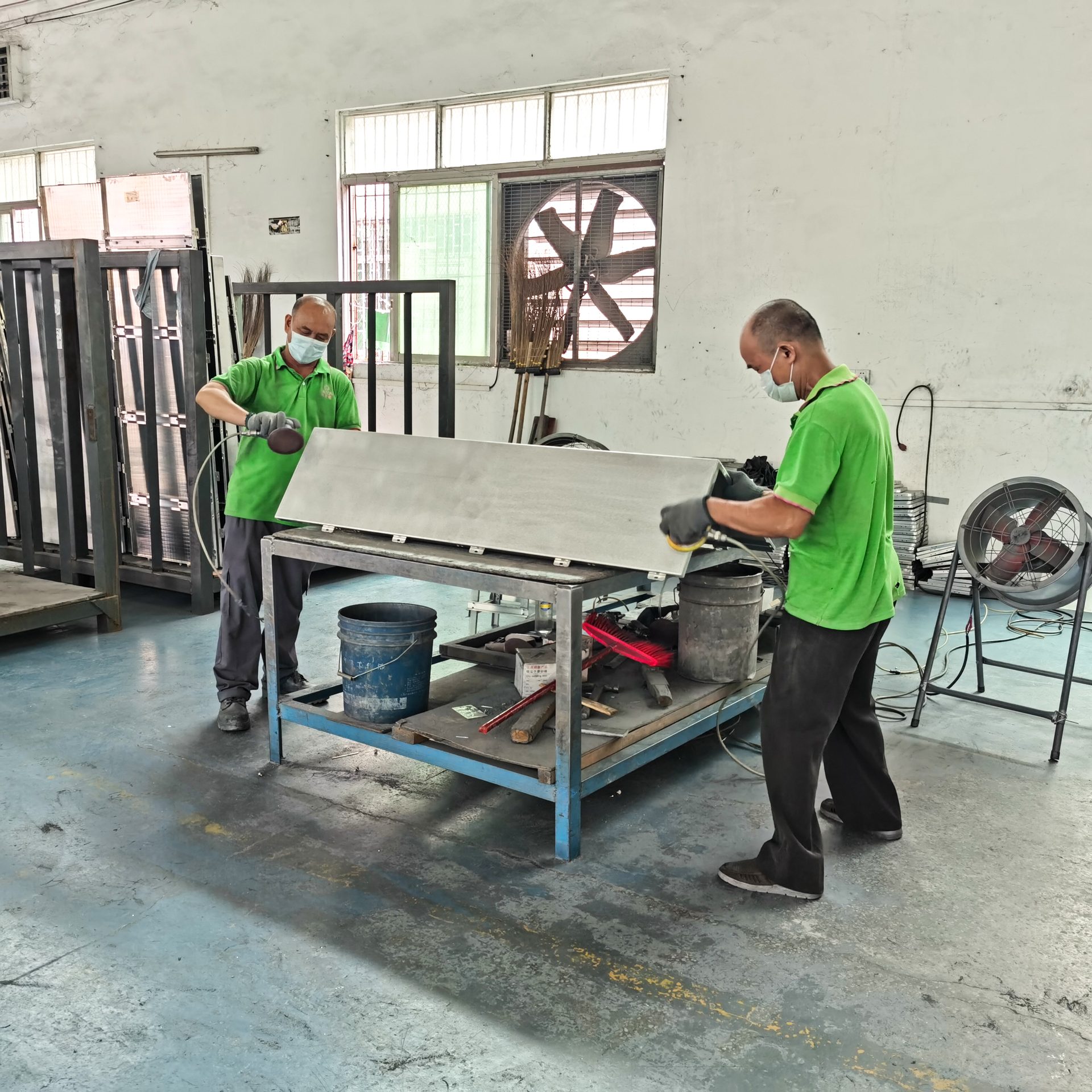
- Ask about pretreatment. Poor surface pretreatment can cause coating failure later, even if the first delivery looks fine.
- Ask for back reinforcement details. Large panels normally need stiffeners to improve flatness and wind-load performance.
- Ask for packing method. Export panels need protective film, corner protection, and strong wooden crates.
- Ask for project drawings. A serious supplier should review panel size, folding depth, installation direction, and joint design.
PVDF Aluminum Veneer Panel vs ACP
Some buyers compare PVDF aluminum veneer panels with aluminum composite panels, also called ACP or ACM. They are not the same product.
An aluminum veneer panel is a solid metal panel. ACP is a sandwich panel with two thin aluminum skins and a core material in the middle. ACP can be useful for some projects, but for higher fire-safety requirements or premium exterior facades, solid aluminum veneer is often preferred.
| Item | PVDF Aluminum Veneer Panel | ACP / ACM |
|---|---|---|
| Structure | Solid aluminum sheet | Two aluminum skins with a core |
| Fire behavior | Better for non-combustible facade requirements | Depends heavily on core material |
| Custom shapes | Good for bending, welding, and curved panels | Limited by composite structure |
| Repair and recycling | Easier as a single metal material | More complex due to mixed layers |
If your project is choosing between these two materials, read the comparison carefully and check the local fire code before deciding. For more detail, you can also read our guide on ACP vs ACM.
What to Send When Asking for a Quotation
The fastest way to get a useful quotation is to send clear project information. If the supplier only receives “please quote aluminum panel”, the answer will be rough and may not match your project.
Prepare these details if possible:
- Project location and building type
- Total facade area in square meters
- Panel drawings, size range, or elevation drawings
- Required thickness, if already specified
- Color reference, such as RAL, Pantone, or physical sample
- Flat, curved, perforated, or special-shaped panels
- Fire, coating, or quality documents required by the project
- Target delivery time and destination port
Simple Buying Checklist
Before confirming an order, use this checklist:
- Panel thickness and alloy are written clearly.
- PVDF coating type and color are confirmed.
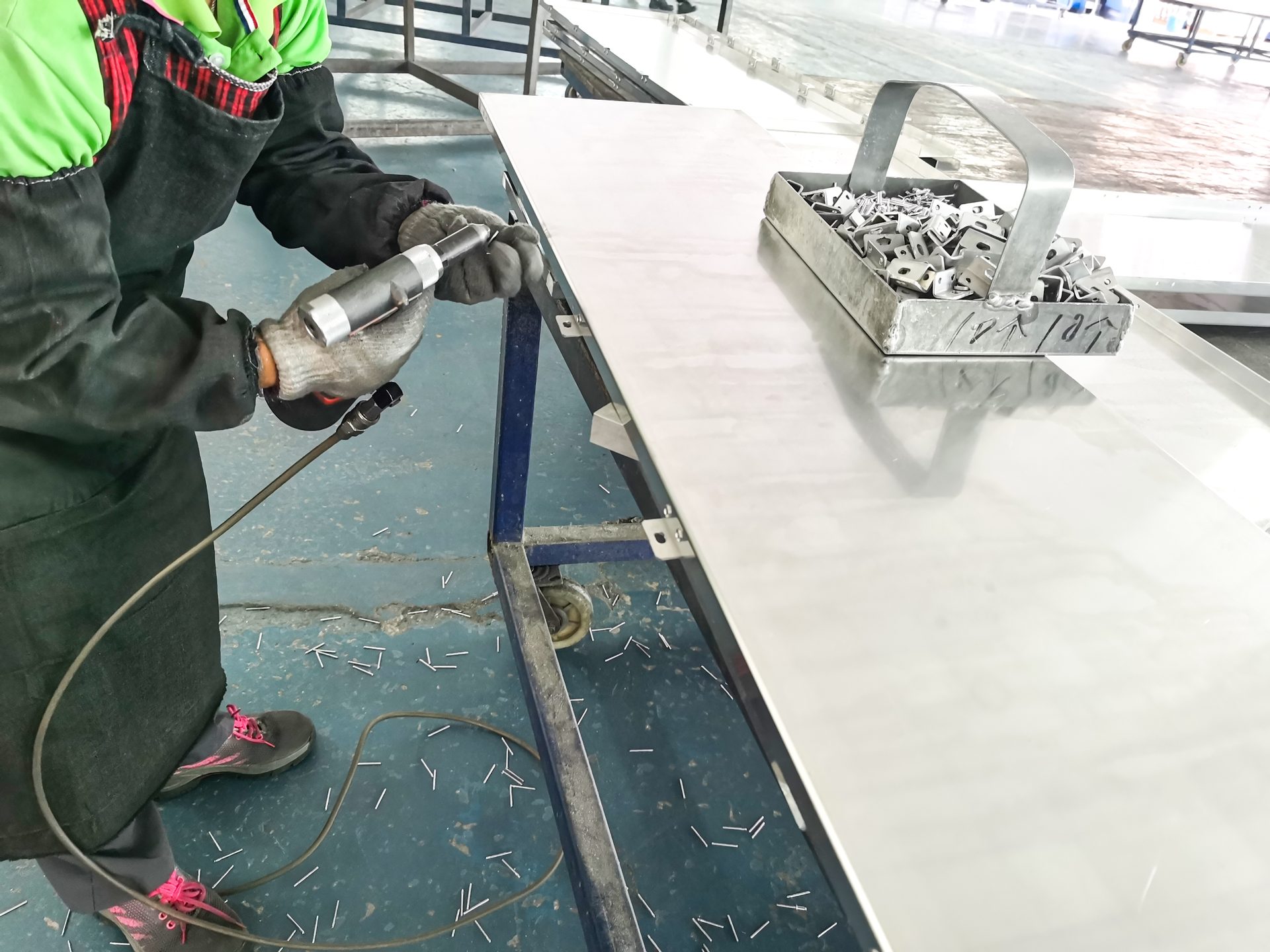
- Drawings show panel size, folding, stiffeners, and fixing points.
- The supplier confirms color tolerance and batch control.
- Packing method is suitable for export shipping.
- Delivery time is realistic for custom fabrication.
- Required test reports and certificates are confirmed before production.
- Sample approval is finished before mass production.
FAQ
Is PVDF aluminum veneer panel suitable for coastal buildings?
Yes, it is commonly used in coastal and humid areas. For coastal projects, ask for a suitable aluminum alloy, proper surface pretreatment, PVDF coating, and clear maintenance instructions.
Is 3.0 mm always better than 2.5 mm?
No. 3.0 mm is stronger and flatter, but it also costs more. The right thickness depends on panel size, wind load, installation system, and budget.
Can PVDF panels be made in custom colors?
Yes. PVDF aluminum veneer panels can be made in many RAL, Pantone, metallic, matte, or custom colors. For large projects, sample approval and batch color control are important.
What is the usual lead time?
For normal custom facade panels, production often takes several weeks after drawings, color, and samples are confirmed. Complex shapes, special colors, or large quantities need more time.
What is the biggest mistake buyers make?
The biggest mistake is comparing only the square-meter price. A correct comparison must include thickness, alloy, coating system, reinforcement, shape complexity, documents, packing, and warranty.
Conclusion
PVDF aluminum veneer panels are a good choice when a building needs a durable, clean, and long-lasting metal facade. The key is not only choosing PVDF, but also checking the panel thickness, alloy, pretreatment, coating system, reinforcement, drawings, and supplier quality control.
If you are preparing a facade project, send us your drawings, color requirement, project location, and target quantity. Likton can help review the specification and provide a practical quotation for custom aluminum veneer panels.
Need Help Choosing PVDF Aluminum Veneer Panels?
Contact Likton for drawings review, coating suggestions, sample support, and project quotation.