Aluminum Facade Materials: Simple 2026 Selection Guide
Aluminum facade materials are not chosen by appearance alone. A good facade choice must match building use, height, local code, wind load, fire review, coating life, maintenance access, budget, and the climate where the building stands.
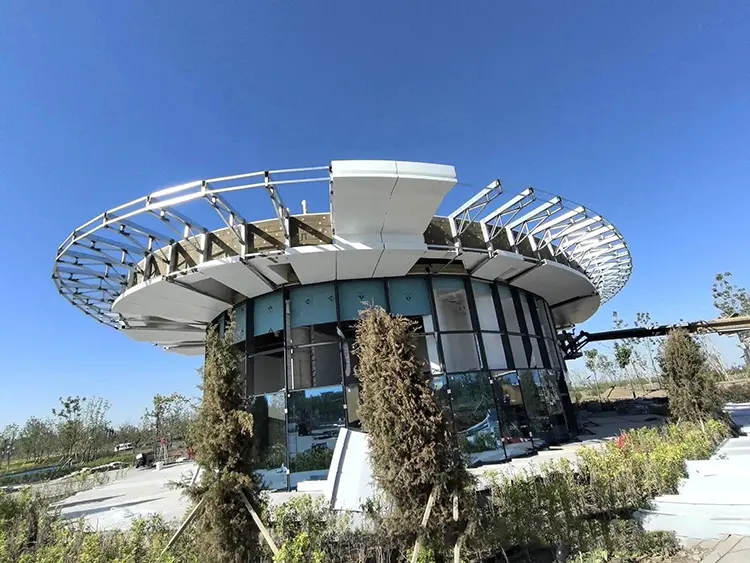
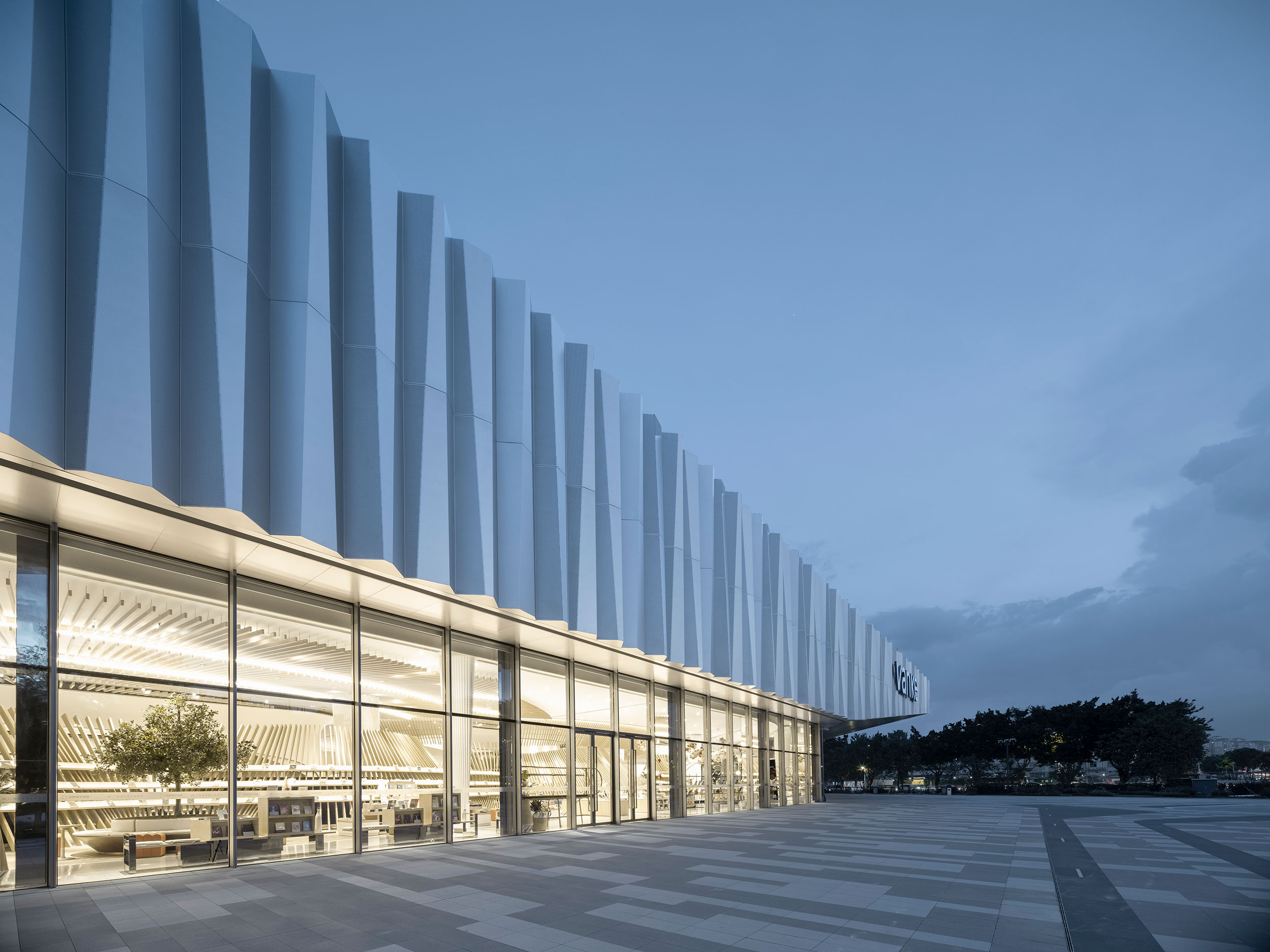
For most commercial projects, the main choices are solid aluminum panels, perforated aluminum panels, ACP / ACM panels, aluminum honeycomb panels, corrugated aluminum panels, and aluminum extrusion systems such as louvers, fins, frames, and sunshades. Each one solves a different problem. The right question is not “which aluminum facade is best?” The better question is “which material fits this part of the building?”
1. Start With the Building, Not the Material
A facade material that works on a small retail shop may not be suitable for a school, hospital, high-rise apartment, airport, or coastal hotel. Before comparing aluminum facade systems, define the building risk first.
| Building or area | Material direction | Do not ignore |
|---|---|---|
| Retail storefront | ACP / ACM, solid aluminum panels, simple cladding systems. | Brand color, impact risk, core type, sign integration. |
| Office or hotel facade | Solid aluminum panels, perforated panels, louvers, glass-metal systems. | Wind load, coating life, panel flatness, maintenance access. |
| School, hospital, public building | Solid aluminum, fire-reviewed systems, durable metal panels. | Fire documents, impact resistance, cleaning, replacement access. |
| Parking garage | Perforated aluminum panels, expanded metal, louvers. | Airflow, open area, privacy, fixing strength, corrosion. |
| Transport hub or large mall | Solid aluminum, honeycomb, perforated, custom systems. | Large modules, fire route, maintenance, production tolerance. |
| Coastal or desert building | Solid aluminum with suitable coating, carefully detailed fasteners. | Salt, sand, UV, edge protection, cleaning plan. |
2. Main Types of Aluminum Facade Materials
Most aluminum facades combine more than one material. For example, a shopping mall may use solid aluminum panels at entrances, perforated panels on parking areas, louvers for sun control, and ACP only in permitted low-risk zones. The table below gives a practical first filter.
| Material | What it is | Where it works well | Main check |
|---|---|---|---|
| Solid aluminum panel | 2.0-4.0 mm aluminum sheet, cut, folded, welded, reinforced, and coated. | Commercial facades, public buildings, custom shapes, high-visibility walls. | Thickness, alloy, return depth, stiffeners, coating, wind load. |
| Perforated aluminum panel | Aluminum plate with punched, CNC-cut, or laser-cut openings. | Sunshade, screens, parking garages, ventilation facades, decorative walls. | Open area, hole pattern, stiffness, privacy, drainage. |
| ACP / ACM panel | Thin aluminum skins bonded to a core. | Signage, retail, interiors, suitable low-rise cladding. | Core type, fire rule, skin thickness, edge sealing. |
| Aluminum honeycomb panel | Aluminum face sheets bonded to a honeycomb core. | Large flat modules, stations, airports, premium interiors and exteriors. | Bonding quality, edge sealing, flatness, panel size. |
| Corrugated aluminum panel | Formed aluminum sheet with ribbed profile. | Industrial buildings, simple wall cladding, roof-edge details. | Profile depth, fixing method, coating, water path. |
| Aluminum extrusion system | Extruded profiles, fins, louvers, frames, and support members. | Sun control, linear facades, screens, curtain wall details. | Die cost, wall thickness, finish, bracket design. |
If the project is mainly about cost, compare this guide with our aluminum exterior wall panel cost guide. If you are deciding between ACP and ACM wording, read the ACP vs ACM guide.
3. Solid Aluminum, ACP, Honeycomb, and Perforated Panels
These four materials are often compared in early design. They should not be treated as simple substitutes. Each has a different structure, different risk, and different cost logic.
| Decision factor | Solid aluminum | ACP / ACM | Honeycomb | Perforated aluminum |
|---|---|---|---|---|
| First material cost | Medium to high | Usually lower | Higher | Medium to high |
| Custom shapes | Strong | Limited to simple shapes | Limited by edge build-up | Strong if pattern is designed well |
| Fire review | Full wall system still matters | Core type is critical | Core and adhesive matter | Often simpler as metal plate, but assembly still matters |
| Flatness | Good with stiffeners | Good for standard sheets | Very good for large panels | Depends on open area and reinforcement |
| Typical use | Exterior wall panels, public projects, shaped facades | Retail, signs, low-risk zones | Large flat modules | Shading, ventilation, privacy, screens |
4. Aluminum Facade Systems Are More Than Panels
An aluminum facade system includes the panel, subframe, brackets, fasteners, drainage path, expansion gaps, sealants, insulation, air cavity, and sometimes fire-stopping or waterproof layers. A good-looking panel can still perform badly if the system detail is weak.
| System part | What it does | Common mistake |
|---|---|---|
| Panel face | Creates the visible facade surface. | Choosing by color only. |
| Return edges | Add stiffness and help fixing. | Too shallow for panel size. |
| Stiffeners | Reduce vibration and oil canning on larger panels. | Missing from cheap quotes. |
| Subframe | Transfers load back to the building structure. | Not checked with wind load and tolerance. |
| Drainage path | Lets water leave the cavity safely. | Blocked joints or poor flashing. |
| Expansion gap | Allows aluminum to move with temperature. | Panels installed too tightly. |
5. Sustainable Aluminum Facades: What Actually Helps
Sustainable aluminum facades are not made by a label alone. The real value comes from long service life, repairable modules, recyclable material, durable coating, less waste during fabrication, and a wall design that supports building energy goals.
Aluminum is recyclable and light compared with many facade materials. But sustainability also depends on whether the facade can be cleaned, repaired, and replaced without tearing out the whole wall. A simple panel module that can be replaced later may be more practical than a complex design that looks efficient on paper but is difficult to maintain.
| Sustainability goal | Useful facade decision | Buyer check |
|---|---|---|
| Longer service life | Use suitable coating, thickness, and fasteners for the climate. | Ask for coating system and maintenance method. |
| Lower replacement waste | Use repeated panel modules and accessible fixings. | Can one damaged panel be replaced? |
| Less fabrication scrap | Repeat sizes and avoid unnecessary one-off shapes. | Can the design be rationalized? |
| Better recyclability | Choose separable assemblies where possible. | Are panels and accessories easy to separate? |
| Reduced heat gain | Use shading fins, perforated screens, ventilated cavities, and light colors. | Does the facade match the building orientation? |
6. Energy Efficient Aluminum Facades
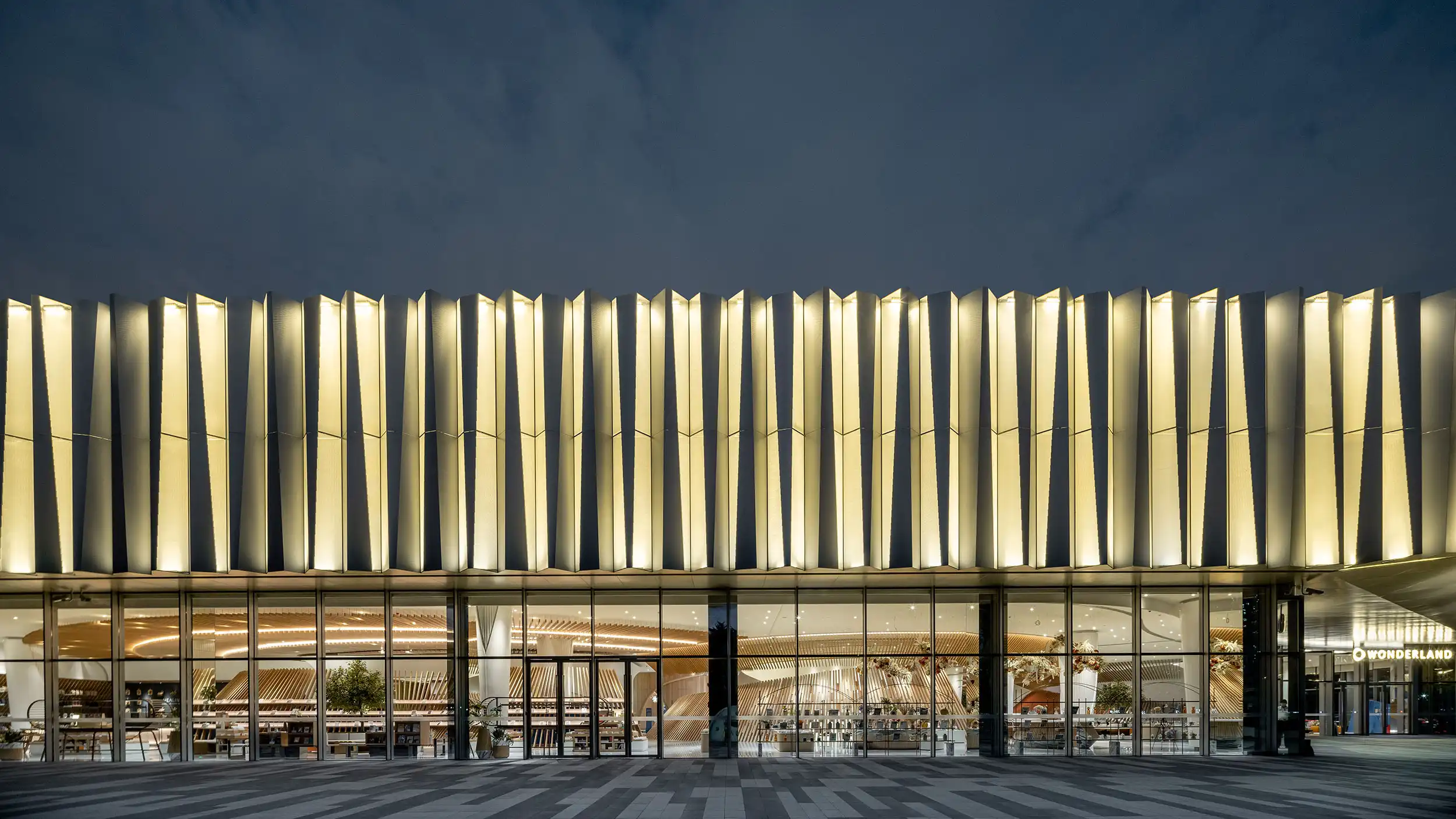
Energy efficient aluminum facades usually depend on the whole wall, not the metal sheet alone. Aluminum conducts heat, so insulation, thermal breaks, air cavity design, solar shading, and glass-to-wall ratio are important. The panel can help by shading, ventilating, protecting insulation, and reducing direct solar load.
| Energy issue | Aluminum facade approach | Design note |
|---|---|---|
| Solar heat gain | Perforated panels, louvers, fins, deep reveals. | Set angle and open area by orientation. |
| Wall heat transfer | Ventilated facade over insulation. | Coordinate insulation and cavity ventilation. |
| Glare | External shading and screen panels. | Review daylight needs and view lines. |
| Thermal movement | Expansion gaps and slotted fixing details. | Aluminum moves with temperature changes. |
| Maintenance energy | Durable coating and accessible panels. | Easier cleaning reduces long-term disruption. |
7. Aluminum Facade Systems for Harsh Environments
Harsh environments include coastal salt, desert sand, heavy UV, industrial pollution, freeze-thaw cycles, and high wind. In these places, the safest material is not always the thickest material. Coating, fastener compatibility, drainage, edge protection, and maintenance schedule matter just as much.
| Environment | Material direction | Detail to confirm |
|---|---|---|
| Coastal area | Solid aluminum or suitable coated panels. | Coating system, cut edges, stainless fasteners, cleaning plan. |
| Desert or high UV | PVDF-coated aluminum, lighter colors, shading systems. | Color stability, thermal movement, sand abrasion. |
| Industrial pollution | Durable coating and easy-clean surface. | Chemical exposure and maintenance method. |
| High wind zone | Smaller modules, deeper returns, stiffeners, stronger subframe. | Wind-load calculation and fixing spacing. |
| Heavy rain area | Rainscreen detailing and clear drainage path. | Flashing, open joints, weep paths, waterproof layer. |
For a deeper climate-risk guide, see metal cladding for extreme climates.
8. Surface Finishes: PVDF, Powder Coating, Anodizing, and Textures
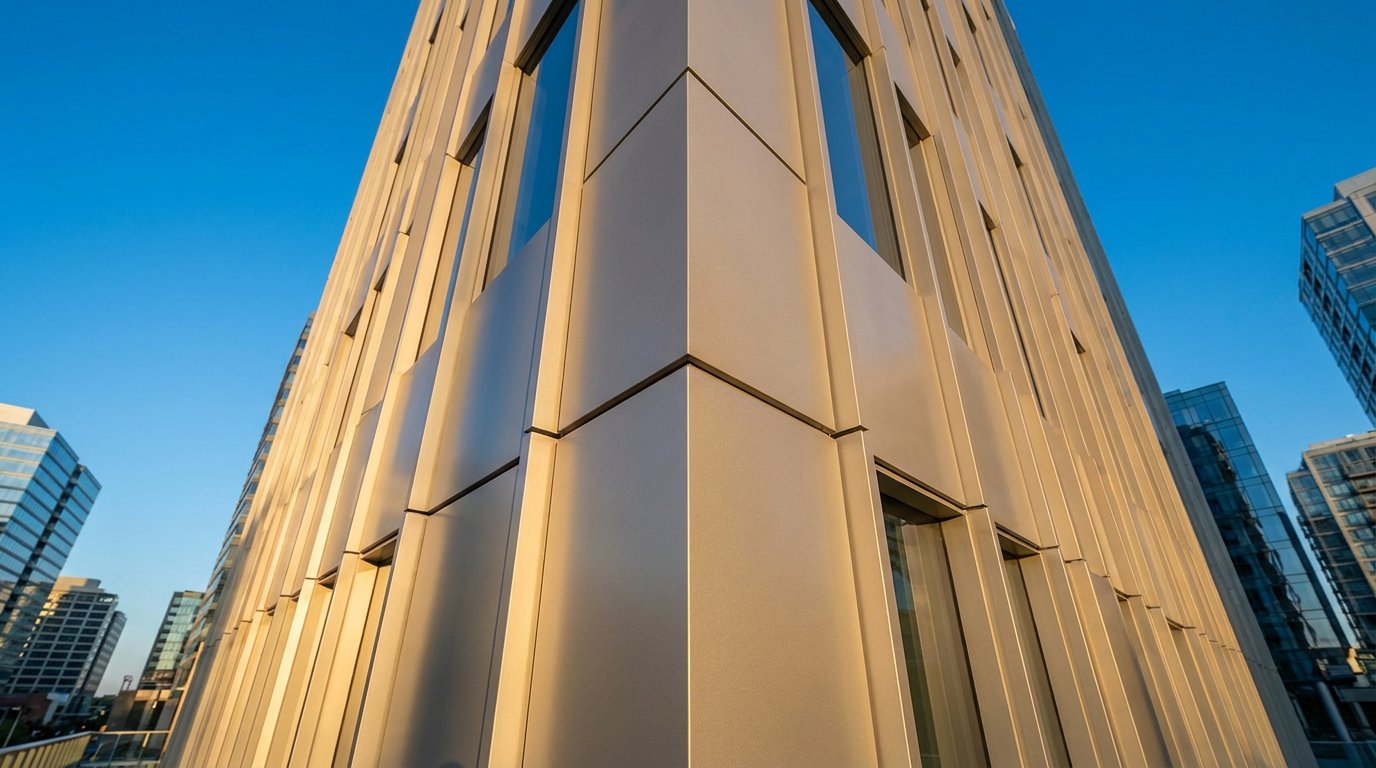
The surface finish affects color, weather resistance, cleaning, lead time, and replacement matching. A facade material quote without coating details is incomplete. Ask for color code, gloss level, coating system, sample approval method, warranty expectation, and whether replacement panels can match later batches.
| Finish | Where it works | What to confirm |
|---|---|---|
| PVDF coating | Exterior facades with strong UV, rain, or pollution exposure. | Coating system, color sample, gloss, warranty expectation. |
| Powder coating | Many exterior and interior aluminum panels. | Outdoor grade, coating thickness, cleaning method. |
| Anodizing | Metallic surfaces, louvers, profiles, premium details. | Color range, batch tolerance, anodized thickness. |
| Wood grain or stone texture | Decorative walls, soffits, entrances, commercial interiors. | Pattern direction, UV exposure, sample matching. |
| Custom color | Brand buildings, hotels, public projects. | Minimum order, sample approval, replacement batch control. |
9. Fire, Certification, and Local Approval
Facade fire performance must be reviewed as a complete wall assembly. Panel material is only one part. Insulation, air cavity, membranes, brackets, sealants, fire stops, and local code all matter. This is especially important when comparing ACP / ACM with solid aluminum panels.
| Document or check | Why it matters | Buyer question |
|---|---|---|
| Fire classification | Supports local approval review. | Which standard and class apply to this product? |
| Core type for ACP / ACM | PE, FR, and A2 cores are different. | What core is quoted? |
| Coating information | Weathering and cleaning depend on finish. | What coating system is included? |
| Factory quality system | Shows process control. | Can ISO documents be provided? |
| Export compliance | Needed for some overseas markets. | Are CE, RoHS, or GPSR documents available when relevant? |
For detailed fire wording, read aluminum facade fire resistance rating.
10. Budget and Quote Comparison
A facade material quote can be misleading if one supplier quotes only raw sheets and another quotes fabricated panels with coating, stiffeners, packing, and documents. Ask each supplier to separate the quote scope. This makes it easier to compare aluminum facade systems fairly.
| Quote line | What to ask | Why it changes cost |
|---|---|---|
| Panel material | Material type, thickness, alloy, core if composite. | Base material is the starting cost. |
| Fabrication | Cutting, folding, welding, perforation, stiffeners. | Complex shapes cost more than flat panels. |
| Surface finish | PVDF, powder coating, anodizing, texture, color. | Finish affects cost and lead time. |
| Accessories | Brackets, profiles, fasteners, sealants if included. | Scope must match the installation plan. |
| Packing | Film, pallets, crates, corner protection. | Important for export and damage prevention. |
| Documents | Certificates, test reports, sample records. | Can affect approval and procurement schedule. |
| Shipping terms | Incoterm, port, crate size, gross weight. | FOB price and landed cost are different. |
11. Practical Selection Checklist
Use this checklist before choosing facade aluminium panels, aluminum facade cladding, or a full architectural aluminum facade system.
- Define building use, height, location, and local approval route.
- Confirm fire requirement before comparing ACP, solid aluminum, or honeycomb.
- Check wind load, panel size, return depth, and stiffener need.
- Choose the finish by climate, UV exposure, pollution, and cleaning plan.
- Separate visible facade zones from back-of-house or low-risk zones.
- Ask whether the quote is sheet only, fabricated panel, or full system scope.
- Request drawings-based pricing before final budget approval.
- Confirm packing and replacement-panel strategy for overseas projects.
12. Likton Metal Factory Capability
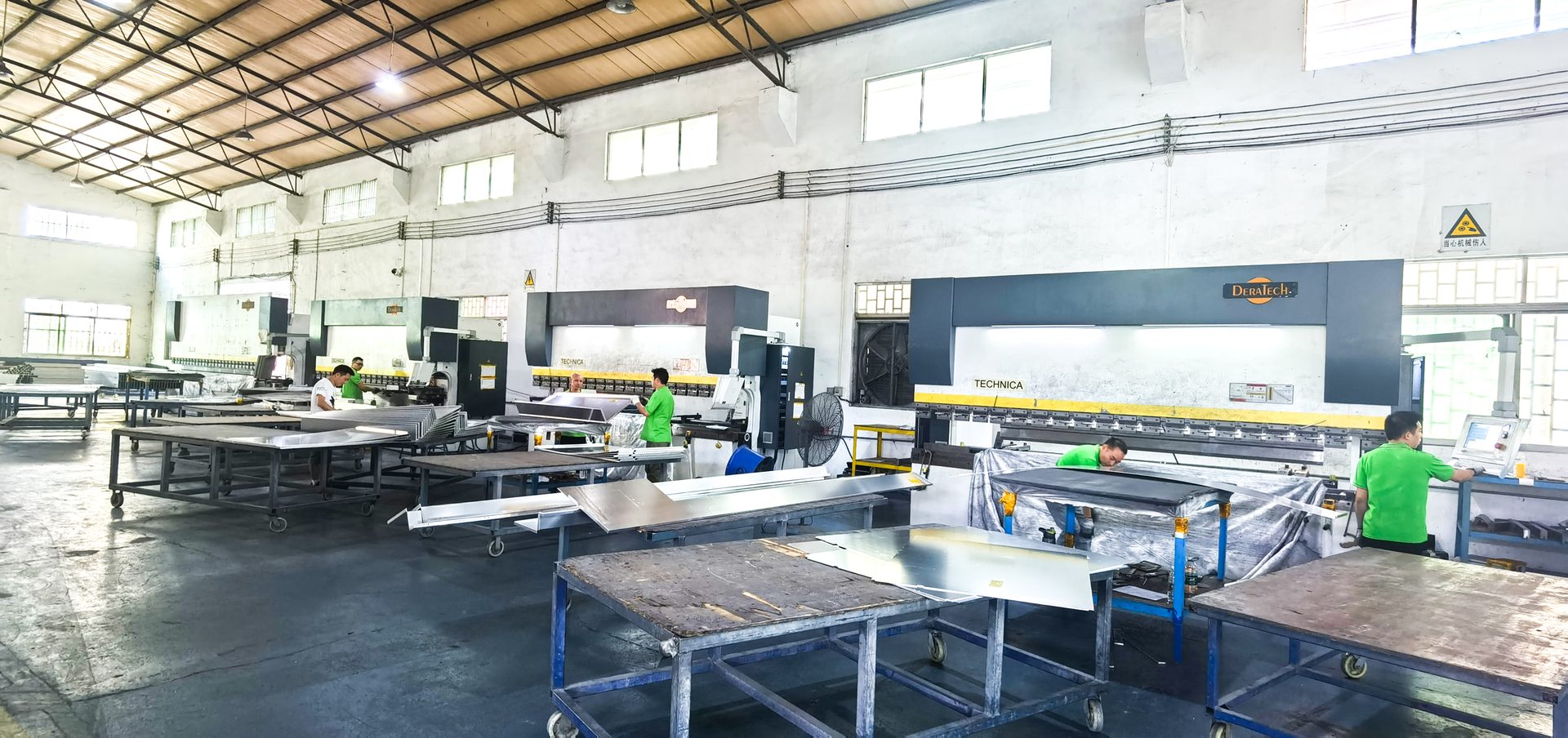
Likton Metal manufactures aluminum facade and ceiling products in Lushi Town, Foshan, Guangdong. The factory covers 20,000 sqm and uses 27 sets of CNC and fabrication equipment, including PRATIC PIC-CNC6500, Yawei laser cutting, and Deratech folding equipment. The production team has more than 100 members, and products have been exported to more than 30 countries, including the USA, UK, Australia, Saudi Arabia, and the UAE.
Available documentation references include ISO 9001:2015, ISO 45001:2018, CE No. CTB25022505602 for EN 13501-1 Class A2, RoHS Compliance, and GPSR EU Authorized Representative Certificate. Final document relevance should be checked against the project specification and local approval route.
FAQ About Aluminum Facade Materials
What are the main aluminum facade materials?
The main aluminum facade materials include solid aluminum panels, perforated aluminum panels, ACP / ACM panels, aluminum honeycomb panels, corrugated aluminum panels, and aluminum extrusion systems such as louvers, fins, frames, and sunshades.
Which aluminum facade material is best for commercial buildings?
There is no single best material for every commercial building. Solid aluminum panels are often used for durable custom facades, ACP / ACM can fit suitable low-risk areas, perforated panels work for shading and ventilation, and honeycomb panels work for large flat modules.
Are sustainable aluminum facades only about recycled aluminum?
No. Recycled content can help, but sustainable aluminum facades also depend on coating life, repairable modules, lower fabrication waste, replacement access, recyclability, and whether the facade supports building energy goals.
How can aluminum facade systems improve energy performance?
Aluminum facade systems can improve energy performance through external shading, perforated screens, louvers, ventilated cavities, integration with insulation, and design details that reduce direct solar heat gain.
Is ACP suitable for exterior aluminum facades?
ACP can be suitable for some exterior facade areas, but the core type, fire requirement, building height, local code, coating, and installation system must be checked before approval.
What should I send for an aluminum facade material quote?
Send elevation drawings, panel schedule, material type, thickness, finish, color code, fire requirement, wind-load requirement, destination port, expected quantity, and packing requirement.