What should you check before choosing an aluminum baffle ceiling manufacturer?
An aluminum baffle ceiling manufacturer should not only give a price per meter. For a commercial project, the useful supplier is the one that helps you confirm profile size, spacing, finish, carrier system, accessories, packing, and installation conditions before production.
If these details are not clear, the ceiling can look acceptable in a small sample but become difficult on site. Baffles may not align with lights or sprinklers. Wood-grain direction may look inconsistent. Long profiles may be scratched or bent during shipping. Accessories may be missing from the quotation.
The safer way is simple: treat the ceiling as a complete project package, not as a single aluminum profile. This guide explains the checks buyers should make before ordering baffle ceilings for shopping malls, offices, hotels, transport spaces, corridors, showrooms, and other commercial interiors.
What is an aluminum baffle ceiling?
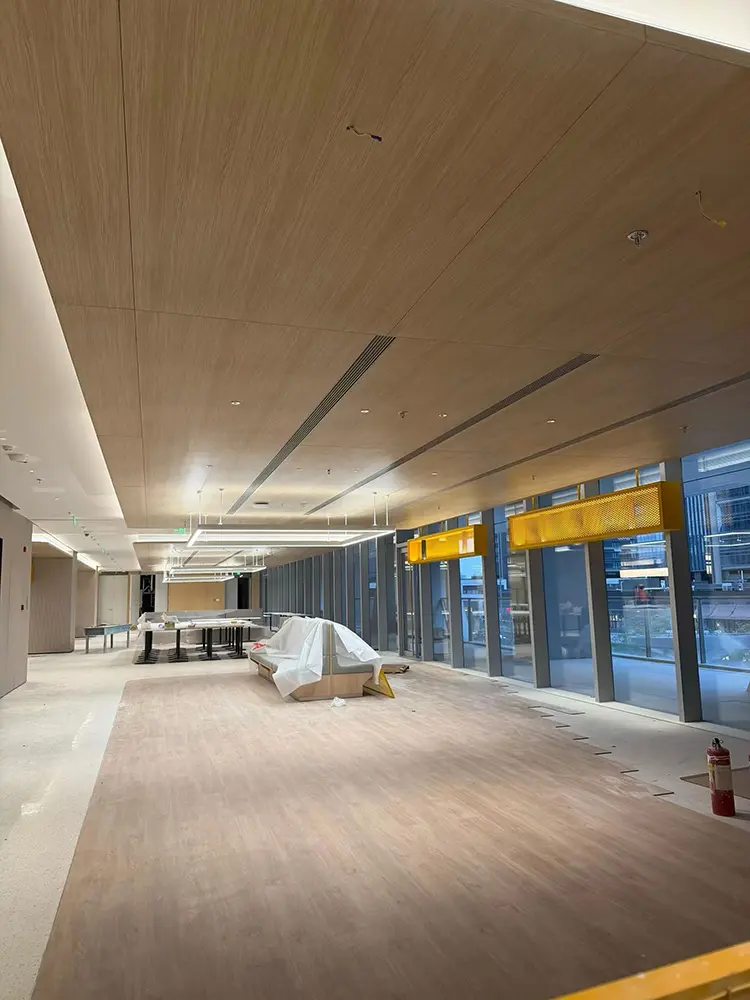
An aluminum baffle ceiling is a linear ceiling system made from repeated aluminum profiles. The profiles are usually installed vertically or semi-vertically with open gaps between them. This creates a clean linear look while keeping space for lighting, sprinklers, air outlets, signs, cameras, or maintenance access.
Buyers often like baffle ceilings because the design is simple and flexible. The risk is that simple-looking ceilings still need careful coordination. The profile size, gap, ceiling height, carrier layout, color, finish direction, and site services should be checked together.
Profile size and spacing decide the final look
Profile size is not just a style choice. A deeper baffle can look stronger from below, but it may cost more, weigh more, and need more careful packing. A narrow spacing can create a dense visual effect, but it also increases quantity and installation work. A wide spacing may reduce cost, but it can expose more pipes, lights, or background structure.
| Decision | Why it matters | What to confirm |
|---|---|---|
| Profile height | Changes visual depth and material use | Ceiling height, viewing distance, and design effect |
| Profile width | Affects strength, appearance, and cost | Whether the profile looks too thin or too heavy |
| Spacing | Changes quantity, openness, and service visibility | Lights, sprinklers, vents, cameras, and access panels |
| Profile length | Long pieces are harder to pack and handle | Maximum transport length and site access |
| Carrier layout | Controls alignment and installation speed | Carrier spacing, hanger positions, and ceiling plan |
A serious manufacturer should ask for the reflected ceiling plan or at least the ceiling area, profile direction, spacing idea, and service layout. If the supplier quotes without these details, the price may be quick but not reliable.
Finish options: do not approve color from a screen only
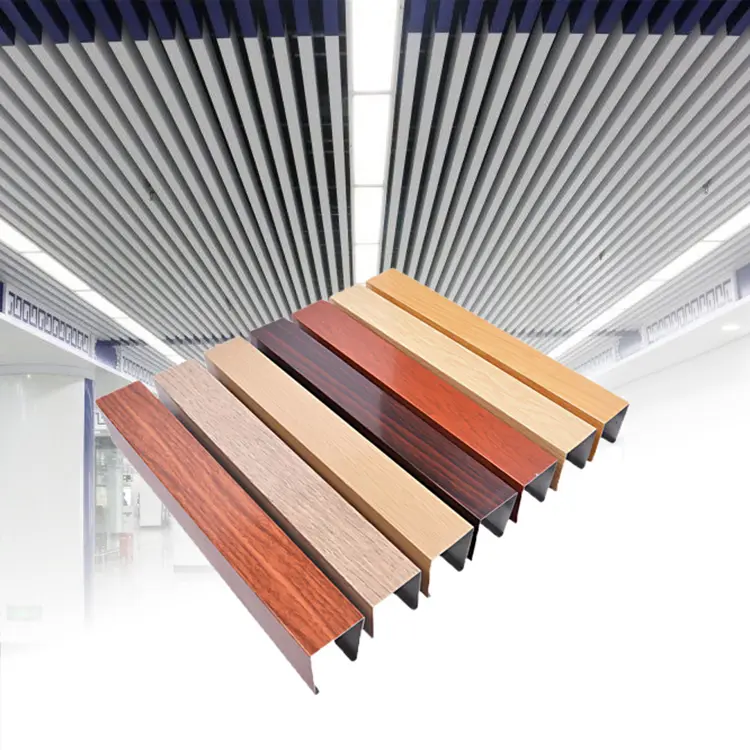
Aluminum baffle ceilings can use solid color, metallic color, wood grain, or other decorative finishes. The right finish depends on lighting, wall materials, floor color, project style, and maintenance needs.
For wood-grain baffles, direction matters. If the profiles are installed in long rows, inconsistent grain direction can be visible. For solid colors, batch consistency matters. If the project is large or delivered in several batches, ask how the supplier controls sample approval and color consistency.
For exterior soffits or semi-outdoor areas, coating choice needs more attention than a purely indoor ceiling. Rain, UV exposure, humidity, and cleaning method can affect long-term appearance. Do not assume one finish fits every environment.
Accessories are part of the ceiling, not an afterthought
Many quotation problems come from accessories. A buyer may compare the visible baffle price and forget carriers, hangers, clips, end caps, screws, special connectors, or cutting service. On site, missing accessories can stop installation even if the profiles are correct.
Ask the manufacturer to separate the quotation scope clearly:
- aluminum baffle profile;
- carrier or suspension system;
- hangers, clips, end caps, and fixing parts;
- special cutting or mixed lengths;
- packing and labeling method;
- spare parts or extra quantity if needed.
This is not paperwork for its own sake. It helps the installer know what will arrive, how it is sorted, and what still needs to be purchased locally.
Manufacturer checklist: what a serious supplier should confirm
| Check item | Why it matters | Useful supplier question |
|---|---|---|
| Profile size and shape | Small changes affect cost, strength, and appearance | Can you confirm the recommended size based on ceiling height and spacing? |
| Finish control | Color difference is easy to notice on repeated linear ceilings | Can you provide physical samples and control batch consistency? |
| Carrier and accessories | Missing parts delay installation | Which carrier, hanger, clips, end caps, and fixing parts are included? |
| Drawing review | Ceiling services may conflict with baffle direction or spacing | Can you review reflected ceiling plans and MEP positions before production? |
| Packing method | Long profiles can be scratched or bent during shipping | How are profiles protected, labeled, and packed for export? |
| Project quantity | Repeated lengths are easier than many mixed sizes | Can you separate standard lengths, cut lengths, and special areas in the quotation? |
Likton’s role is most useful when the project is not a simple stock purchase. The team can review profile size, spacing, finish samples, ceiling drawings, accessory scope, packing details, and quotation information before production.
Common problems when the supplier only quotes by unit price
A low unit price is not always wrong. It becomes risky when the quote is missing important details.
| Common mistake | What can happen later | Better approach |
|---|---|---|
| Comparing only price per meter | Accessories, packing, cutting, or finish control may be excluded | Compare the full quotation scope |
| Choosing spacing without checking services | Lights, sprinklers, vents, and cameras may break the layout | Review the ceiling plan before production |
| Approving color from a photo | Final color may look different under project lighting | Approve physical samples when appearance matters |
| Ignoring profile length | Long profiles may bend, scratch, or be hard to move on site | Confirm maximum length, packing, and site access |
| Not asking about labels | Installers may waste time sorting profiles | Request labels by area, size, or installation sequence |
These problems usually start before production. A clear RFQ gives the manufacturer enough information to quote the real project instead of guessing from a product photo.
What information should you send for an accurate quotation?
For an aluminum baffle ceiling quotation, prepare the information below. If some details are not final, mark them as “to be confirmed” instead of leaving the supplier to guess.
| RFQ item | Why the manufacturer needs it |
|---|---|
| Project type and location | Helps judge use environment, packing, and delivery needs |
| Ceiling drawing or reflected ceiling plan | Shows area, direction, service points, and installation zones |
| Profile size | Affects aluminum use, strength, appearance, and quotation |
| Spacing between baffles | Changes quantity, visual density, and installation work |
| Length requirement | Long profiles need careful packing and site handling |
| Surface finish | Solid color, wood grain, metallic finish, and gloss affect production |
| Color sample or color code | Reduces risk of color mismatch |
| Quantity or ceiling area | Helps calculate material, accessories, packing, and batch planning |
| Accessories needed | Carrier, hanger, clips, end caps, and fixing parts may or may not be included |
| Packing and delivery destination | Export packing needs stronger protection than local delivery |
| Installation deadline | Helps the supplier judge production and shipping planning |
When aluminum baffle ceilings may not fit the project
Aluminum baffle ceilings are useful, but they are not the right answer for every ceiling. They may not fit well when the project needs a completely closed ceiling surface, strong acoustic absorption without extra backing materials, very frequent access above the ceiling, or the lowest possible upfront cost.
They also need coordination when the ceiling has many service points. If lights, sprinklers, cameras, speakers, air outlets, and signage are dense, the baffle direction and spacing should be reviewed before ordering.
How to compare two aluminum baffle ceiling quotations
When two suppliers quote very different prices, compare the details before choosing. A cheaper quote may be a real saving, or it may simply be missing items.
| Quotation detail | Supplier A | Supplier B | Why it matters |
|---|---|---|---|
| Profile size and wall thickness | Different sizes are not the same product | ||
| Finish type and sample process | Controls appearance and batch consistency | ||
| Carrier and accessories included | Missing parts create site cost | ||
| Cutting and special lengths | Mixed lengths may increase processing work | ||
| Packing method | Long profiles need protection from bending and scratches | ||
| Labels and packing sequence | Helps installers sort materials faster | ||
| Drawing review included | Reduces risk before production | ||
| Delivery term | Changes total landed cost |
FAQ
What is the main advantage of an aluminum baffle ceiling?
It creates a clean linear ceiling appearance while leaving space for lighting, sprinklers, air movement, and maintenance access. The final result depends on profile size, spacing, finish, carrier layout, and installation coordination.
Is a wood-grain aluminum baffle ceiling real wood?
No. It is aluminum with a wood-grain surface finish. Buyers should approve a physical sample and confirm grain direction before mass production, especially for long repeated rows.
What affects aluminum baffle ceiling price?
Profile size, wall thickness, spacing, finish, length, quantity, accessories, packing, cutting, and delivery destination all affect price. A quote that excludes accessories or packing is not directly comparable with a complete quote.
Can aluminum baffle ceilings be used with lights and sprinklers?
Yes, but the reflected ceiling plan should be reviewed. Service positions can affect spacing, direction, cutting, and access. Confirm this before production instead of solving it on site.
Should I ask for samples before ordering?
For visible commercial interiors, yes. Samples help check profile size, color, gloss, edge quality, wood-grain direction, and whether the finish looks right under project lighting.
What should I send to an aluminum baffle ceiling manufacturer for a quote?
Send the ceiling plan, profile size, spacing, finish, color code or sample, quantity, accessory scope, packing requirement, delivery destination, and installation schedule if available.
Practical next step
If you are comparing aluminum baffle ceiling manufacturers, prepare the ceiling plan, profile size, spacing, surface finish, color sample, quantity, accessory scope, and delivery destination first. Likton can review these details and help check whether the quotation scope is clear before production.