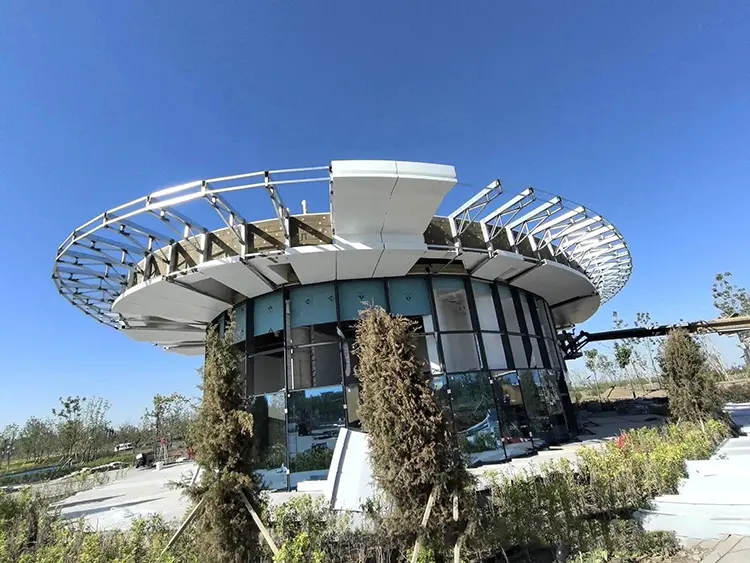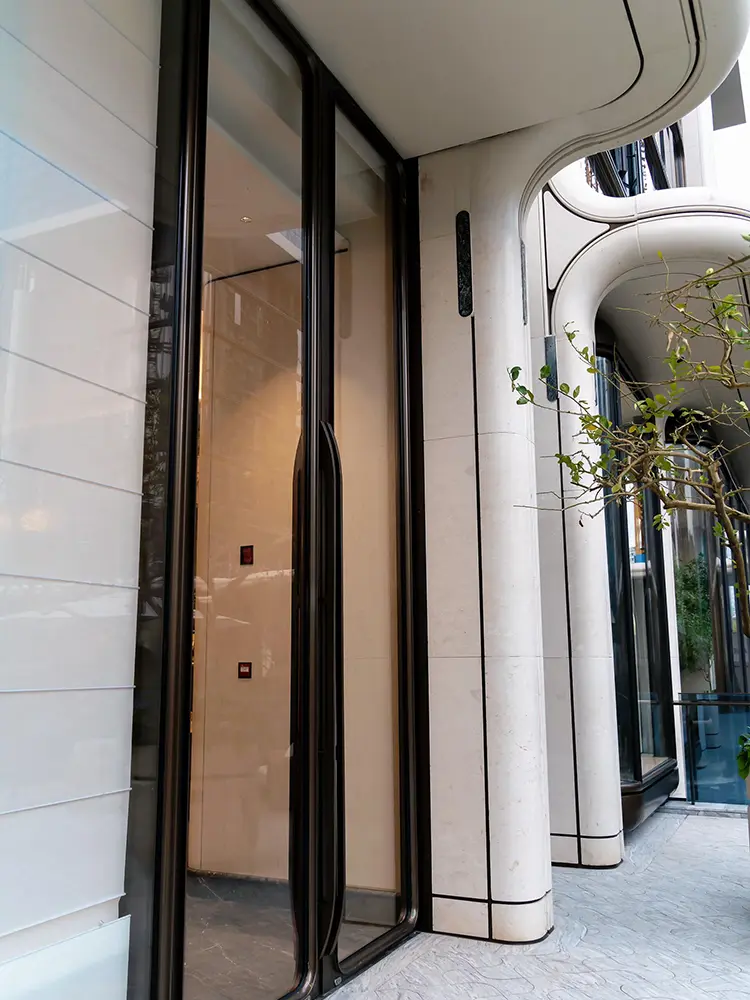
Aluminum vs Glass Curtain Wall Guide
The practical difference is simple: use glass where people need daylight, views, and a transparent facade. Use aluminum panels where the wall needs privacy, shading, lower glare, easier color control, impact resistance, or a solid surface to cover structure and services.
Most commercial buildings should not choose only one material for the whole facade. A better design often uses glass for vision areas and aluminum panels for spandrels, columns, parapets, equipment screens, soffits, and decorative metal elevations. This guide explains how to choose by building zone, cost, durability, maintenance, heat, and project risk.
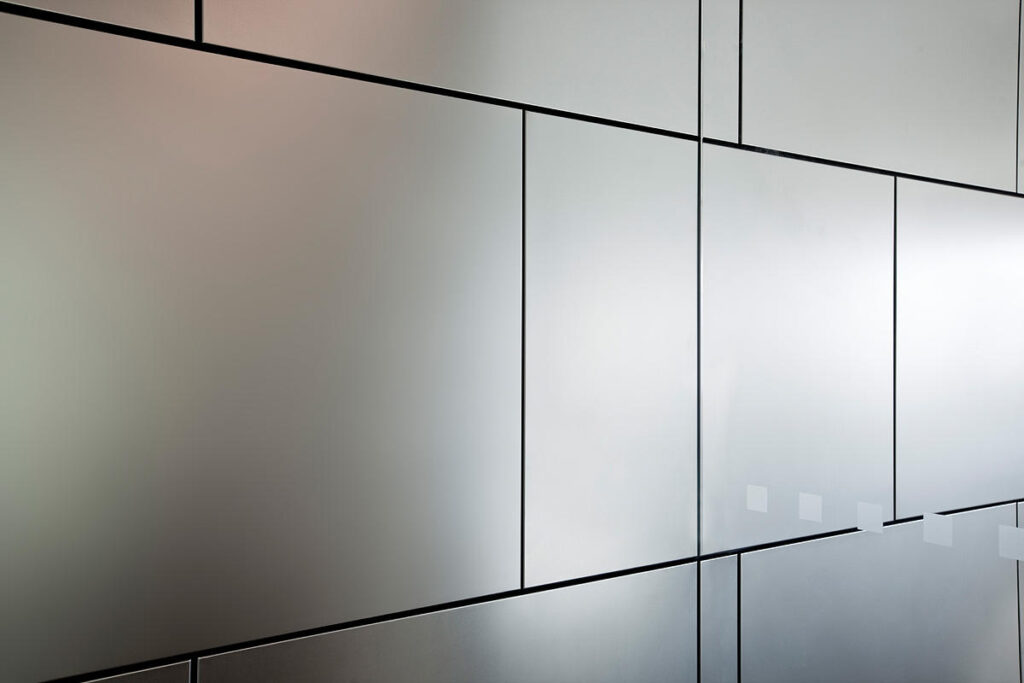
1. Choose by Building Zone First
The easiest way to choose between aluminum curtain wall panels and glass curtain walls is to divide the facade into zones. Each zone has a different job. A vision zone needs transparency. A spandrel zone usually needs to hide floor slabs, insulation, or services. A parapet or soffit needs weather protection and a clean finish.
| Facade zone | Better choice | Why | Common mistake |
|---|---|---|---|
| Office vision area | Glass curtain wall | People need daylight and outside views. | Using too much reflective glass without checking glare and heat. |
| Spandrel area | Aluminum panel or opaque glass | It hides floor slabs, insulation, and structure. | Using transparent glass where there is nothing useful to see. |
| Parapet and roof edge | Aluminum panel | Needs a durable opaque cover and easier detailing. | Ignoring water drainage and coping details. |
| Column cover | Aluminum panel | Easy to shape, fold, curve, and match the facade color. | Forgetting access panels or movement joints. |
| Lobby entrance | Glass plus aluminum feature panels | Glass gives openness; aluminum controls branding and shading. | Using all glass and then adding blinds or films later. |
| Parking garage screen | Perforated aluminum panel | Allows airflow while controlling appearance and privacy. | Choosing a hole pattern without checking wind load and open area. |
If a design team asks, “Which is better, aluminum or glass?”, the better question is: “Which part of the building are we talking about?” The answer changes by zone.
2. Durability, Cost, and Maintenance Compared
Many buyers search for how metal panel elevations compare with glass curtain walls in durability, cost, and maintenance. The short answer: aluminum panels are usually more practical for opaque, impact-prone, or service areas. Glass is necessary for daylight and views, but it brings cleaning, sealing, breakage, heat, and glare considerations.
| Question | Aluminum curtain wall panels | Glass curtain wall | Practical decision |
|---|---|---|---|
| Which is easier to keep private? | Better. Opaque panels block views into service or private areas. | Needs tint, frit, blinds, film, or internal layout control. | Use aluminum where privacy is the goal. |
| Which gives daylight? | No, unless combined with windows or glass units. | Yes. This is the main reason to use glass. | Use glass only where daylight and views are valuable. |
| Which handles impact better? | Usually better for lower opaque zones, depending on thickness and fixing. | Safety glass helps, but damaged units can be costly to replace. | Use aluminum in high-contact or service zones. |
| Which is easier to clean? | Often easier if coating and access are planned. | Needs frequent glass cleaning to keep appearance. | For tall buildings, cleaning access can change lifetime cost. |
| Which is easier to replace? | Individual panels can often be replaced if numbered and accessible. | Glass replacement may need lifting equipment and matching glass units. | Ask about replacement method before ordering. |
| Which costs less? | Can be lower in opaque zones, but depends on thickness, coating, shape, and subframe. | Can be higher with insulated, laminated, low-E, large, or curved glass. | Compare full system scope, not material name. |
3. Cost: Compare the Full Scope, Not One Material
A glass curtain wall quote and an aluminum panel quote may include different scopes. One may include glass, frames, gaskets, sealant, lifting, and installation. The other may include panels, coating, brackets, stiffeners, packing, and shop drawings. If the scope is not the same, the price comparison is not useful.
| Cost item | Aluminum panels | Glass curtain wall | What to ask |
|---|---|---|---|
| Main material driver | Panel thickness, alloy, coating, perforation, bending, welding, stiffeners | Glass type, frame profile, thermal break, laminated or insulated glass | What exact material and thickness are included? |
| Support system | Rails, brackets, fasteners, anchors, thermal break pads if needed | Mullions, transoms, anchors, gaskets, setting blocks | Is the support system included or by installer? |
| Installation cost | Panel sequence, bracket layout, access, site adjustment | Glazing labor, lifting, sealant, glass breakage control | Who provides shop drawings and installation guidance? |
| Long-term cost | Cleaning, coating life, panel replacement, color matching | Glass cleaning, seal inspection, failed units, replacement access | How will damaged parts be replaced after 5-10 years? |
| Export cost | Protective film, corner protection, wooden cases, panel numbering | Glass crates, breakage risk, heavier shipping, careful unloading | How is packing designed for shipment and site sequence? |
For early budgeting, use aluminum panels where the wall does not need transparency. Save glass for areas where daylight and views justify the extra frame, cleaning, thermal, and replacement considerations.
4. Heat, Glare, and Indoor Comfort
Glass can make a building feel open, but it can also bring heat gain, glare, and cooling load if the wrong glass or orientation is used. Aluminum panels reduce transparency, but they can help block sun and cover insulated wall areas. The right facade often combines both.
| Problem | Glass curtain wall response | Aluminum panel response | Better design question |
|---|---|---|---|
| Too much heat | Use low-E, tinted, insulated, or shaded glass. | Use opaque panels, ventilated cavity, insulation, or sunshade screens. | Which orientation gets the strongest sun? |
| Glare near work areas | Use frit, blinds, shading, or lower visible light transmission. | Use panels or louvers where views are not needed. | Where do people sit inside the building? |
| Privacy concerns | Use tinted glass, frit, blinds, or layout control. | Use solid or perforated aluminum panels. | Which rooms should not be visible from outside? |
| Service zones | Opaque glass can hide services but may add cost. | Aluminum panels can cover service areas cleanly. | Does this wall need to be transparent at all? |
If the building is in a hot climate, do not decide by facade appearance alone. Ask the facade consultant or engineer how the glass ratio, panel zones, insulation, shading, and orientation affect cooling load and comfort.
5. When Not to Use Full Glass
A full glass curtain wall can look impressive, but it is not always the most practical choice. Some buildings later add blinds, films, sunshades, or opaque backing because too much glass created heat, glare, privacy, or maintenance problems.
- Do not use full glass where there is no useful view: spandrels, back-of-house walls, equipment areas, and storage zones often work better with aluminum panels.
- Do not use full glass only for appearance: check heat gain, glare, privacy, cleaning access, and replacement cost first.
- Do not ignore orientation: west-facing glass in hot climates can create comfort and cooling problems.
- Do not compare glass and aluminum by material price only: frame system, installation, cleaning, and future replacement matter.
- Do not hide services behind clear glass: if the wall needs to cover structure or insulation, aluminum panels may be simpler.
6. When Aluminum Panels Are the Better Choice
Aluminum panels are usually better when the facade needs a controlled opaque surface. They can be flat, curved, folded, perforated, welded, powder coated, PVDF coated, anodized, or finished with wood grain or stone grain. They are useful where glass would add cost without adding value.
| Use aluminum panels when | Why it helps | Detail to confirm |
|---|---|---|
| The wall hides floor slabs or services | Panels create a clean opaque surface. | Panel thickness, stiffeners, joint width, and bracket layout. |
| The facade needs sun control | Solid or perforated panels can reduce direct sun. | Open area, pattern, orientation, and wind load. |
| The building needs strong color identity | Coated aluminum gives stable color control across opaque areas. | Color code, gloss, sample approval, and coating type. |
| Panels need custom shapes | Aluminum can be bent, curved, welded, and perforated. | Minimum radius, bending depth, welding marks, and tolerance. |
| Maintenance access is difficult | Opaque panels can reduce cleaning burden compared with large glass areas. | Coating durability and replacement method. |
7. What About Timber vs Aluminium Curtain Walling?
Some projects compare timber vs aluminium curtain walling. Timber can create a warm natural look, but it needs careful moisture control, maintenance, and detailing. Aluminium is more common for commercial facade systems because it is stable, light, corrosion resistant, and easier to combine with glass, metal panels, louvers, and custom finishes.
If the project wants a wood appearance but needs metal performance, wood grain aluminum panels can be considered. They do not replace the natural feel of real timber, but they can reduce maintenance in many exterior facade applications.
8. Quote Checklist Before You Decide
Before choosing aluminum panels, glass curtain wall, or a mixed facade, ask suppliers and contractors to price the same scope. This prevents a low number from hiding missing items.
| Information to request | For aluminum panels | For glass curtain wall |
|---|---|---|
| Material specification | Panel type, thickness, alloy, coating, color, perforation if any | Glass type, thickness, low-E, laminated, insulated, tint, frame type |
| System scope | Panels, brackets, rails, fasteners, stiffeners, sealant, shop drawings | Glass, mullions, transoms, gaskets, anchors, sealant, shop drawings |
| Performance | Wind load, fire documents, coating durability, corrosion resistance | Wind load, thermal performance, safety glass, air/water performance |
| Maintenance | Cleaning method, coating warranty, replacement panel process | Cleaning access, seal inspection, glass unit replacement process |
| Export and delivery | Panel numbering, protective film, wooden cases, loading plan | Glass crates, breakage allowance, unloading method, storage requirements |
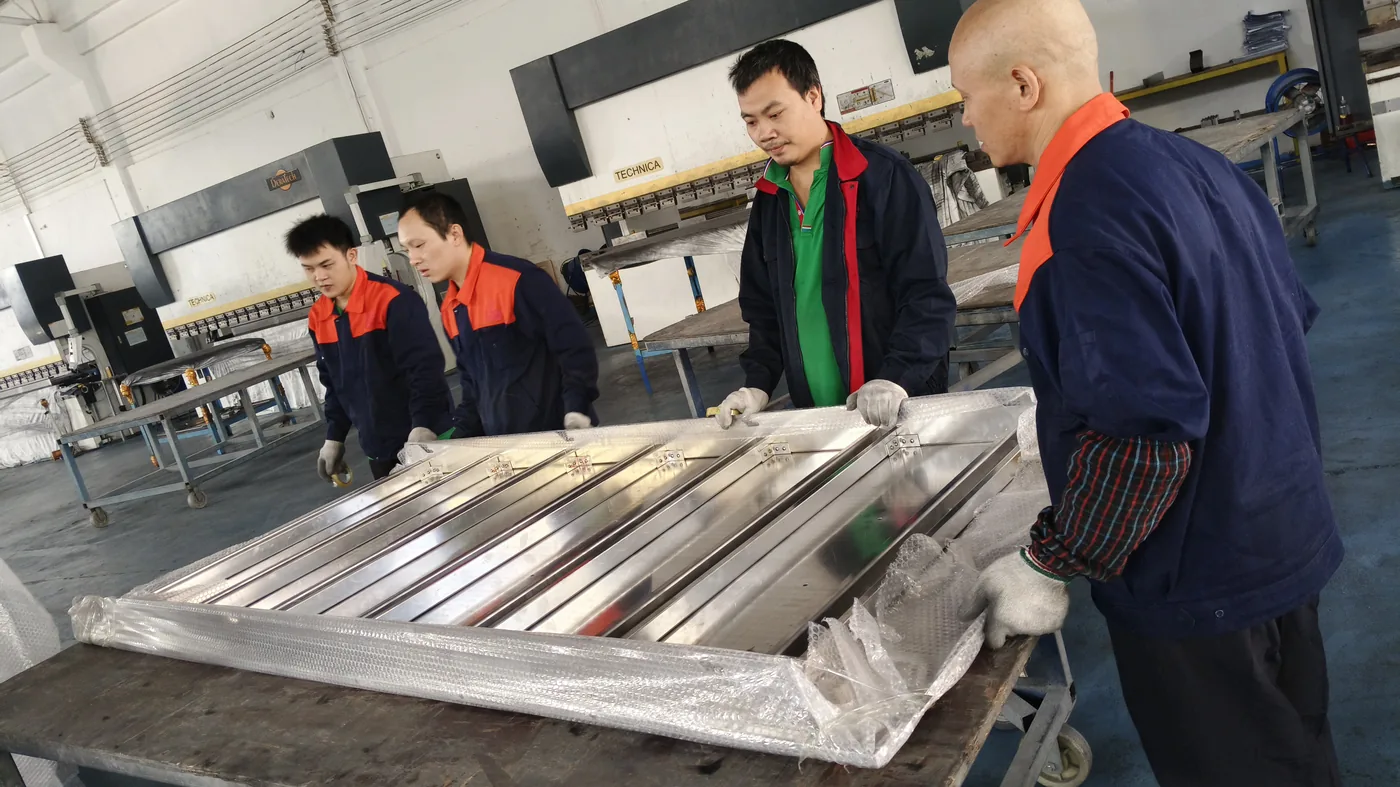
Likton Metal manufactures aluminum facade panels in Lushi Town, Foshan, Guangdong. The factory covers about 20,000 square meters and has more than 10 years of experience. The production team has more than 100 members and uses 27 sets of CNC equipment, including PRATIC PIC-CNC6500, Yawei laser cutting equipment, and Deratech folding equipment. Products have been exported to more than 30 countries, including the USA, UK, Australia, Saudi Arabia, and the UAE.
Available documentation references include ISO 9001:2015, ISO 45001:2018, CE No. CTB25022505602 with EN 13501-1 Class A2, RoHS Compliance, and GPSR EU Authorized Representative Certificate. For project approval, always confirm which documents your local authority or consultant requires.
9. Final Decision Rule
Use glass where transparency has a clear purpose. Use aluminum where the facade needs a controlled, durable, opaque surface. Use both when the building needs daylight in some zones and privacy, shading, insulation coverage, or design control in others.
If you are still unsure, mark the facade drawings by zone: vision glass, spandrel, column cover, parapet, soffit, service screen, sunshade, and feature wall. Then decide the material for each zone. This method is more useful than trying to choose one material for the whole building.
FAQ About Aluminum and Glass Curtain Walls
Which is better, aluminum curtain wall or glass curtain wall?
Neither is better for every situation. Glass is better for daylight and views. Aluminum panels are better for opaque wall zones, privacy, sun control, service areas, spandrels, parapets, and custom metal elevations.
Are aluminum panels cheaper than glass curtain walls?
They can be cheaper in opaque zones, but it depends on the scope. Aluminum panel cost depends on thickness, coating, shape, perforation, brackets, packing, and drawings. Glass curtain wall cost depends on glass type, frame system, glazing labor, thermal performance, and replacement access.
Where should glass be used on a facade?
Use glass where people need outside views, daylight, visibility, or an open public-facing appearance. Common areas include office vision zones, lobbies, showrooms, hotel rooms, and entrances.
Where should aluminum panels be used?
Use aluminum panels for spandrels, parapets, columns, soffits, equipment screens, privacy zones, sunshade screens, and decorative metal elevations where transparency is not needed.
Which is easier to maintain?
Aluminum panels can be easier in many opaque areas because they do not need constant glass cleaning. Glass curtain walls need regular cleaning and seal checks, and replacement can be more difficult if access is limited.
Can aluminum and glass curtain walls be used together?
Yes. Many commercial facades use both. Glass is used for vision zones, while aluminum panels are used for spandrels, columns, parapets, sunshade areas, and decorative opaque surfaces.