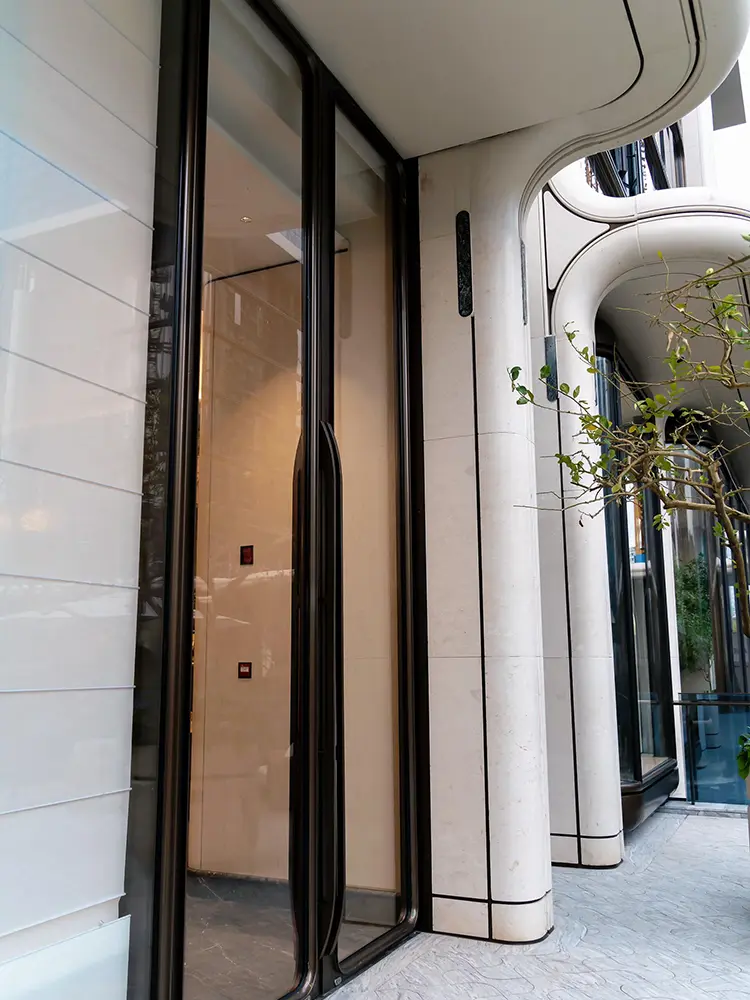
For most solid aluminum facade panel projects, 3.0 mm is the practical starting point for exterior wall cladding. It gives better flatness, impact resistance, and stiffness than thinner sheet, especially when panels are large, installed high on a building, or exposed to wind. But thickness alone is not the full answer. Panel size, folded edge depth, stiffeners, fixing method, coating, and project location all affect whether the facade stays flat after installation.
If the project is a small soffit, interior wall, or low-risk decorative area, 2.0 mm or 2.5 mm may be enough. If the project uses large panels, curved panels, perforated panels, high-rise elevations, or coastal exterior walls, the specification often needs 3.0 mm or thicker, with proper reinforcement. This guide explains how to choose thickness without overpaying or under-specifying the panel.
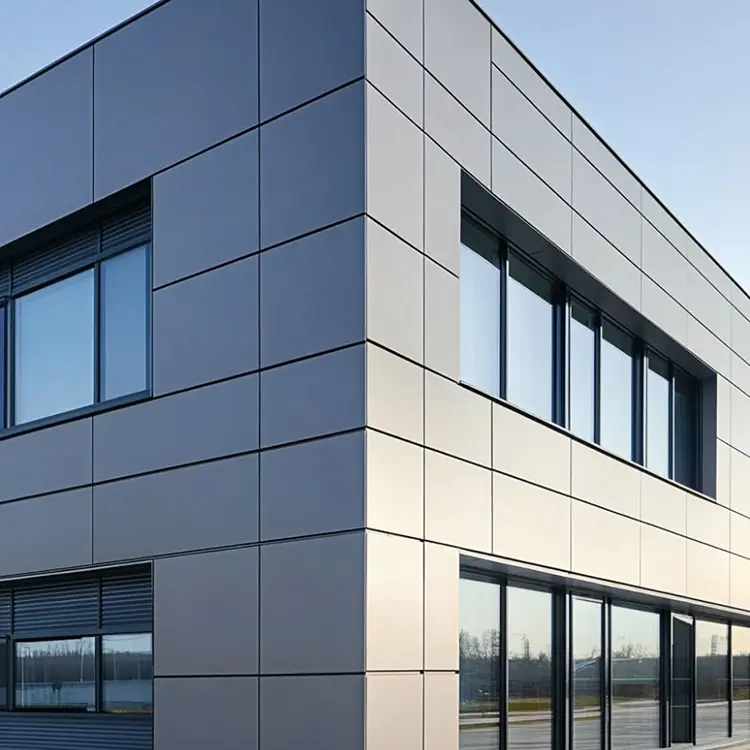
Quick Answer: Which Thickness Should You Choose?
| Panel thickness | Best used for | Be careful when | What to confirm |
|---|---|---|---|
| 1.5-2.0 mm | Interior decoration, small ceiling panels, short-span low-risk areas. | Using on large exterior wall panels or windy elevations. | Panel size, fixing distance, and whether the area is truly interior or sheltered. |
| 2.5 mm | Medium exterior panels, soffits, small facade areas, controlled module sizes. | The design needs large flat panels or long unsupported spans. | Folded edge depth, stiffener layout, and wind-load requirement. |
| 3.0 mm | Common exterior aluminum facade panels, commercial wall cladding, high-visibility elevations. | Panels are very large, heavily perforated, curved, or installed on high-rise buildings. | Back stiffeners, mounting system, coating type, and sample approval. |
| 4.0 mm or above | Special large panels, impact-prone areas, complex shapes, or demanding project specifications. | The extra thickness may add cost, weight, and fabrication limits. | Structural calculation, installation support, bending feasibility, and budget impact. |
Why 3.0 mm Is Common for Exterior Facade Panels
Exterior facade panels are not just decorative sheets. Once installed, they must handle wind pressure, temperature movement, transportation, lifting, fixing stress, and normal building maintenance. A thin panel may look acceptable when it leaves the workshop, but it can show waviness after coating, shipping, or installation if the module is too large.
This is why many commercial facade projects start with 3.0 mm solid aluminum panels. The thickness gives the fabricator more room to form clean folded edges, hold better flatness, and add back stiffeners without making the panel too fragile. It is also a practical balance between cost and performance for office buildings, malls, hotels, schools, transport stations, and public buildings.
That does not mean every exterior project must use 3.0 mm. A narrow soffit panel may not need it. A small low-level decorative strip may work with 2.5 mm. A very large panel may need more than 3.0 mm or a different module division. The right answer comes from project conditions, not from a single rule.
Thickness Is Only One Part of Flatness
Buyers often ask, “If I choose a thicker panel, will it stay flat?” Thickness helps, but it does not solve everything. Oil canning, waviness, and visible distortion can still happen when panel design is weak.
| Flatness factor | Why it matters | Practical check |
|---|---|---|
| Panel size | Larger panels are easier to wave, especially under light reflection. | Break oversized elevations into reasonable modules before production. |
| Folded edge depth | Returns add stiffness around the panel perimeter. | Confirm return depth with shop drawings, not only elevation drawings. |
| Back stiffeners | Stiffeners reduce movement in large flat areas. | Ask how stiffeners are positioned, fixed, and checked before packing. |
| Fixing points | Incorrect fixing can pull the panel and create stress marks. | Review bracket, hanger, and screw positions before mass production. |
| Coating and color | Glossy or dark finishes make small waves more visible. | Use samples or mockups when the facade is highly reflective. |
How Project Type Changes the Thickness Decision
Low-rise commercial exterior walls
For many low-rise commercial buildings, 2.5 mm or 3.0 mm can both be considered. The final choice depends on panel size, joint spacing, and visual expectations. If the facade uses large smooth panels, 3.0 mm is usually safer. If the panels are narrow, well-supported, and not in a high-wind zone, 2.5 mm may be acceptable after drawing review.
High-rise facade decoration
High-rise projects need more caution. Wind load, installation access, replacement difficulty, and safety requirements all become more serious. In these projects, 3.0 mm is often the baseline for solid aluminum facade panels, and the supplier should review panel dimensions, stiffeners, and fixing details before quoting. A low price based only on thin sheet can become expensive later if panels deform or need rework.
Soffits, canopies, and ceilings
Soffit and ceiling panels do not always need the same thickness as exposed wall panels. Smaller modules and sheltered locations may allow thinner panels. But large canopy panels, wind-exposed undersides, and public entrance areas still need careful support because people will see the underside at close distance.
Perforated or curved panels
Perforation removes material, so open area and hole spacing affect stiffness. Curved panels add another layer of complexity because radius, forming method, and installation direction matter. A perforated or curved facade panel should not be specified by thickness alone. Confirm hole pattern, edge distance, radius, coating, and sample approval before bulk production.
When a Thinner Panel Becomes Risky
A thinner panel may save material cost, but it can create hidden risk when the project conditions are demanding. Watch for these warning signs:
- The panel is large and flat with few breaks or folds.
- The color is dark, glossy, or metallic, making waves easier to see.
- The facade is high, open to wind, or difficult to repair later.
- The design uses perforation, slots, curves, or welded shapes.
- The quotation does not mention folded edges, stiffeners, brackets, or packing protection.
- The supplier gives one thickness answer before checking drawings.
In these situations, do not choose only by the lowest square-meter price. Ask for a drawing-based recommendation. The better question is not “What is the cheapest thickness?” but “What thickness and reinforcement will keep this panel flat after coating, packing, shipping, and installation?”
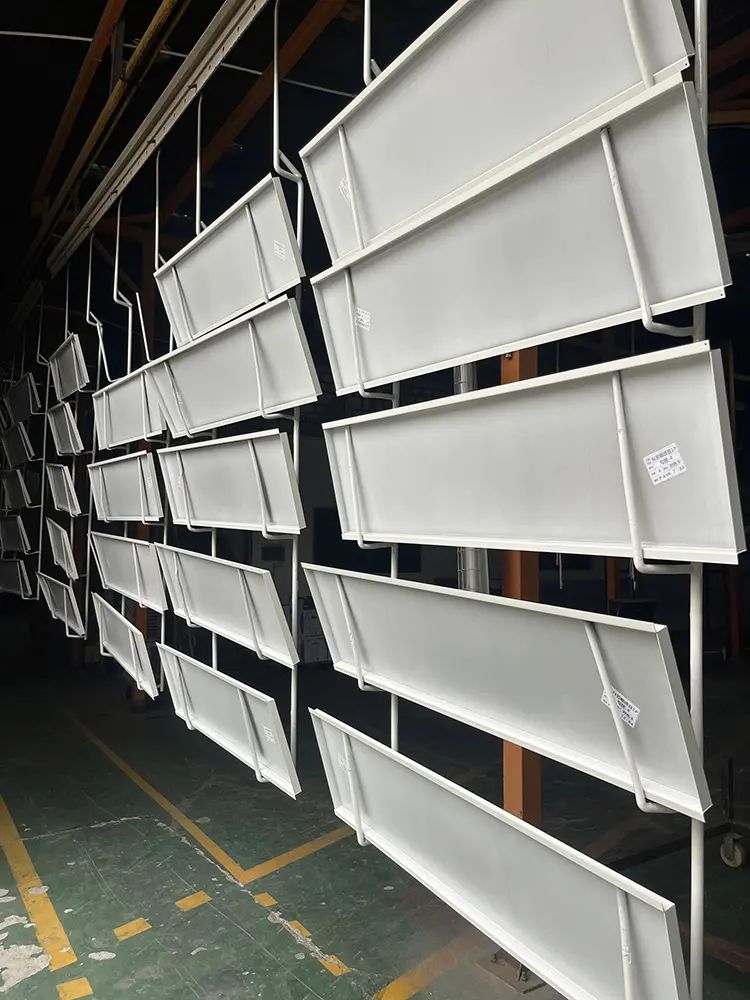
Factory photos are useful here because they show whether the supplier is only selling sheet material or actually fabricating facade panels. For thickness decisions, the important details are folded edge depth, hanger position, stiffener planning, and whether panels are handled as numbered project parts before delivery.
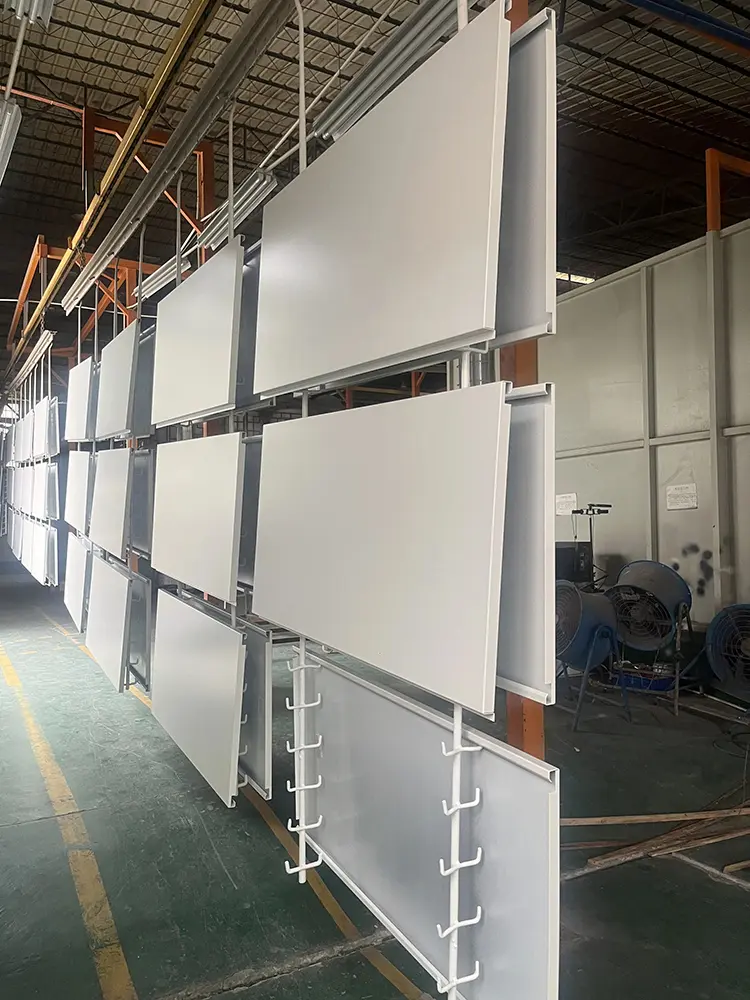
What Likton Checks Before Recommending Thickness
At Likton, thickness discussion usually starts from drawings. A buyer may ask for 2.5 mm or 3.0 mm, but the final suggestion should consider the actual facade module. Our workshop team reviews panel size, joint width, folding direction, fixing points, and whether stiffeners are needed. For exterior projects, PVDF coating, color consistency, packing, and panel numbering also matter because the panels must arrive on site ready for organized installation.
This is not about making every panel thicker. Sometimes the right answer is to keep 3.0 mm but improve stiffener layout. Sometimes the right answer is to reduce panel size. Sometimes a sample is needed because the finish or shape makes distortion more visible. A practical supplier should help you reduce risk before production, not only quote the material thickness.
Quotation Checklist: What to Send Before Asking for Thickness Advice
If you want a useful recommendation, send more than a simple panel name. The supplier needs project details to judge the risk correctly.
| Information to send | Why it matters |
|---|---|
| Building type and project location | Exterior exposure, wind, climate, and building use affect the specification. |
| Elevation drawings or facade layout | Panel size and joint pattern are the main basis for thickness review. |
| Panel size schedule if available | Mixed sizes may need different reinforcement details. |
| Surface finish and color code | PVDF, powder coating, metallic colors, and gloss level affect appearance and cost. |
| Special shape, perforation, or curve | These details change stiffness, fabrication method, and sample requirements. |
| Installation system or bracket detail | Fixing method affects panel stress and site tolerance. |
| Quantity, packing requirement, and destination | Export packing, panel numbering, and shipping protection should be planned early. |
Common Mistakes to Avoid
Choosing thickness before checking panel size
Two panels with the same thickness can behave differently if one is small and the other is oversized. Always judge thickness together with panel dimensions.
Ignoring folded edges and stiffeners
A facade panel is a fabricated product, not only a flat sheet. Folded edges and stiffeners are often what make the panel usable on site.
Comparing only square-meter price
A cheap quote may exclude reinforcement, proper coating, strong packing, or drawing review. That can make the real project cost higher.
Using ACP logic for solid aluminum panels
Solid aluminum panels are different from aluminum composite panels. We manufacture solid aluminum facade panels, not ACP or honeycomb panels. The thickness, bending, reinforcement, and fixing logic should be reviewed as a solid metal panel system.
FAQ
Is 3.0 mm aluminum panel always required for exterior facades?
No. 3.0 mm is a common and practical choice for many exterior facade projects, but smaller or sheltered panels may use 2.5 mm. Large, high-rise, curved, or perforated panels may need 3.0 mm or additional reinforcement.
Can 2.0 mm aluminum panels be used outdoors?
Sometimes, but only in low-risk conditions such as small panels, sheltered locations, or specific decorative areas. For large exterior wall cladding, 2.0 mm can be risky unless the design is carefully reviewed.
Do thicker panels always prevent oil canning?
No. Thicker material helps, but oil canning is also affected by panel size, folded edges, stiffeners, installation stress, and reflective finishes.
What thickness is suitable for perforated aluminum facade panels?
It depends on hole size, open area, edge distance, panel size, and fixing method. Perforation reduces stiffness, so the supplier should review the drawing before confirming thickness.
Does PVDF coating change the required thickness?
The coating itself does not decide thickness, but exterior PVDF projects often have higher visual and weather requirements. Panel flatness, color consistency, and sample approval should be checked together.
What should I send to get a reliable quotation?
Send project location, elevation drawings, panel sizes, desired thickness if known, coating type, color code, quantity, installation system, and any special shape or perforation requirement.
Need help checking aluminum facade panel thickness? Send Likton your elevation drawings, panel size schedule, finish requirement, and project location. We can review thickness, folded edges, stiffeners, coating, and packing details before quotation.
For related selection topics, you can also read Likton guides on aluminum facade materials, PVDF aluminum veneer panels, and aluminum exterior wall panel cost factors.