How much does aluminium cladding cost?
Aluminium cladding cost depends on the panel type, thickness, size, shape, coating, fixing method, quantity, packing, and project requirements. A simple flat panel with standard colour and clear drawings is usually easier to quote and produce than a curved, perforated, welded, or reinforced panel.
For custom facade projects, asking for one fixed price before the supplier reviews drawings is risky. The better question is: what information does the supplier need to give a reliable aluminium cladding quotation?
This guide explains the main cost factors in plain language, so architects, contractors, and procurement teams can compare quotes more fairly and avoid hidden costs.
What is included in aluminium cladding cost?
When buyers ask for aluminium cladding price, they may be talking about different things. Some suppliers quote only the panel. Others include surface treatment, accessories, packing, drawings, or shipping.
Before comparing prices, confirm what the quotation includes.
| Cost item | What it means | Why it matters |
|---|---|---|
| Aluminium panel | Raw material and fabricated panel body | Thickness, alloy, panel size, and shape affect material use and processing time |
| Surface finish | PVDF coating, powder coating, anodizing, or other finish | Exterior projects often need better colour stability and weather resistance |
| Fabrication | Cutting, punching, bending, welding, grinding, stiffeners, and panel numbering | More complex shapes take more labour and factory control |
| Accessories | Brackets, stiffeners, rivets, screws, hangers, or sub-frame parts if included | Some quotes exclude accessories, which can make the first price look lower |
| Packing | Protective film, foam, wooden cases, pallet packing, or export packing | Poor packing can damage coated panels before installation |
| Shipping | Local delivery or international freight | Usually affected by volume, destination, and packing method |
| Installation | Site labour, scaffolding, sub-frame, sealant, and fixing work | Often quoted by the contractor, not the panel factory |
If two suppliers give very different prices, first check whether they are quoting the same scope. A low panel-only price may not be cheaper after coating, accessories, packing, and installation risks are added.
Main factors that change aluminium cladding price
1. Panel thickness
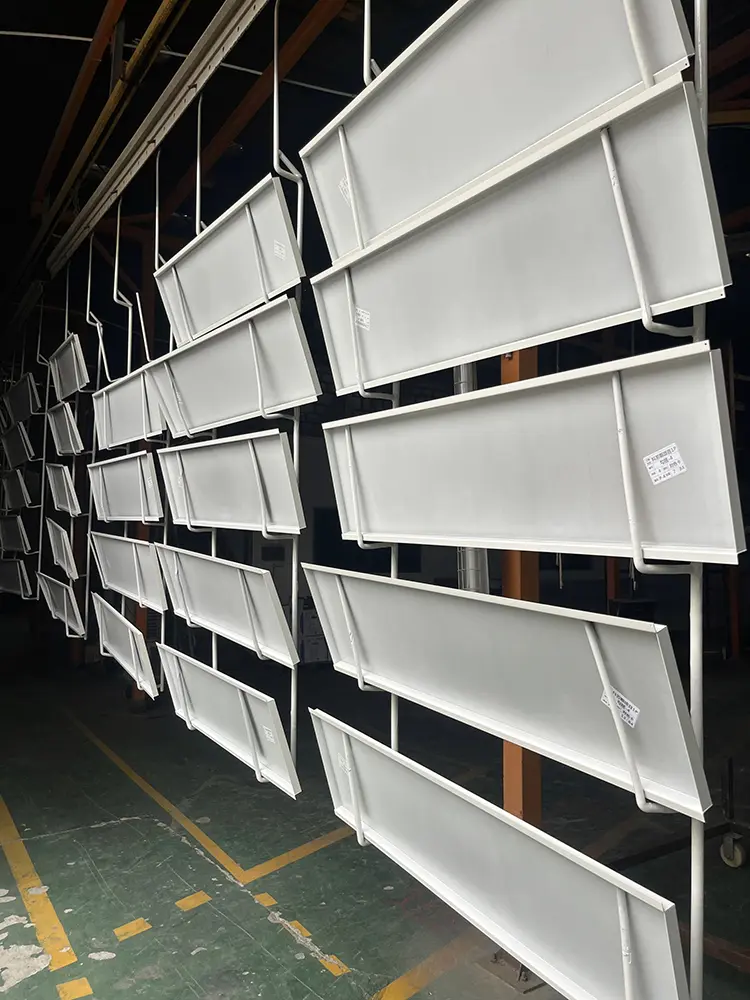
Thickness affects material cost, stiffness, weight, and flatness. For exterior aluminium wall panels, the right thickness should be reviewed together with panel size, folded edge depth, stiffener design, wind exposure, and fixing method.
Choosing the thinnest panel only to reduce cost can create problems later. Large panels may wave, oil-can, or feel weak if stiffness is not considered. A slightly stronger specification can sometimes reduce installation trouble and replacement risk.
For quotation, tell the supplier the required thickness if it is already specified. If not, share the panel size, elevation drawings, installation position, and project environment so the supplier can suggest a practical direction.
2. Panel size and layout
Large panels may look clean on a facade, but they can increase cost in several ways:
- more material per panel;
- higher flatness requirement;
- stronger folded edges or stiffeners;
- more careful handling during coating and packing;
- higher risk of damage during transport and installation.
Smaller panels are usually easier to process and install, but too many joints may affect the design appearance. The best layout is not always the cheapest panel size. It is the layout that balances visual effect, fabrication, transport, and site installation.
3. Shape complexity
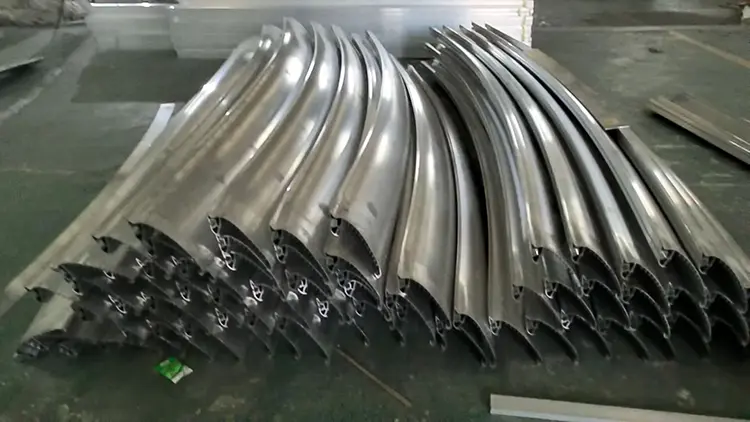
Flat rectangular panels are usually the simplest. Cost increases when the design includes:
- curved panels;
- irregular shapes;
- column covers;
- soffit panels;
- deep folded edges;
- welding and grinding;
- special corner details;
- many different panel sizes.
Custom shapes are not a problem when drawings are clear, but they need more review before production. Likton checks panel size, folding direction, fixing points, edge details, and surface finish requirements before fabrication, because small drawing issues can become expensive after coating.
4. Perforation, patterns, and open area
Perforated aluminium cladding can be attractive for screens, facades, ceilings, and ventilation areas, but it changes the cost structure.
Important details include:
- hole size;
- hole shape;
- open area percentage;
- pattern direction;
- edge distance;
- panel thickness;
- whether the pattern must align across panels;
- whether the panel also needs bending or welding.
High open area may reduce stiffness. Small holes or complex patterns may increase punching time. If perforated panels are part of the project, provide the pattern drawing and ask for sample approval before mass production.
5. Surface finish and coating
Surface finish is one of the most important cost factors for exterior aluminium cladding. For outdoor facade panels, PVDF coating is commonly selected when UV exposure, rain, and colour stability are concerns. Powder coating may be suitable for some interior or less demanding conditions, depending on project requirements.
Do not compare coating price only by the coating name. Ask about:
- colour code;
- gloss level;
- coating system;
- batch consistency;
- surface protection;
- project environment;
- sample approval process.
For large facade areas, colour consistency matters. A cheaper coating option may create a visible colour difference if batches are not controlled well.
6. Quantity and repeatability
Quantity affects price, but not always in a simple way. A project with many repeated panels is usually easier to quote and produce than a project with the same total area but hundreds of unique panel sizes.
A supplier may need more time when every panel has a different size, hole pattern, folded edge, or bracket position. Panel numbering and packing sequence also become more important.
When sending an RFQ, include a panel list if available. It helps the supplier understand whether the job is standard production or a more complex custom fabrication project.
7. Packing and export protection
Packing is easy to ignore until coated panels arrive scratched or bent. For export projects, packing should protect:
- coating surface;
- corners and edges;
- panel backs;
- stiffeners and brackets;
- panel labels;
- installation sequence.
Good packing adds cost, but damaged panels cost more. For overseas orders, ask how the supplier protects finished panels and whether the packing method fits the unloading and site storage conditions.
Aluminium cladding cost is not only material price
Many buyers compare aluminium cladding quotes by material thickness and square metre price. That is understandable, but it can miss important risks.
| Quote looks cheaper because… | Possible hidden risk | Better question to ask |
|---|---|---|
| Thinner panel is used | Weak flatness or poor stiffness on large panels | Is the thickness suitable for this panel size and fixing method? |
| Coating is downgraded | Colour fading or surface issues outdoors | What coating system is included for exterior use? |
| Accessories are excluded | Extra cost appears later | Are brackets, stiffeners, rivets, and screws included? |
| Packing is basic | Scratches or dents during transport | How are coated panels packed and protected? |
| Drawings are not reviewed | Production errors or site mismatch | Will the supplier review shop drawings before production? |
| All panels are treated as standard | Custom panels may be underpriced at first | Are curved, perforated, welded, or irregular panels priced separately? |
A good aluminium cladding quotation should make the scope clear. If the quote is very low but vague, ask more questions before confirming the order.
What information should you send for an accurate quotation?
The fastest way to get a useful price is to send clear project information. If the supplier has to guess, the quote will either be rough or risky.
Prepare these details when possible:
- project location and building type;
- elevation drawings or shop drawings;
- panel size and quantity;
- thickness requirement;
- surface finish and colour code;
- coating type if specified;
- perforation pattern or special shape drawing;
- folded edge and stiffener requirements;
- fixing method or installation system;
- fire, wind-load, or local specification requirements if any;
- packing requirement;
- delivery destination;
- expected project schedule.
If drawings are not ready, send reference images and approximate dimensions first, but treat the first quote as a budget estimate rather than a final production price.
Example: why two aluminium cladding quotes can be different
Imagine two suppliers are asked to quote aluminium wall panels for the same commercial building.
Supplier A gives a lower price but only includes flat panels with basic packing. Coating details, stiffeners, accessories, and panel numbering are not clearly stated.
Supplier B gives a higher price but includes PVDF coating, drawing review, panel numbering, export packing, and a note that several large panels may need back stiffeners.
Supplier A may still be useful if the project is simple and the contractor manages the missing details. But if the project is an export facade with custom sizes, Supplier B may reduce risk because more of the real project work is included.
The right choice depends on project responsibility. If you only compare the first number, you may miss what each supplier is actually taking responsibility for.
How Likton helps control aluminium cladding cost
Cost control does not mean making every detail cheaper. It means choosing a specification that can be produced, coated, packed, shipped, and installed without unnecessary problems.
For custom aluminium facade and wall panel projects, Likton can review:
- panel size and layout;
- folded edge direction;
- CNC cutting or punching details;
- bending and welding requirements;
- stiffener and fixing point needs;
- PVDF coating and colour requirements;
- panel numbering;
- packing and shipping protection.
This review helps buyers find practical adjustments before production. For example, simplifying an over-complex panel shape, adjusting panel division, confirming coating requirements early, or grouping similar panels can sometimes reduce cost without weakening the design intent.
The useful question is not only “How low can the price be?” It is “How can we meet the project requirement with a specification that is realistic to produce and install?”
When should you not choose the cheapest aluminium cladding quote?
Be careful with the cheapest quote when:
- the supplier does not ask for drawings;
- coating details are missing;
- the panel thickness is changed without explanation;
- large panels are quoted without stiffener or flatness discussion;
- packing is not described;
- accessories are unclear;
- the supplier cannot explain how custom shapes will be fabricated;
- the quote does not separate standard panels from special panels.
A low price can be useful for early budget comparison. It becomes risky when it hides technical responsibility.
Quick supplier questions before confirming an order
Ask these questions before choosing an aluminium cladding supplier:
- What exactly is included in the quoted price?
- Is the coating suitable for exterior use and project environment?
- Are stiffeners, brackets, fasteners, or accessories included?
- How are large panels controlled for flatness?
- How are custom shapes, curved panels, or perforated panels priced?
- Will you review drawings before production?
- Can you provide a sample or mock-up before mass production?
- How are coated panels protected during packing and shipping?
- How are panels numbered for installation?
- What information do you still need before final quotation?
These questions make it easier to compare suppliers fairly.
FAQ about aluminium cladding cost
Is aluminium cladding priced by square metre?
Often yes, but square metre price can be misleading if the scope is unclear. A simple flat panel and a curved perforated panel may have very different fabrication and coating requirements even if the area is similar.
Why does aluminium cladding price vary so much?
Price varies because thickness, panel size, coating, shape, quantity, accessories, packing, and project responsibility are different. The same material name can represent very different finished products.
Does thicker aluminium cladding always mean better quality?
Not always. Thickness matters, but it should be considered together with panel size, folded edges, stiffeners, fixing method, and installation environment. A well-designed panel system is more important than thickness alone.
Is PVDF coating worth the extra cost?
For many exterior facade projects, PVDF coating is selected because UV exposure, rain, and colour stability are important. For interior or less exposed areas, other finishes may be suitable. The correct choice depends on project environment and specification.
What is the cheapest way to reduce aluminium cladding cost?
The safest way is usually not to reduce thickness blindly. Better options may include simplifying panel shape, using a standard colour, improving panel layout, reducing unnecessary unique panel sizes, and preparing clear drawings before quotation.
Can I get a final price without drawings?
You can get a rough budget estimate, but not a reliable production quotation. For a final price, the supplier needs panel size, quantity, coating, drawings, installation details, and packing requirements.
What should I send to Likton for a quotation?
Send elevation drawings, panel sizes, quantity, surface finish, colour code, coating requirement, installation details, packing requirement, delivery destination, and any special details such as perforation, curves, welding, or stiffeners.
Final advice
Aluminium cladding cost is best understood as a project quotation, not a single material price. A reliable quote should explain panel specification, coating, fabrication, accessories, packing, and what information is still missing.
If you are preparing a facade or wall panel quotation, send the drawings, panel size, surface finish, colour code, quantity, and delivery destination. Likton can review the fabrication details and suggest a practical aluminium cladding solution before production.
Image Plan
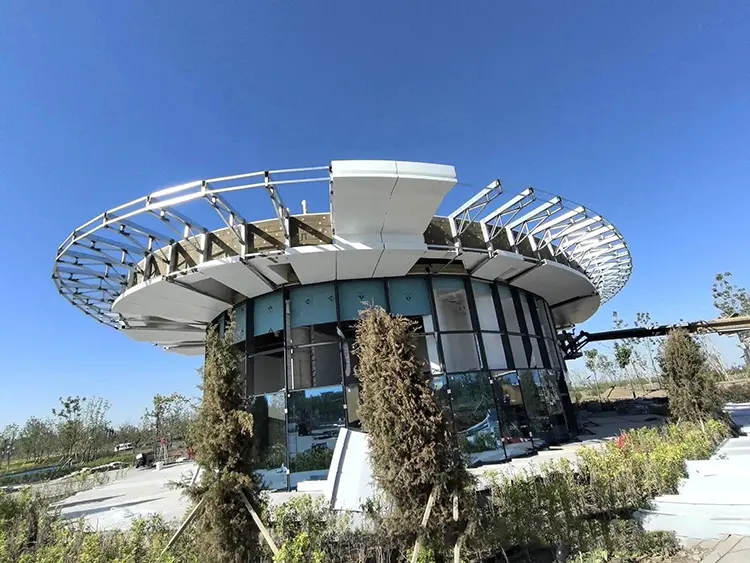
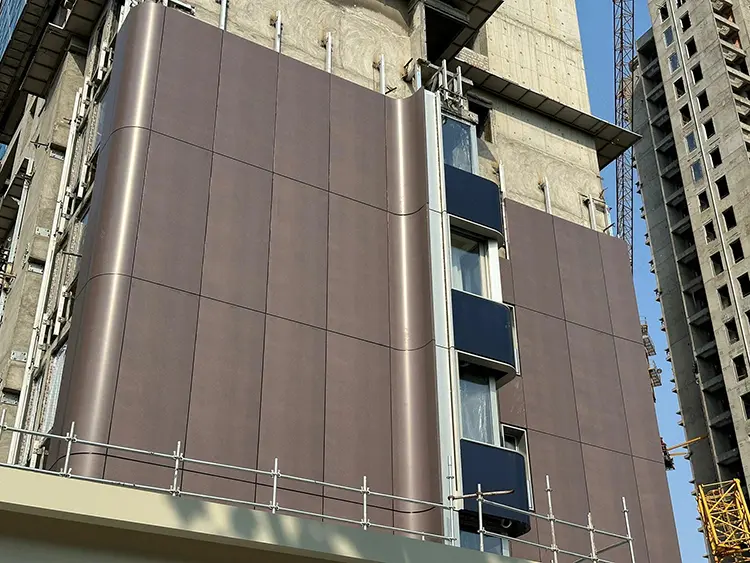
Featured image: Finished aluminium cladding facade or exterior wall panel project, clear and modern, not reused from recent curtain wall manufacturer article.
Supporting image 1: Likton workshop image showing aluminium wall panel fabrication, bending, panel backs, stiffeners, or batch production.
Supporting image 2: Coated aluminium panels packed or prepared for shipment, showing export packing or quality control.
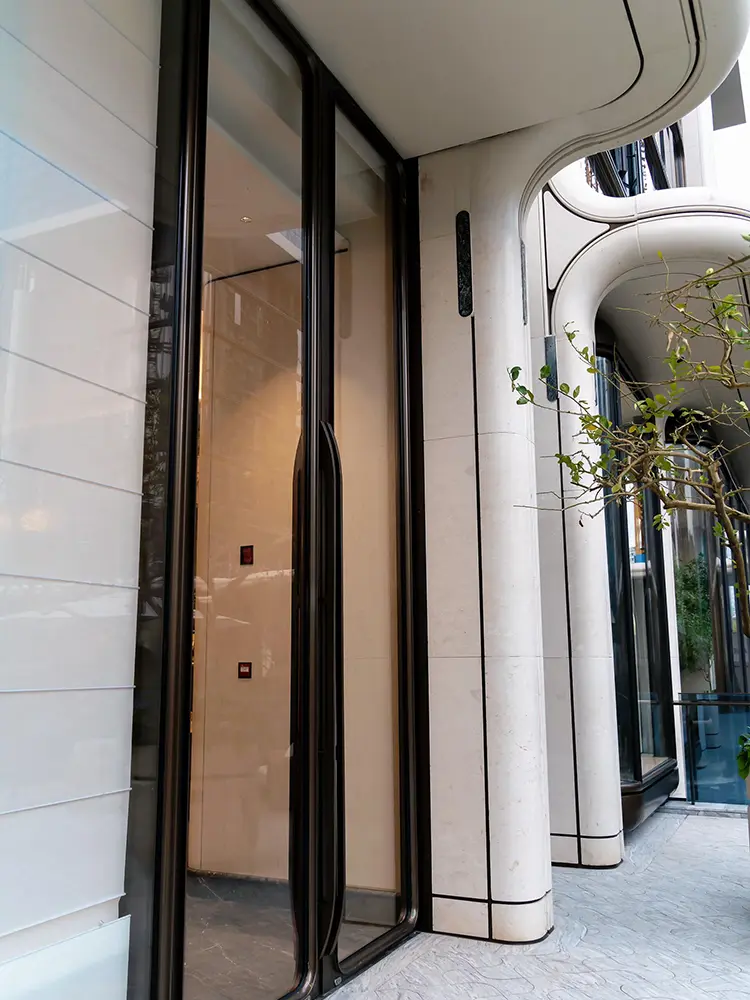
Optional detail image: Close-up of folded edge, stiffener, perforation, or panel back to support the cost-factor section.
Suggested Alt Text
Likton aluminium cladding panels used on a commercial building facadeLikton workshop fabricating custom aluminium wall cladding panelsFinished aluminium cladding panels packed for export shipmentClose-up of folded edges and stiffeners on aluminium cladding panels
Internal Link Plan
- Link to the main aluminium facade or cladding product page with anchor text such as
custom aluminium facade panels. - Link to
aluminum-exterior-wall-panelwith anchor text such asaluminium exterior wall panel cost factors. - Link to
aluminum-curtain-wall-costonly where curtain wall pricing is mentioned, to avoid overlap. - Link to the contact/RFQ page near the final CTA.
Schema Suggestions
BlogPostingFAQPageif the visible FAQ section is kept on the public page.